

The Chemistry of Time: A Deep Dive into Tirzepatide Expiry and Stability
1. Introduction: The Myth of the Expiration Date
In the precise world of metabolic research, we often treat the expiration date printed on a reagent box as an absolute threshold—a binary switch where the molecule is “good” at 11:59 PM and “bad” at 12:00 AM. In reality, biological molecules do not adhere to such rigid schedules.
Every reagent has a lifespan, but Tirzepatide expiry is a dynamic chemical process, not a calendar event. The date provided by a manufacturer is a statistical estimate based on optimal storage conditions—uninterrupted -20°C freezing, zero light exposure, and controlled humidity. However, the moment that pen peptide enters a working laboratory, the variables change. Door openings, brief thaws during transport, and minor fluctuations in pH all accelerate the timeline of degradation.
Understanding Tirzepatide expiry requires shifting your perspective from administrative compliance to chemical intuition. It is about looking at the pen peptide in front of you and understanding the molecular war of attrition taking place inside the glass. This guide explores the mechanisms of that decay, ensuring that the tool you use to measure metabolic function is as sharp on Day 30 as it was on Day 1.
2. The Chemistry of Degradation: What “Going Bad” Actually Means
To a layperson, “expired” might mean spoiled or rotten. To a biochemist, it means the population of active molecules in the pen peptide has dropped below a critical threshold. Why does this happen? Tirzepatide is a large peptide (39 amino acids), and its size makes it vulnerable to three primary enemies: water, oxygen, and heat.
A. Deamidation: The Charge Shift
One of the most common pathways for peptide degradation is deamidation. This reaction specifically targets the side chains of Asparagine (Asn) and Glutamine (Gln) residues.
-
The Mechanism: Under physiological conditions (or slightly basic pH), the amide group on the side chain is attacked, releasing ammonia and converting the amino acid into aspartic acid or isoaspartic acid.
-
The Impact: This conversion introduces a negative charge where there was previously a neutral charge. This alters the local electrostatic environment of the peptide. If this change occurs near the receptor-binding domain of the Tirzepatide molecule, it can drastically reduce affinity for the GIP or GLP-1 receptors. The molecule is still there, but it no longer “fits” the lock.
B. Oxidation: The “Rusting” of the Molecule
Oxidation is chemically analogous to iron rusting. It involves the reaction of specific amino acids with reactive oxygen species (ROS) or dissolved atmospheric oxygen.
-
The Targets: Methionine (Met) and Tryptophan (Trp) are the most susceptible. Methionine oxidation leads to the formation of methionine sulfoxide.
-
The Impact: Oxygen atoms are bulky. When they attach to the sulfur atom in Methionine, they create steric hindrance—effectively a physical bump on the molecular surface. This bump prevents the peptide from folding correctly or slotting into the receptor pocket. Light exposure significantly accelerates this process, which is why amber pen peptides are standard.
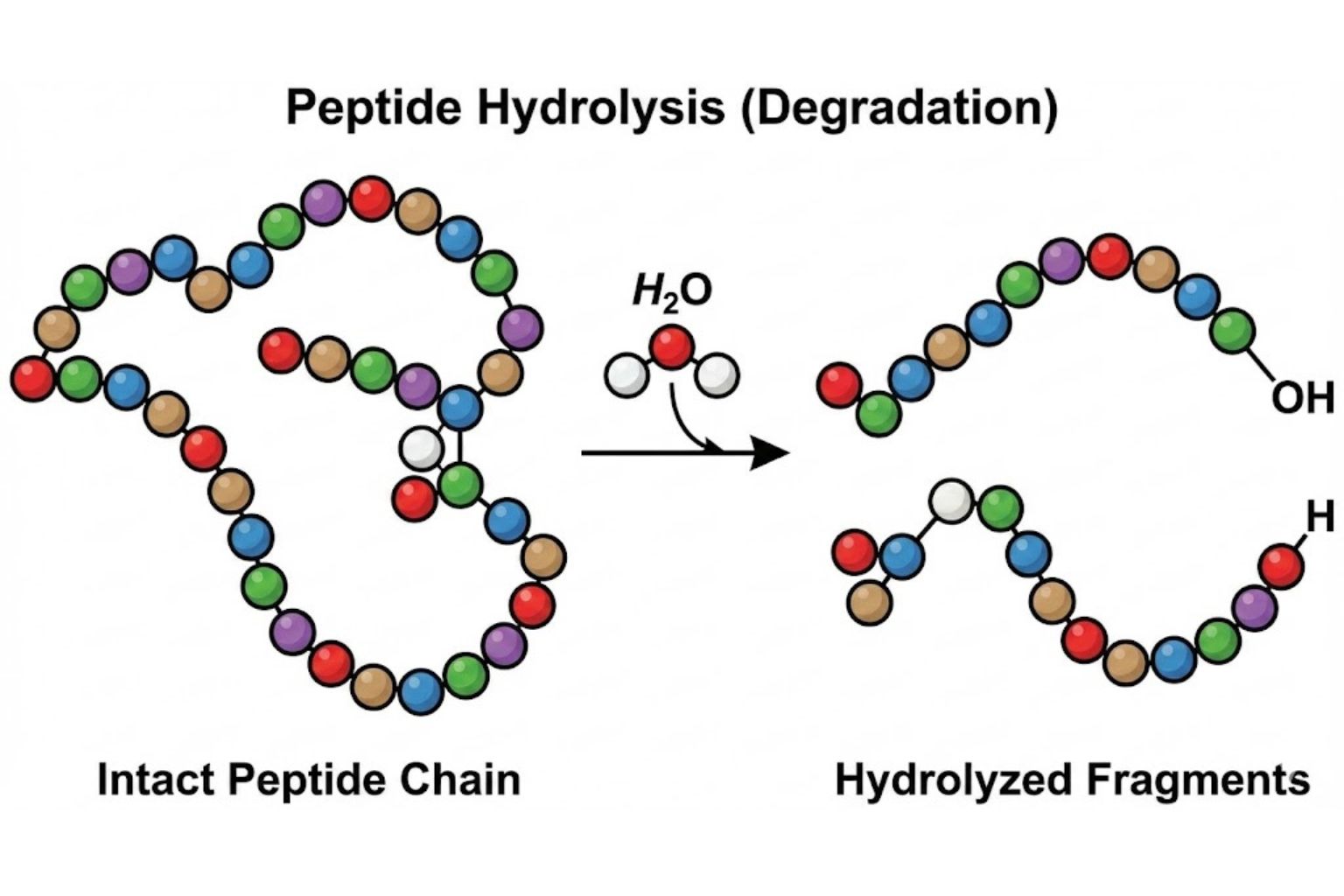
C. Hydrolysis: The Backbone Fracture
Hydrolysis is the most destructive force. It is the literal breaking of the peptide backbone.
-
The Mechanism: Water molecules attack the peptide bonds that link the amino acids together. This cleaves the long Tirzepatide chain into smaller, inactive fragments.
-
The Impact: Unlike deamidation or oxidation, where you have a “damaged” whole molecule, hydrolysis leaves you with debris. These fragments are not only inactive but can sometimes act as competitive inhibitors, clogging the receptors without activating them.
Key Takeaway: Tirzepatide expiry dates are essentially a guarantee that these three reactions have not yet proceeded far enough to impact biological activity. But once the seal is broken, the race against these reactions begins.
3. Lyophilised Shelf Life: The Dormant Phase
When you receive Tirzepatide, it is usually in a lyophilised (freeze-dried) state. In this form, the peptide is suspended in a sugar matrix (often mannitol or sucrose) and stripped of water.
The Standard: 2 Years at -20°C
In this anhydrous, frozen state, chemical reactions like hydrolysis are virtually halted because there is no water to facilitate them. Oxidation and deamidation are slowed to a crawl. Under these conditions, the peptide remains stable for 24 months or longer.
The Threat: Moisture Ingress
The greatest danger to lyophilised Tirzepatide is not time, but seal integrity. If the rubber stopper is punctured or the crimp is loose, humidity from the freezer can seep in.
-
Hygroscopy: The lyophilised “cake” is hygroscopic—it loves water. It will pull moisture from the air aggressively.
-
Micro-Collapse: Even a tiny amount of moisture allows microscopic mobility within the powder. This permits the peptide chains to interact and aggregate, even while “dry.“
Visual Inspection of the “Cake”
You can often diagnose the health of a lyophilised pen peptide before you even open it.
-
-
Healthy: The powder should appear as a white, distinct “puck” or loose, fluffy powder at the bottom of the pen peptide.
-
Compromised: If the powder looks sticky, shrunken, translucent, or has collapsed into a hard, gummy film at the bottom, moisture has entered. The Tirzepatide expiry has accelerated rapidly, and the potency is likely compromised.
-
4. Reconstituted Shelf Life: The Ticking Clock
The moment bacteriostatic water is added, the stability profile changes drastically. The peptide is now solvated, mobile, and vulnerable.
The 14-Day vs. 30-Day Debate
-
The 30-Day Window: Most rigorous laboratory standards suggest a maximum shelf life of 28–30 days for reconstituted peptides kept at 2–8°C (refrigerated). Beyond this, the accumulation of deamidated and oxidized species becomes statistically significant.
-
The 14-Day Preference: Ideally, for high-sensitivity assays or precise dosing (metabolic studies), researchers prefer a 14-day window. In the first two weeks, the peptide retains >98% purity. By day 30, purity may drop to 92–95%. While this sounds high, a 5% impurity consisting of aggregated peptide can induce immunogenic responses in test subjects, skewing data.
The Temperature Factor
Heat is kinetic energy. At room temperature, the degradation reactions described in Section 2 happen exponentially faster than at 4°C.
-
The Rule of Thumb: Leaving a reconstituted pen peptide on the benchtop for 24 hours is roughly equivalent to storing it in the fridge for 3 weeks.
-
Bacteriostatic Limits: While bacteriostatic water (containing benzyl alcohol) inhibits bacterial growth, it does not stop chemical degradation. The alcohol prevents the pen peptide from becoming a petri dish, but it does not stop the peptide from falling apart chemically.
5. Visual Indicators of Degradation
How can you tell if Tirzepatide has expired without running it through an HPLC (High-Performance Liquid Chromatography) machine? Your eyes are a valuable diagnostic tool.
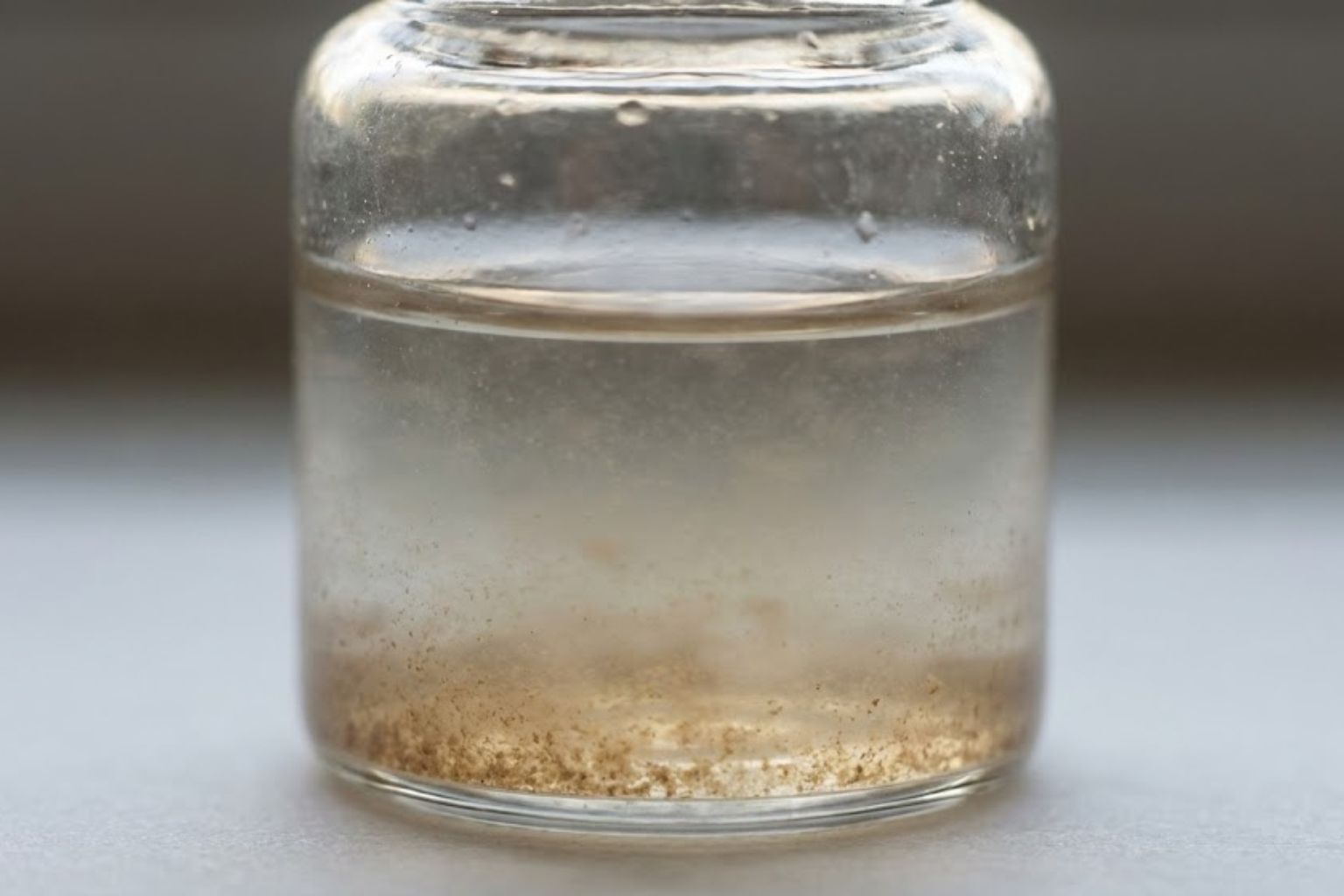
A. Cloudiness (Turbidity)
This is the most critical red flag. A proper peptide solution should be crystal clear—indistinguishable from water.
-
What it means: Cloudiness indicates aggregation. The peptide chains have unfolded and stuck together to form large, insoluble clumps. These clumps cannot bind to receptors.
-
Action: Discard immediately. Do not attempt to filter or shake it back into solution.
B. Particulates
Sometimes the solution remains clear, but you see tiny floating specks or “snowflakes” when you hold the pen peptide up to the light.
-
What it means: This is early-stage precipitation or fibrillation. It indicates that the solubility limit has been breached or the peptide has been damaged by freeze-thaw cycles.
-
Action: Discard. Injecting particulates can cause phlebitis or blocked needles in animal models.
C. Discoloration
Tirzepatide should be colorless.
-
Yellowing: A yellow or brown tint typically indicates severe oxidation, particularly of the Tryptophan residues.
-
Pink/Red: This often indicates bacterial contamination (certain bacteria produce pink pigments) or a reaction with the rubber stopper.
-
Action: Discard.
The Golden Rule: If the visual appearance of the solution has changed since the day you mixed it, the Tirzepatide expiry has effectively passed, regardless of what the calendar says.
6. The Impact of pH Shifts
Peptides are chemically sensitive to the acidity or alkalinity of their environment. Every peptide has a specific pH range where it is most stable.
-
The Wrong Solvent: Using standard saline (NaCl) for long-term storage can sometimes lead to pH drift because saline lacks buffering capacity. As CO2 from the air dissolves into the liquid in the pen peptide, it forms carbonic acid, slowly lowering the pH.
-
The Consequence: If the pH drops (becomes acidic) or rises (becomes basic) outside of Tirzepatide’s stability window, the rate of hydrolysis skyrockets.
-
The Solution: Always use Bacteriostatic Water or a specifically buffered diluent recommended by the supplier. These are formulated to maintain a neutral pH (around 7.0), keeping the peptide in its “happy zone” and extending its usable life.
7. Extending Shelf Life: Aseptic Best Practices
You cannot stop chemical entropy, but you can slow it down. The longevity of your reconstituted Tirzepatide is directly correlated to your handling technique.
A. The Alcohol Wipe Ritual
Every single time a needle penetrates the pen peptide, it pushes a tiny amount of the outside world into the sterile environment.
-
Protocol: Wipe the rubber stopper with a 70% isopropyl alcohol pad vigorously for 15 seconds before every puncture. Allow it to dry. This kills surface bacteria and removes dust that might contain proteases.
B. Protease Contamination
Proteases are enzymes that exist everywhere—on your skin, in your saliva, and on unsterilized surfaces. Their sole biological function is to eat peptides.
-
The Risk: If you touch the needle or the stopper with a bare finger, you may introduce proteases into the pen peptide. Just a few molecules of protease can enzymatically digest an entire pen peptide of Tirzepatide from the inside out within days.
-
Prevention: Never reuse needles. Never touch the stopper with your hands.
C. Minimize Headspace
Oxidation requires oxygen. The air gap above the liquid in the pen peptide (the headspace) is a reservoir of oxygen.
-
Storage: Store pen peptides upright. This minimizes the surface area of the liquid in contact with the air.
-
Argon Purging (Advanced): Some high-level labs purge the headspace of their pen peptides with inert argon gas after each use to displace oxygen, though this is rare for standard metabolic research.
8. Conclusion: The Cost of Doubt
In the grand scheme of research, the cost of a single pen peptide of Tirzepatide is negligible compared to the cost of a failed experiment.
Respecting Tirzepatide expiry is respecting the scientific method. Using a peptide that is 35 days old, or one that has been left on the bench overnight, introduces an uncontrolled variable into your study. If your data shows a “lack of response,” is it because the biology failed, or because the reagent failed? You will never know.
By understanding the chemistry of degradation—the silent shift of charges, the rust of oxidation, and the break of hydrolysis—you can make informed decisions. Monitor your pen peptides visually, adhere to strict temperature controls, and follow the cardinal rule of reagent management: When in doubt, throw it out. Retaining a questionable pen peptide is never worth the risk of retracted research or irreproducible results.