

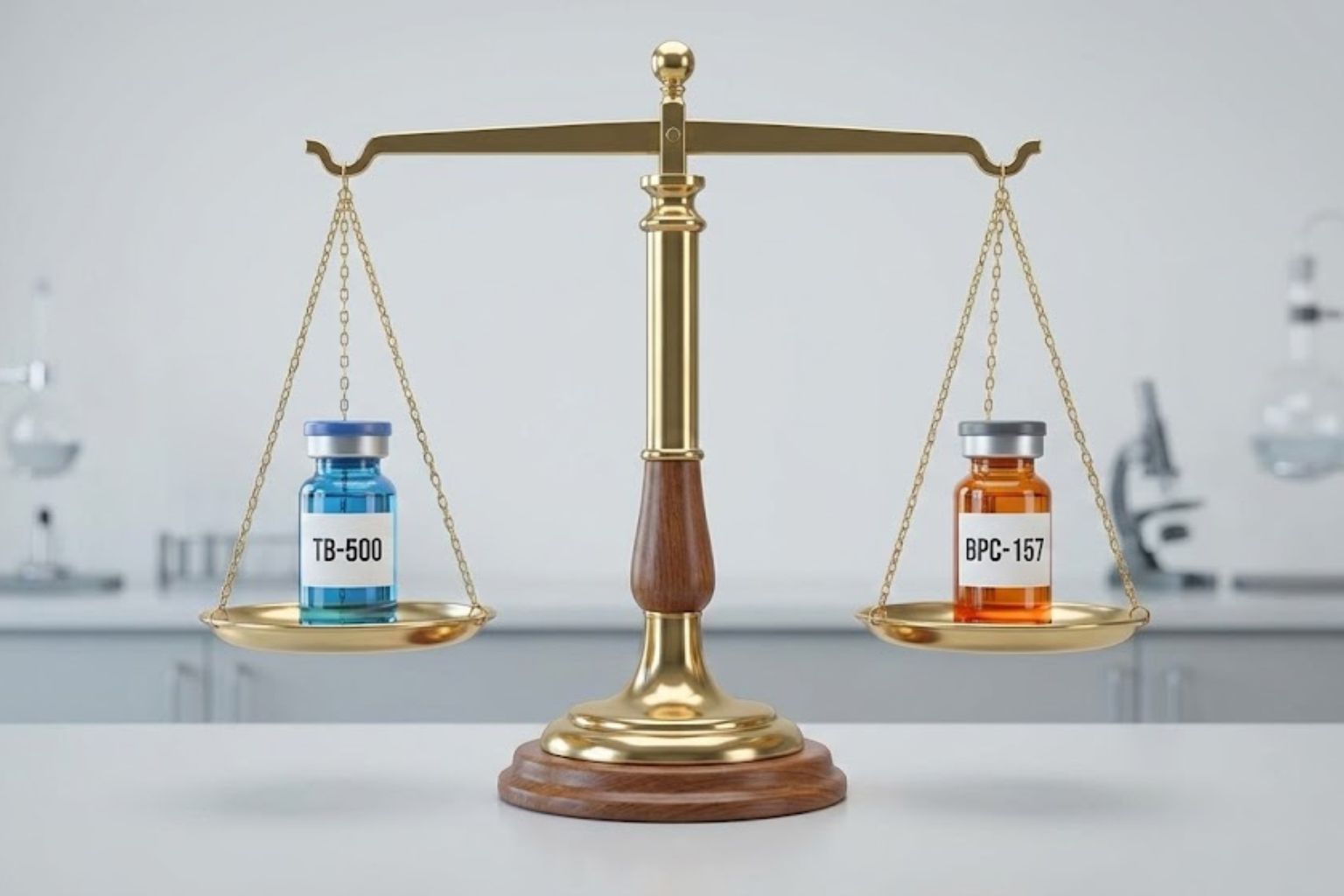
A Comprehensive Analysis of TB-500 vs. BPC-157
In the rapidly evolving realm of regenerative peptides, two names consistently dominate the conversation, appearing in everything from high-level athletic protocols to cutting-edge laboratory research: TB-500 and BPC-157. Often colloquially grouped together as “healing peptides” or sold as a combined “injury stack,” this simplification does a disservice to their unique biochemical identities.
While both peptides share the ultimate goal of tissue restoration, they achieve this end through entirely different biological pathways. They are like two different contractors working on the same building: one might be the electrician rewiring the system, while the other is the mason repairing the foundation. For researchers deciding which compound to utilize—or whether to deploy both simultaneously—understanding the granular nuance of TB-500 vs BPC-157 is essential.
This comprehensive guide dissects their mechanisms, contrasts their systemic reach, and evaluates their specific tissue targets to provide a clear roadmap for their application in regenerative science.
2. Mechanism of Action: The “Mobiliser” vs. The “Builder”
To understand why one might choose one peptide over the other, we must first look at the molecular level. The core difference lies in how they repair.
TB-500 (Thymosin Beta-4): The Mobiliser
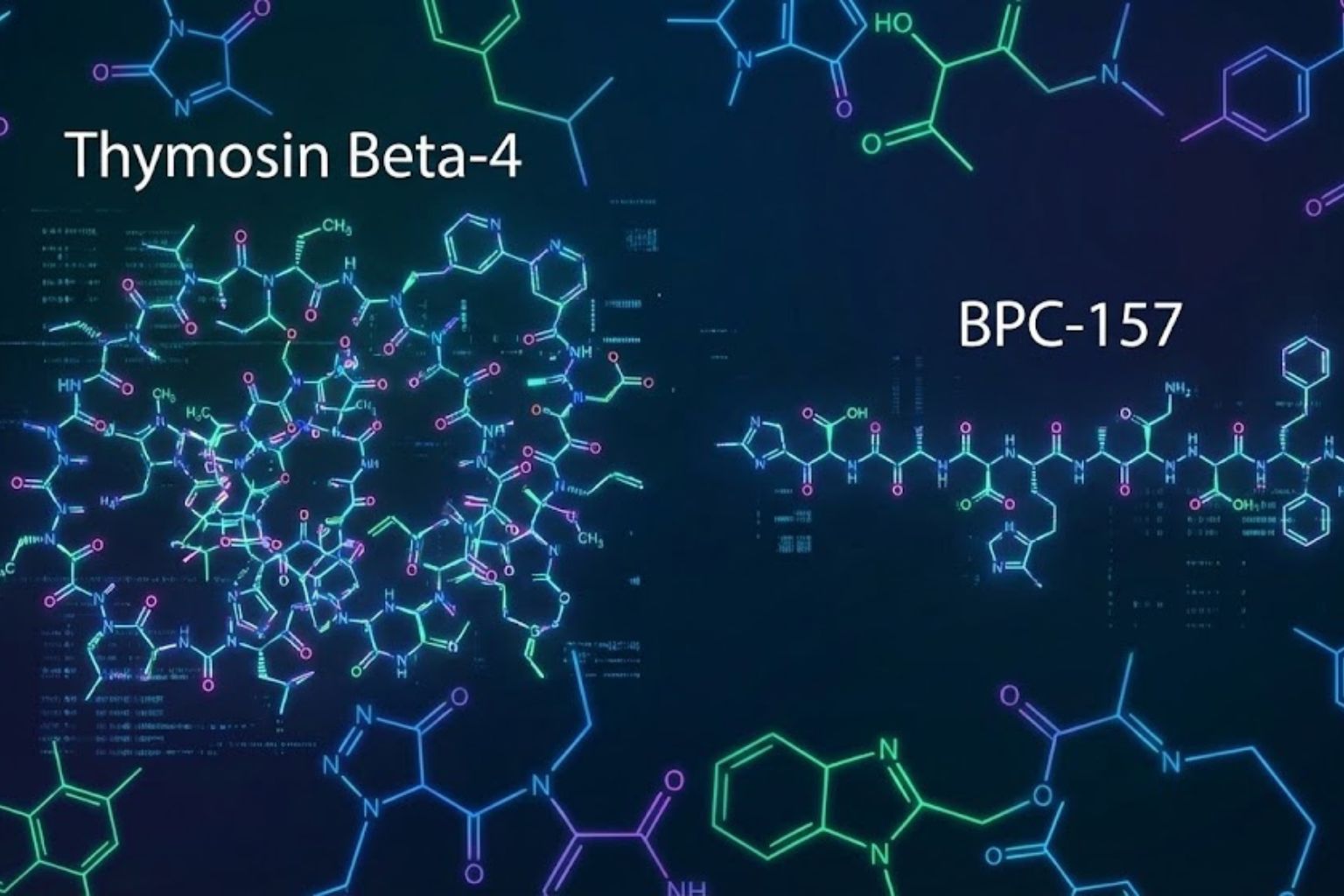
TB-500 is a synthetic version of the naturally occurring protein Thymosin Beta-4. Its primary mechanism of action is Actin Sequestration.
-
The Cytoskeletal Key: As discussed in previous sections, actin is the protein that forms the cell’s skeleton. TB-500 binds to G-actin (globular actin), preventing it from polymerizing into filaments until the exact moment it is needed.
-
Cell Migration: By managing this actin pool, TB-500 allows cells to disassemble and reassemble their structure rapidly. This fluidity enables cells to “crawl” or migrate to distant sites of injury.
-
The Analogy: Think of TB-500 as a logistics manager. It doesn’t build the wall itself; it ensures the trucks (cells) can drive through the mud to get to the construction site. It is about mobility and flexibility.
BPC-157 (Body Protection Compound): The Builder
BPC-157 is a peptide derived from a protective protein found in human gastric juice. Its mechanism is far more vascular and receptor-based.
-
The Nitric Oxide Pathway: BPC-157 significantly influences the Nitric Oxide (NO) system. NO is a vasodilator, meaning it widens blood vessels to increase flow.
-
Angiogenesis: BPC-157 is exceptionally potent at stimulating angiogenesis—the formation of new blood vessels (capillaries) from existing ones. It creates the “supply lines” that bring oxygen and nutrients to damaged tissue.
-
Growth Hormone Receptors: Research suggests BPC-157 upregulates growth hormone receptors on tendon fibroblasts, directly stimulating the cells to proliferate.
-
The Analogy: Think of BPC-157 as the mason and the plumber. It lays the bricks (tissue structure) and installs the pipes (blood vessels). It is about structure and supply.
3. Systemic vs. Local Effects: The Administration Debate
When evaluating TB-500 vs BPC-157, the site of administration is a major point of divergence in research protocols.
TB-500: The Systemic Traveler
TB-500 is generally considered to be fully systemic.
-
How it moves: Once injected subcutaneously (into the fat), it enters the bloodstream and circulates throughout the body. Because it mimics a naturally occurring protein that acts as a signal for repair, it effectively “hunts” for inflammation.
-
Implication: You do not need to inject TB-500 near the injury. An injection in the abdominal fat can effectively treat a shoulder injury. This makes it user-friendly for animal models where accessing specific injury sites might be difficult or painful.
BPC-157: The Local Preference
BPC-157 is the subject of much debate regarding local vs. systemic efficacy.
-
Systemic Effect: It does have a systemic effect. Oral administration (for gut issues) has been shown to help tendon healing, proving it travels.
-
Local Superiority: However, anecdotal evidence from researchers and some animal studies suggests that local injection (subcutaneously as close to the injury as possible) yields superior results for connective tissue. This is likely due to the paracrine (cell-to-cell) signaling nature of its angiogenic effects.
-
Implication: If treating a specific tendon tear (e.g., Achilles tendon), researchers often prefer BPC-157 injected directly into the tissue overlying the tendon, whereas TB-500 would be injected centrally.
4. Target Tissues: Choosing the Right Tool
While there is overlap, each peptide has a “home turf” where it outperforms the other.
TB-500 Domain: Muscle and Flexibility
-
Muscle Bellies: TB-500 shines in the repair of muscle fibers (myocytes). Its ability to activate satellite cells makes it the primary choice for muscle tears and strains.
-
Flexibility: Because it prevents the formation of rigid scar tissue (fibrosis) and keeps the cytoskeleton fluid, TB-500 is unique in its ability to maintain or restore flexibility in healed tissue. It is often used to prevent the “stiffening” associated with old injuries.
-
Cardiac Tissue: As noted in cardiac studies, TB-500 is the superior agent for heart tissue regeneration following ischemia.
BPC-157 Domain: Tendons, Ligaments, and Gut
-
-
The “Wolverine” of Tendons: BPC-157 is arguably the most effective compound known for tendon and ligament repair. These tissues are avascular (lack blood flow). By forcing new capillaries into these “white tissues,” BPC-157 dramatically speeds up healing that would otherwise take months.
-
The Gut Brain: Unique to BPC-157 is its interaction with the gastrointestinal tract. It heals ulcers, protects the liver from toxic insults (like alcohol or NSAIDs), and repairs the gut lining (leaky gut). TB-500 has little to no effect on the gut.
-
Bone: BPC-157 has also demonstrated efficacy in speeding up bone union in fractures, a specific utility where it outperforms TB-500.
-
5. The “Wolverine Stack”: Synergy in Action
Because they work via different pathways, the question for many researchers is not “TB-500 or BPC-157,” but “Why not both?” This combination is famously dubbed the “Wolverine Stack” in biohacking communities, referencing the Marvel character’s rapid healing factor.
The Theory of Synergy
-
Step 1 (BPC-157): Increases the supply of nutrients and oxygen by building new blood vessels (Angiogenesis) and upregulates growth receptors on the fibroblasts.
-
Step 2 (TB-500): Mobilizes the necessary cells to the site via actin sequestration and prevents the inflammation from becoming excessive (anti-fibrotic).
-
The Result: You have the materials (thanks to BPC) and the workers (thanks to TB-500) arriving at the site simultaneously.
This synergistic effect is currently a hot topic in animal model studies, showing faster wound closure rates and higher tensile strength in healed tissue than either peptide achieves alone.
6. Safety, Half-Life, and Dosing Protocols
The logistics of research often dictate the choice of peptide.
TB-500 Logistics
-
Half-Life: TB-500 has a complex pharmacokinetic profile. While the peptide itself may clear quickly, its biological effects (actin sequestration) are long-lasting.
-
Dosing Schedule: Research protocols often utilize a “loading phase” (e.g., higher doses twice a week for 4 weeks) followed by a “maintenance phase” (lower dose once a month). This makes it less demanding in terms of daily injections.
BPC-157 Logistics
-
Half-Life: BPC-157 has a very short half-life (estimated at 4 hours).
-
Dosing Schedule: To maintain active levels in the body, it typically requires daily or even twice-daily administration. For a researcher, this means more handling of the subject, more consumables (syringes), and higher labor intensity.
The debate of TB-500 vs BPC-157 is not about which peptide is “better” in a vacuum; it is about matching the mechanism to the pathology.
-
Choose BPC-157 if: The target is a tendon, ligament, bone fracture, or gastrointestinal issue. The injury is localized and avascular.
-
Choose TB-500 if: The target is muscle, cardiac tissue, or the injury is diffuse (systemic inflammation). The goal is to prevent stiffness and scarring.
-
Choose Both if: The injury is severe, involving multiple tissue types (e.g., a severe rotator cuff tear involving both muscle and tendon), and maximum recovery speed is the priority.
Together, these two peptides represent the forefront of non-surgical recovery research, offering a biological toolkit that allows the body to repair itself in ways previously thought impossible.