

Thymulin Lab Protocols
In the high-pressure environment of biomedical research, we often obsess over the variables we can see: the concentration of the drug, the duration of the incubation, the genotype of the mice. However, there is a “hidden variable” that frequently undermines months of hard work: the consistency of reagent handling.
For laboratories in the UK working with Thymulin (Facteur Thymique Sérique), a zinc-dependent thymic peptide, this consistency is paramount. Thymulin is not a stable chemical salt; it is a fragile biological complex. Its activity relies entirely on the preservation of its nine-amino-acid chain and its coordination with a Zinc ion. If one researcher leaves the pen peptide on the bench for an hour while answering emails, while another puts it back immediately, your data set is no longer a measure of Thymulin’s efficacy—it is a measure of your team’s inconsistency.
The solution to this variance is not just “being careful”; it is the implementation of rigid Thymulin laboratory protocols. Standard Operating Procedures (SOPs) transform “tribal knowledge” (what the senior postdoc knows) into institutional reliability. This guide is dedicated to helping Lab Managers and Principal Investigators establish, document, and enforce robust Thymulin laboratory protocols to ensure that every microgram of peptide behaves exactly as predicted.
Why Thymulin Demands Specific SOPs
Before drafting a protocol, the lab team must understand why they are following it. Generic peptide handling rules are a good start, but Thymulin laboratory protocols must account for specific biochemical vulnerabilities.
The Zinc-Dependence Factor
Unlike many other research peptides, Thymulin is biologically inactive without Zinc. The peptide (FTS) acts as a carrier, but the Zinc (Zn2+) is the effector.
-
The Risk: Zinc can dissociate from the peptide in acidic conditions or in the presence of chelating agents (like EDTA).
-
The Protocol Implication: Your SOPs must strictly forbid the use of buffers containing chelators during reconstitution or dilution. This is a nuance that generic “peptide storage” guides often miss.
The Cost of Drift
In immunological assays (e.g., T-cell rosette formation), the difference between a potent batch of Thymulin and a partially degraded one can be subtle. It might not kill the cells, but it might fail to induce the expected differentiation markers. This “false negative” can lead a lab down the wrong path for months. Strict Thymulin laboratory protocols act as an insurance policy against these false negatives.
Phase 1: Receipt and “The Golden Hour”
The most critical moment in a peptide’s life is its arrival at your facility. The transition from the courier’s dry ice box to your freezer is where many cold chains break.
The Receipt Protocol
Your Thymulin laboratory protocols should dictate the following steps upon package arrival:
-
Immediate Notification: The receptionist or mailroom staff must be trained to recognize “Temperature Sensitive” labeling and alert the lab manager immediately.
-
Inspection: Before accepting the shipment into inventory, inspect the coolant.
-
Green Flag: Dry ice is still present, or gel packs are frozen hard.
-
Red Flag: Ice packs are slushy or warm. If this occurs, quarantine the shipment and contact the supplier.
-
-
The “Golden Hour”: The peptide should be logged and moved to long-term storage within 60 minutes of arrival. Do not leave the box sitting on a desk while you go to lunch.
Documentation Requirements
Create a “Reagent Receipt Log” specifically for peptides. Columns should include:
-
Date & Time of Arrival.
-
Lot Number & Batch Number.
-
Condition of Coolant (Frozen/Thawed).
-
Name of Receiver.
Phase 2: Storage Hardware and Environment
You cannot follow good Thymulin laboratory protocols with bad hardware. The equipment you use to store the peptide is as important as the peptide itself.
Freezer Specifications
-
The “No Frost-Free” Rule: This is the cardinal rule. Domestic freezers cycle their temperature (warming up slightly to melt ice build-up). This thermal cycling destroys peptide bonds over time. Your SOP must mandate the use of manual defrost freezers or dedicated laboratory-grade units.
-
Temperature Ranges:
-
Lyophilised (Powder): Store at -20°C. For archival storage >1 year, -80°C is preferred.
-
Reconstituted (Liquid): Store at +4°C (Standard Fridge). Never refreeze unless specialized flash-freezing protocols are used.
-
Organization and Mapping
Searching for a tiny pen peptide with the freezer door open causes a massive temperature spike for all other samples inside.
-
Map It: Use a freezer map (Excel sheet or software). Know exactly which box, rack, and position (e.g., Shelf 2, Rack B, Box 4, Position A1) the Thymulin is in before you open the door.
-
Secondary Containment: Store pen peptides inside a secondary box (plastic or cardboard). This prevents the pen peptide from falling into the abyss behind the shelf and adds a small layer of thermal insulation against door-opening spikes.
Phase 3: The Reconstitution SOP
This is the step where human error is most likely to occur. Transforming powder into liquid makes the peptide reactive and unstable. Your Thymulin laboratory protocols for reconstitution must be rigid.
Preparation
-
Equilibration: Allow the lyophilised pen peptide to stand at room temperature for 15–20 minutes before opening. Opening a cold pen peptide in humid UK air causes condensation to form inside the pen peptide, introducing moisture that degrades the unused powder.
-
Sterility: Wipe the rubber septum with 70% ethanol. Allow it to dry.
Solvent Selection
-
Short Term (<24 hours): Sterile Phosphate Buffered Saline (PBS) or distilled water (pH 7.0-7.4) is acceptable.
-
Medium Term (Days/Weeks): Bacteriostatic Water (containing 0.9% Benzyl Alcohol) is mandatory to prevent microbial growth.
-
Zinc Considerations: Ensure the buffer does not contain EDTA or citrate, as these will strip the Zinc from the Thymulin.
Mixing Technique
The SOP should explicitly state: “DO NOT VORTEX.” Vortexing creates high shear forces and introduces air bubbles (oxidation). The protocol should instruct users to:
-
Inject the solvent slowly down the side of the pen peptide.
-
Gently swirl or rotate the pen peptide.
-
Allow it to sit for a few minutes until fully dissolved.
Phase 4: The Aliquoting Strategy
Repeated freeze-thaw cycles are the enemy. Every time you freeze and thaw water, ice crystals form and expand, potentially shearing the peptide.
The “Single-Use” Rule
Your Thymulin laboratory protocols should mandate immediate aliquoting after reconstitution.
-
Calculate Usage: If your typical assay requires 50µl of Thymulin, do not store it in 1ml volumes.
-
Dispense: Divide the master solution into small, sterile microcentrifuge tubes (e.g., 50-100µl per tube).
-
Labeling: Each aliquot tube must be labeled with the Peptide Name, Concentration, and Date.
-
Freeze Once: Place these aliquots in the freezer.
-
Thaw Once: When needed, take one tube, thaw it, use it, and discard the remainder. Never refreeze a thawed aliquot.
Phase 5: Inventory Management & Tracking
A well-run lab knows exactly what it has. Poor inventory management leads to using expired reagents or running out of stock mid-experiment.
FIFO (First-In, First-Out)
Implement a FIFO system in your Thymulin laboratory protocols.
-
New shipments go to the back of the freezer shelf.
-
Older batches are moved to the front.
-
Mark boxes with bright stickers indicating “USE THIS BATCH FIRST.”
Digital Tracking
Move away from paper logs if possible. Use a Laboratory Information Management System (LIMS) or a shared cloud spreadsheet.
-
Fields to Track: Lot Number, Date Reconstituted, Number of Aliquots Remaining, Location, Expiry Date.
-
Low Stock Alerts: Set a rule (e.g., “When only 5 aliquots remain, order more”).
Phase 6: Monitoring and Quality Control
Trust, but verify. How do you know your Thymulin laboratory protocols are working?
Data Loggers
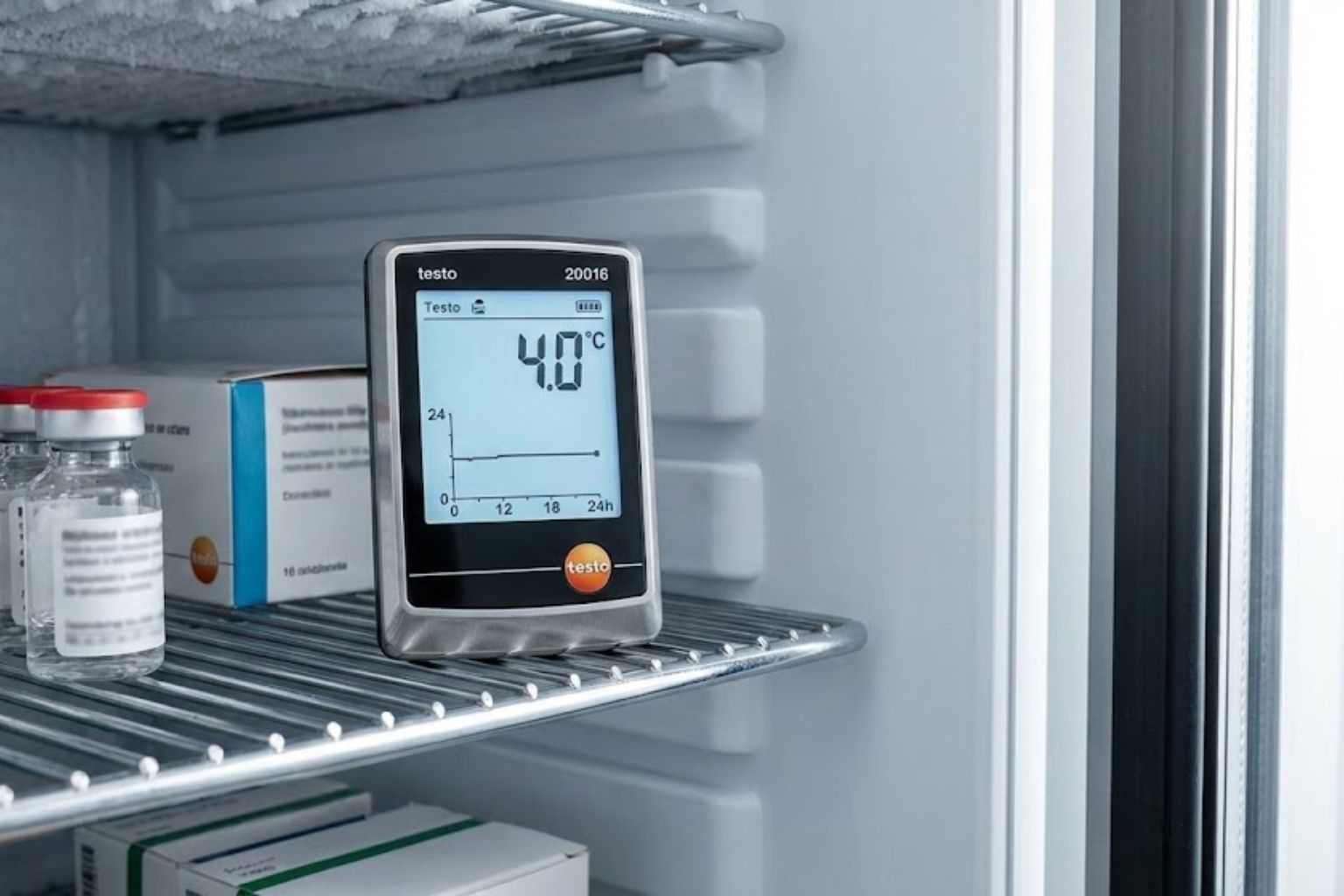
Every fridge and freezer storing Thymulin must have independent temperature monitoring.
-
Review Cycle: Designate a team member to download and review the temperature graphs monthly.
-
Alarm Limits: Set alarms at critical thresholds (e.g., if the -20°C freezer rises to -10°C).
Visual Inspection Criteria
Train all staff to visually inspect Thymulin before use. The SOP should include a “Discard if…” section:
-
Discard if the solution is cloudy.
-
Discard if particles are visible.
-
Discard if the color has changed (e.g., yellowing).
-
Discard if the pen peptide stopper looks compromised or corroded.
Bioactivity Verification
For critical long-term projects, perform a “bridging study” when switching lots. Run a small control assay comparing the old batch vs. the new batch to ensure the Thymulin laboratory protocols have preserved activity across shipments.
Phase 7: Handling at the Bench
The journey from the freezer to the pipette tip is dangerous.
Keep it Cool
-
The Ice Bucket Rule: Whenever a researcher retrieves an aliquot, it must immediately go into an ice bucket or a cool block. Carrying a tube in a warm hand across the lab is a violation of Thymulin laboratory protocols.
-
UV Exposure: Do not leave clear tubes sitting under the strong UV light of a biosafety cabinet for extended periods. If the workflow requires long hood time, cover the tube with foil.
Phase 8: Disposal and Cleanup
Proper disposal is part of the lifecycle.
Waste Classification
-
Unused Peptide: Generally treated as chemical waste or biological waste depending on your institution’s specific hazardous materials classification. While Thymulin is not infectious, standard lab safety dictates treating it as a biological reagent.
-
Sharps: Needles used for reconstitution must go immediately into sharps bins.
Staff Training and Compliance
The best Thymulin laboratory protocols are useless if no one reads them.
Onboarding
Make the Peptide SOP part of the new hire onboarding packet. A new PhD student should not be allowed to touch the Thymulin stocks until they have read the SOP and signed a training log.
Refresher Courses
Conduct a brief “Lab Hygiene” meeting once a year to remind staff about the importance of aliquoting, the dangers of frost-free freezers, and the specific Zinc requirements of Thymulin.
Common Pitfalls in Protocol Execution
Even with SOPs, humans make mistakes. Here are the most common violations of Thymulin laboratory protocols to watch out for:
-
“I’ll just label it later”: The researcher plans to label the tube after filling it, gets distracted, and leaves a mystery tube in the rack. Rule: Label before filling.
-
Overfilling Boxes: Stuffing the freezer so full that air cannot circulate, causing warm spots.
-
Using the Door Shelf: Storing critical peptides in the door of the fridge. This is the warmest and most unstable part of the unit.
-
Ignoring the pH: Reconstituting in water that hasn’t been pH-checked, leading to Zinc dissociation.
Protocol as Culture
Establishing robust Thymulin laboratory protocols is about more than just preserving a peptide; it is about establishing a culture of excellence and reproducibility in your laboratory. When every member of the team adheres to the same high standards of storage, reconstitution, and handling, the noise in your data decreases, and the confidence in your conclusions increases.
By treating Thymulin with the specific care it requires—respecting its zinc dependence, its thermal fragility, and its hatred of freeze-thaw cycles—you optimize your research budget and time. Make these SOPs a living document in your lab, and ensure that Thymulin laboratory protocols are followed not just as a rule, but as a scientific necessity.
Frequently Asked Questions (Lab Protocol Edition)
Q: Can we store Thymulin in liquid nitrogen? A: Yes, for very long-term storage of aliquots, the vapor phase of liquid nitrogen is excellent. However, ensure you use cryopen peptides with silicone O-rings to prevent nitrogen from seeping inside the tube, which can cause the tube to explode upon thawing.
Q: How do I write an SOP if I don’t have a template? A: Start simple. Use the headings in this blog (Receipt, Storage, Reconstitution, Usage). describe the “Who, What, Where, When, and How” for each step. Keep it concise so people actually read it.
Q: We had a power outage over the weekend. Is our Thymulin safe? A: Check your data loggers. If the temperature stayed below -10°C (for frozen) or below 8°C (for refrigerated), it is likely fine. If it reached room temperature for 48 hours, it is safer to discard and re-order.
Q: Why does our protocol forbid “frost-free” freezers? A: Frost-free freezers heat their coils to melt ice. This causes the internal temperature to fluctuate significantly (sometimes swinging from -20°C to -5°C and back). These constant thermal expansions and contractions degrade delicate peptide structures.
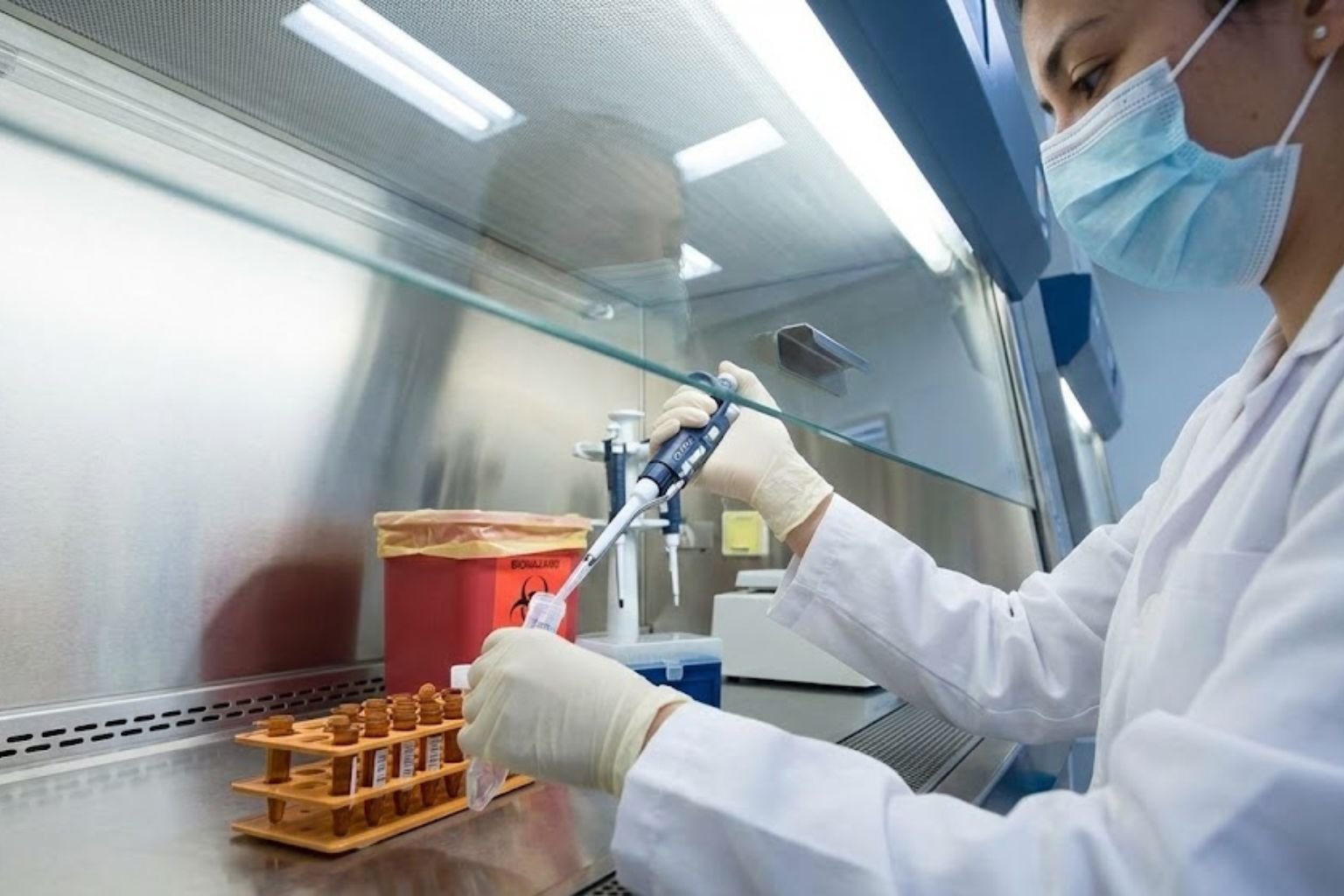
Q: Is it necessary to wear a mask when handling Thymulin? A: Standard PPE (lab coat, gloves, eye protection) is required. A mask is generally used to protect the sample from contamination (spittle/breath) rather than protecting the user from the peptide, unless you are handling large quantities of powder where inhalation is a risk.