

When handling research-grade peptides, proper storage isn’t just a recommendation—it’s essential for maintaining molecular integrity and research validity. Does tirzepatide need refrigeration? This question sits at the heart of peptide stability protocols, and the answer directly impacts the quality and reliability of your research outcomes. Whether you’re working with tirzepatide for metabolic studies or other research applications, understanding storage requirements ensures your investment in high-purity compounds delivers consistent, reproducible results.
Tirzepatide, a dual glucose-dependent insulinotropic polypeptide (GIP) and glucagon-like peptide-1 (GLP-1) receptor agonist, has gained significant attention in research settings since 2025. As laboratories across the UK and internationally incorporate this peptide into their research protocols, questions about proper handling and storage have become increasingly critical. The molecular structure of tirzepatide makes it particularly sensitive to environmental conditions, and improper storage can lead to degradation, aggregation, or complete loss of structural integrity[1].
This comprehensive guide examines the refrigeration requirements for tirzepatide in both lyophilized (freeze-dried) and reconstituted forms, explores the science behind peptide stability, and provides evidence-based protocols for maintaining research-grade quality throughout the storage lifecycle.
Key Takeaways
- Unopened lyophilized tirzepatide should be stored at 2-8°C (refrigerated) for optimal long-term stability, though brief periods at room temperature during shipping are generally tolerable
- Reconstituted tirzepatide requires continuous refrigeration at 2-8°C and should be used within the timeframe specified by stability data, typically 28 days or less
- Never freeze tirzepatide in either form—freezing causes irreversible structural damage to the peptide chain
- Temperature excursions beyond recommended ranges can significantly reduce peptide stability and research reliability
- Proper storage protocols are essential for maintaining the high purity standards expected in research-grade peptides from suppliers like PEPTIDE PRO
Understanding Tirzepatide: Structure and Stability Considerations
The Molecular Composition of Tirzepatide
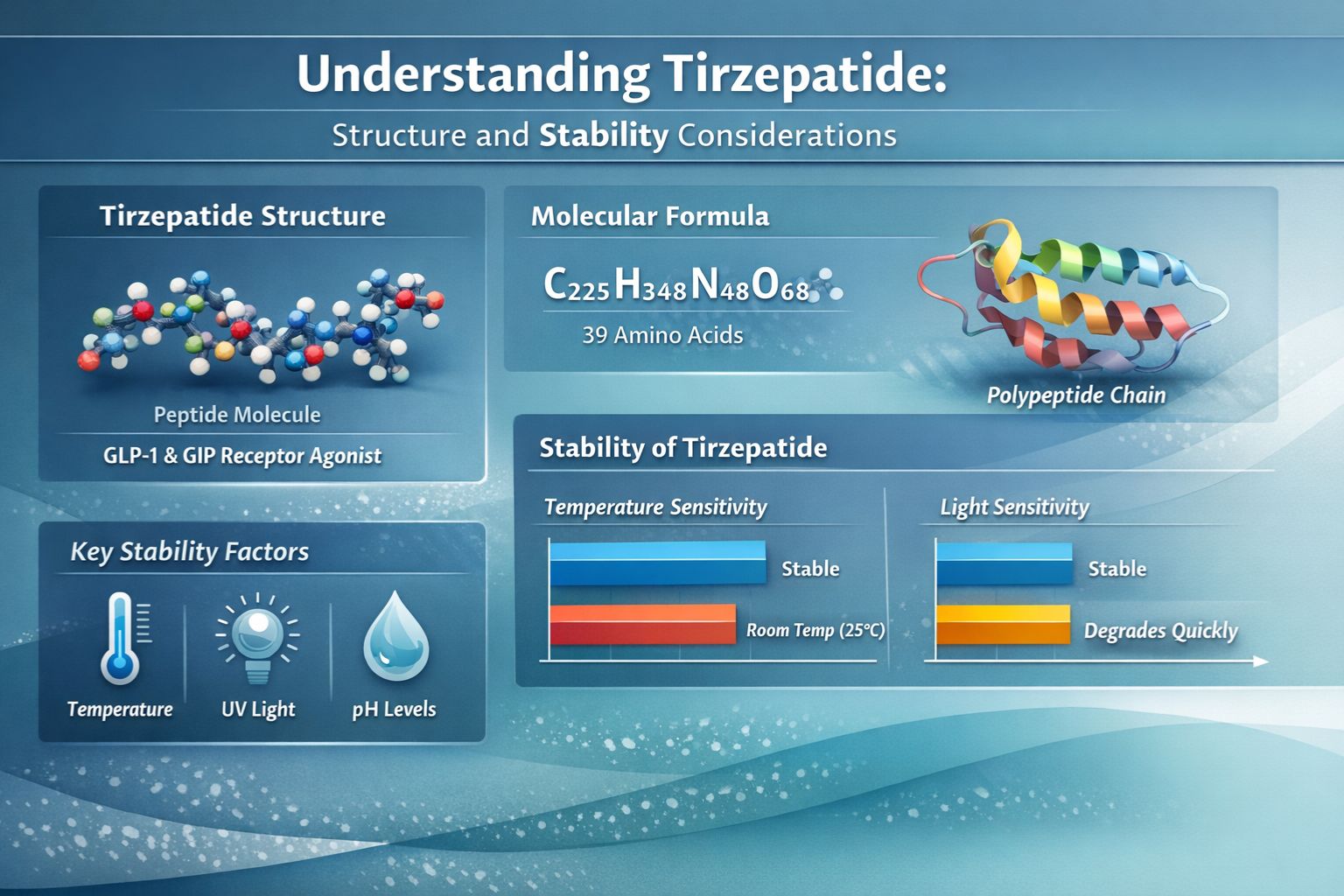
Tirzepatide is a synthetic peptide consisting of 39 amino acids with a molecular weight of approximately 4,813 Da[2]. Its structure includes specific modifications that enhance its pharmacological properties but also introduce storage considerations. The peptide contains:
- C20 fatty diacid moiety attached to the lysine residue at position 20
- Two non-coded amino acid residues (Aib at positions 2 and 13)
- Specific sequence modifications that confer dual receptor agonism
These structural features make tirzepatide susceptible to several degradation pathways:
- Oxidation of methionine and other susceptible residues
- Deamidation of asparagine and glutamine residues
- Aggregation through hydrophobic interactions
- Hydrolysis of peptide bonds under certain conditions
- Conformational changes induced by temperature fluctuations
Why Peptide Stability Matters in Research
When working with research-grade peptides, stability directly correlates with:
- Reproducibility of experimental results
- Accuracy of dose-response relationships
- Validity of mechanistic studies
- Cost-effectiveness of research programs
- Publication quality and peer review acceptance
Degraded peptides may exhibit altered binding affinities, reduced biological activity, or unexpected off-target effects that compromise research integrity[3]. This makes proper storage not merely a best practice but a fundamental requirement for rigorous scientific investigation.
Does Tirzepatide Need Refrigeration? Storage Requirements by Form
Lyophilized (Freeze-Dried) Tirzepatide Storage
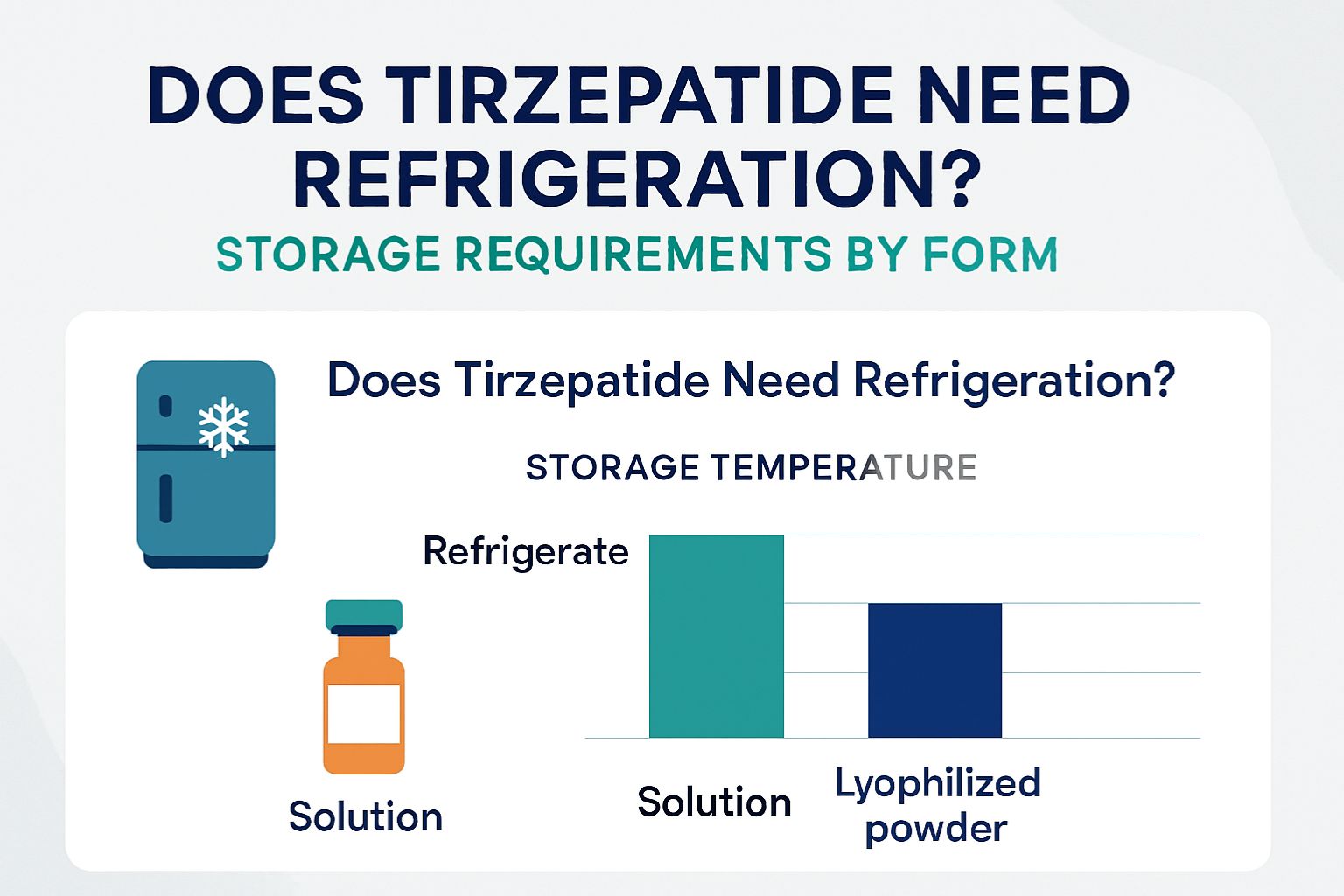
Yes, lyophilized tirzepatide requires refrigeration for optimal stability. While the freeze-drying process removes water to enhance stability, refrigeration remains the gold standard for long-term storage.
Recommended Storage Conditions for Unopened Vials
| Storage Parameter | Specification | Duration |
|---|---|---|
| Temperature | 2-8°C (36-46°F) | Until expiration date |
| Light exposure | Protected from light | Continuous |
| Humidity | Low humidity environment | Continuous |
| Container integrity | Sealed, unopened pen peptide | Until reconstitution |
Storage at 2-8°C provides the following advantages:
✅ Minimizes oxidation reactions that can degrade sensitive amino acid residues
✅ Reduces molecular motion that could promote aggregation
✅ Extends shelf life significantly compared to room temperature storage
✅ Maintains manufacturer specifications for purity and potency
✅ Ensures compliance with research protocol standards
Short-Term Room Temperature Exposure
Research indicates that lyophilized tirzepatide can tolerate brief periods at room temperature (up to 25°C) without significant degradation:
- During shipping: 3-5 days in appropriate packaging
- During handling: Minutes to hours for preparation procedures
- Temporary storage: Up to 24-48 hours in controlled laboratory conditions
However, refrigeration should resume as soon as practical to maintain optimal stability. PEPTIDE PRO ships all peptides in temperature-appropriate packaging to minimize temperature excursions during transit.
Reconstituted Tirzepatide Storage
Reconstituted tirzepatide absolutely requires continuous refrigeration. Once mixed with bacteriostatic water or other reconstitution solutions, the peptide becomes significantly more vulnerable to degradation.
Critical Storage Requirements After Reconstitution
🔬 Temperature: Strict 2-8°C (refrigerated) at all times
🔬 Duration: Use within 28 days (or as specified by stability data)
🔬 Container: Sterile, sealed pen peptide with minimal headspace
🔬 Light: Protected from direct light exposure
🔬 Handling: Minimize temperature fluctuations and contamination risk
Why Reconstituted Peptides Are More Vulnerable
When tirzepatide is reconstituted, several factors increase degradation risk:
- Aqueous environment facilitates hydrolysis and deamidation reactions
- Increased molecular mobility in solution promotes aggregation
- Potential pH fluctuations can destabilize peptide structure
- Microbial growth risk if bacteriostatic water is not used
- Oxidation acceleration in the presence of dissolved oxygen
Never leave reconstituted tirzepatide at room temperature for extended periods. Even 2-4 hours at 25°C can initiate degradation processes that compromise research quality[4].
What Happens If You Don’t Refrigerate Tirzepatide?
Failure to maintain proper refrigeration leads to predictable degradation patterns:
Within 24 hours at room temperature:
- Initial oxidation of susceptible residues begins
- Slight changes in molecular conformation may occur
- Minimal but measurable loss of activity (typically <5%)
Within 48-72 hours at room temperature:
- Significant oxidation and deamidation
- Aggregation becomes detectable
- Activity loss of 10-25% possible
- Visible changes may appear (cloudiness, precipitation)
Beyond 1 week at room temperature:
- Extensive degradation across multiple pathways
- Activity loss exceeding 50%
- Aggregation and precipitation likely
- Peptide may be completely unusable for research
Temperature cycling (repeated warming and cooling) can be even more damaging than consistent room temperature storage, as it promotes aggregation through repeated conformational changes[5].
The Science Behind Peptide Refrigeration: Temperature and Molecular Stability
Thermodynamic Principles of Peptide Degradation
The relationship between temperature and peptide stability follows the Arrhenius equation, which describes how reaction rates increase with temperature:
k = A × e^(-Ea/RT)
Where:
- k = rate constant for degradation
- A = pre-exponential factor
- Ea = activation energy
- R = gas constant
- T = absolute temperature
For most peptide degradation reactions, the rate approximately doubles for every 10°C increase in temperature[6]. This means:
- Storage at 25°C (room temperature) results in degradation rates 4-8 times faster than at 5°C (refrigerated)
- Storage at 37°C (body temperature) accelerates degradation 16-32 times compared to refrigeration
Specific Degradation Pathways Affected by Temperature
Oxidation
Methionine oxidation is one of the most common degradation pathways for peptides containing this amino acid. Tirzepatide’s methionine residues are particularly vulnerable:
- At 2-8°C: Oxidation proceeds slowly; shelf life measured in months to years
- At 25°C: Oxidation accelerates significantly; shelf life reduced to weeks
- At 37°C: Rapid oxidation; degradation within days
Deamidation
Asparagine and glutamine deamidation converts these residues to aspartic acid and glutamic acid, respectively, altering the peptide’s charge and potentially its activity:
- Temperature-dependent reaction with half-lives ranging from days (at 37°C) to years (at 2-8°C)
- pH-dependent, with neutral pH showing intermediate rates
- Sequence-dependent, with certain neighboring residues accelerating the reaction
Aggregation
Protein aggregation occurs when peptide molecules associate through hydrophobic interactions, hydrogen bonding, or disulfide formation:
- Dramatically accelerated at higher temperatures
- Can be irreversible, forming insoluble precipitates
- Particularly problematic for peptides with hydrophobic modifications like tirzepatide’s fatty acid chain
Why Freezing Is Prohibited
While freezing might seem like a logical extension of refrigeration for enhanced stability, freezing tirzepatide is strongly contraindicated for several reasons:
❌ Ice crystal formation can physically disrupt peptide structure
❌ Freeze-concentration effects create localized areas of extreme pH or salt concentration
❌ Protein unfolding at the ice-water interface
❌ Irreversible aggregation upon thawing
❌ Loss of biological activity even if the peptide appears intact
Studies on similar peptides have demonstrated that a single freeze-thaw cycle can reduce activity by 20-40%, with multiple cycles causing near-complete loss of function[7].
Practical Storage Protocols: Best Practices for Research Settings
Setting Up Proper Refrigeration Infrastructure
Selecting Appropriate Refrigeration Equipment
Not all refrigerators are suitable for peptide storage. Research-grade storage requires:
Dedicated pharmaceutical/laboratory refrigerator with:
- Precise temperature control (±1°C accuracy)
- Digital temperature display and logging
- Alarm systems for temperature excursions
- Uniform temperature distribution (no hot/cold spots)
- Minimal temperature fluctuation during door opening
Avoid using:
- Domestic kitchen refrigerators (inconsistent temperatures)
- Frost-free refrigerators (cycling temperatures)
- Refrigerators with frequent door opening (temperature fluctuations)
- Units without temperature monitoring
Temperature Monitoring and Documentation
Implement a temperature monitoring protocol:
- Daily temperature checks with recorded log
- Min/max thermometers to detect excursions
- Continuous data loggers for critical applications
- Alarm systems for out-of-range conditions
- Regular calibration of monitoring equipment
This documentation becomes part of your research records and supports data integrity during publication and peer review.
Organizing Peptide Storage
Storage Location Within Refrigerator
Optimal placement:
- Middle shelves: Most stable temperature zone
- Back of refrigerator: Away from door opening effects
- Dedicated storage boxes: Organized, protected from light
- Clear labeling: Product name, concentration, reconstitution date
Avoid:
- Door shelves (temperature fluctuations)
- Bottom shelves (potential condensation)
- Near refrigerator vents (temperature extremes)
- Overcrowded areas (poor air circulation)
Inventory Management
Maintain a peptide inventory system:
| Information | Purpose |
|---|---|
| Product name | Identification |
| Lot/batch number | Traceability |
| Receipt date | Age tracking |
| Expiration date | Quality assurance |
| Reconstitution date | Stability monitoring |
| Storage location | Quick retrieval |
This system ensures you use peptides within their stability window and maintain proper rotation (first-in, first-out).
Reconstitution Protocols for Optimal Stability
Preparation Environment
Reconstitute tirzepatide in a clean, controlled environment:
- Laminar flow hood or clean bench (preferred)
- Sanitized workspace with 70% isopropanol
- Sterile technique throughout
- Minimal exposure to room temperature
Reconstitution Solution Selection
Bacteriostatic water is the standard reconstitution solution for research peptides:
- Contains 0.9% benzyl alcohol as preservative
- Inhibits bacterial growth for up to 28 days
- Compatible with most peptide sequences
- Maintains pH in acceptable range
Alternative solutions (consult specific protocols):
- Sterile water (use within 24-48 hours)
- Buffered solutions (for pH-sensitive peptides)
- Specific diluents per manufacturer recommendations
Reconstitution Technique
Follow this step-by-step protocol:
- Remove pen peptide from refrigerator, allow to reach room temperature (10-15 minutes)
- Sanitize rubber stopper with alcohol swab
- Inject bacteriostatic water slowly down the side of the pen peptide (never directly onto powder)
- Swirl gently to dissolve (do not shake vigorously)
- Inspect for complete dissolution and clarity
- Label with reconstitution date and concentration
- Return to refrigerator immediately (2-8°C)
Handling During Research Use
Minimizing Temperature Excursions
When removing peptides from refrigeration for experimental use:
⏱ Plan ahead: Remove only what you need for immediate use
⏱ Work quickly: Minimize time at room temperature (ideally <30 minutes)
⏱ Use ice: Keep pen peptides on ice during extended procedures
⏱ Return promptly: Refrigerate immediately after use
⏱ Avoid repeated cycles: Aliquot if frequent use is anticipated
Aliquoting for Frequent Use
If your research protocol requires frequent access to tirzepatide:
- Reconstitute the full pen peptide as normal
- Divide into smaller aliquots (e.g., single-use or weekly portions)
- Use sterile, sealed containers for each aliquot
- Label clearly with date and concentration
- Freeze aliquots at -20°C or -80°C (only if validated for your specific application)
- Thaw once and use completely (never refreeze)
Note: While freezing reconstituted peptides is generally not recommended, some research protocols have validated specific freezing conditions for certain peptides. Always consult stability data and published protocols before freezing any reconstituted peptide.
Storage During Transport and Shipping
Receiving Peptide Shipments
When your PEPTIDE PRO order arrives:
Immediate actions:
- ✅ Inspect packaging for damage or temperature indicator activation
- ✅ Check contents against packing list
- ✅ Verify product identity and lot numbers
- ✅ Transfer to refrigerator within 1-2 hours of receipt
- ✅ Document receipt date and condition
Temperature indicators on packaging provide evidence of temperature excursions during transit. If indicators show exposure to inappropriate temperatures, contact the supplier immediately.
Short-Term Transport Between Facilities
When transporting tirzepatide between laboratories or facilities:
Use validated cold chain methods:
- Insulated cooler bags or boxes
- Ice packs (gel packs, not ice that can freeze)
- Temperature monitoring devices
- Minimize transport time (<2-4 hours preferred)
- Avoid direct contact between peptide pen peptides and ice packs
Document transport conditions:
- Departure time and temperature
- Arrival time and temperature
- Any delays or issues
- Transfer to refrigeration confirmation
International Shipping Considerations
For researchers ordering from PEPTIDE PRO internationally:
Shipping protocols include:
- Temperature-controlled packaging rated for transit duration
- Express shipping options to minimize time in transit
- Customs documentation for peptide research materials
- Temperature monitoring throughout journey
- Insurance and tracking for high-value shipments
Upon international receipt:
- Clear customs promptly to minimize delays
- Inspect immediately upon delivery
- Refrigerate within recommended timeframe
- Contact supplier if any concerns about product integrity
Troubleshooting Storage Issues
Identifying Degraded Tirzepatide
Visual inspection can reveal obvious degradation:
🔍 Clear solution: Normal appearance for reconstituted tirzepatide
🔍 Slight opalescence: May be acceptable; consult supplier
🔍 Cloudiness: Possible aggregation; likely degraded
🔍 Visible particles: Aggregation or precipitation; do not use
🔍 Color change: Oxidation or contamination; do not use
For lyophilized powder:
- Should appear as white to off-white cake or powder
- Discoloration (yellowing, browning) indicates degradation
- Cake collapse or unusual appearance may indicate moisture exposure
What to Do If Refrigeration Fails
Equipment failure scenarios:
Immediate response (within 2 hours of failure):
- Transfer peptides to backup refrigeration immediately
- Document time and temperature of exposure
- Assess peptide condition visually
- Consider peptide salvageable if exposure was brief (<2 hours at <25°C)
Extended failure (>2 hours):
- Document full timeline and temperature exposure
- Segregate potentially compromised peptides
- Consider peptides compromised if exposure exceeded 4 hours at room temperature
- Consult with research supervisor about continued use
- Consider analytical testing (HPLC, mass spectrometry) to confirm integrity
Prevention strategies:
- Backup refrigeration unit available
- Temperature alarm systems with remote notification
- Regular equipment maintenance and calibration
- Emergency response protocols documented
- Redundant storage for critical materials
Assessing Peptide Viability After Temperature Excursion
Decision framework:
| Exposure Condition | Lyophilized Form | Reconstituted Form | Recommendation |
|---|---|---|---|
| <2 hours at 25°C | Likely acceptable | Likely acceptable | Visual inspection, proceed with caution |
| 2-4 hours at 25°C | Probably acceptable | Questionable | Consider analytical testing |
| 4-24 hours at 25°C | Questionable | Likely compromised | Replace if possible |
| >24 hours at 25°C | Likely compromised | Compromised | Replace |
| Any freezing | Compromised | Compromised | Replace |
| >30°C any duration | Questionable | Likely compromised | Replace |
When in doubt, replacing compromised peptides is the most conservative approach to ensure research integrity.
Regulatory and Quality Considerations
Research Use Only Designation
All peptides from PEPTIDE PRO are clearly labeled “For Research Use Only” and are not intended for human or animal consumption. This designation carries specific implications:
Storage responsibilities:
- Researchers must maintain appropriate storage conditions
- Documentation of storage conditions may be required for publication
- Institutional review boards may require storage protocols
- Grant compliance may mandate specific storage standards
Quality assurance:
- Certificates of Analysis (COAs) specify storage conditions
- Deviation from recommended storage may void quality guarantees
- Research integrity depends on adherence to storage protocols
Documentation for Research Compliance
Maintain comprehensive records:
📋 Peptide receipt logs: Date, supplier, lot number, condition upon receipt
📋 Storage logs: Daily temperature readings, location, responsible personnel
📋 Reconstitution records: Date, solution used, concentration, expiration
📋 Usage logs: Date accessed, quantity used, purpose, personnel
📋 Incident reports: Any temperature excursions, equipment failures, or concerns
This documentation supports:
- Good Laboratory Practice (GLP) compliance
- Publication data integrity requirements
- Institutional research oversight
- Grant reporting requirements
- Troubleshooting experimental issues
Certificate of Analysis (COA) Specifications
Each peptide shipment from reputable suppliers includes a Certificate of Analysis documenting:
- Peptide identity confirmation (mass spectrometry)
- Purity level (HPLC analysis, typically ≥98%)
- Peptide content (quantification)
- Storage recommendations
- Expiration or retest date
- Lot/batch traceability
Storage conditions on COA represent the validated conditions under which the stated purity and quality are maintained. Deviation from these conditions may compromise the guarantees provided in the COA.
Comparing Tirzepatide Storage to Other Research Peptides
Storage Requirements Across Common Research Peptides
Different peptides have varying stability profiles and storage requirements:
| Peptide | Lyophilized Storage | Reconstituted Storage | Freezing Tolerance |
|---|---|---|---|
| Tirzepatide | 2-8°C preferred | 2-8°C required | Not recommended |
| Semaglutide | 2-8°C preferred | 2-8°C required | Not recommended |
| BPC-157 | 2-8°C or -20°C | 2-8°C required | Some protocols allow |
| TB-500 | 2-8°C or -20°C | 2-8°C required | Some protocols allow |
| CJC-1295 | 2-8°C preferred | 2-8°C required | Not recommended |
| Ipamorelin | 2-8°C or -20°C | 2-8°C required | Some protocols allow |
General principle: When in doubt, refrigeration at 2-8°C is the safest approach for virtually all research peptides, both lyophilized and reconstituted.
Why Some Peptides Are More Stable Than Others
Factors affecting peptide stability:
- Sequence composition: Peptides with fewer oxidation-prone residues (methionine, cysteine, tryptophan) tend to be more stable
- Length: Shorter peptides generally show better stability than longer sequences
- Modifications: Chemical modifications (acetylation, PEGylation, fatty acid conjugation) can enhance or reduce stability
- Hydrophobicity: Highly hydrophobic peptides are more prone to aggregation
- Structural complexity: Peptides with disulfide bonds or complex folding are more fragile
Tirzepatide’s 39-amino acid sequence with fatty acid modification places it in the category of peptides requiring careful storage management.
Economic Considerations: Protecting Your Research Investment
Cost of Peptide Degradation
Research-grade peptides represent a significant investment:
Direct costs of improper storage:
- Replacement cost of degraded peptides (£100-£1,000+ per pen peptide)
- Repeated experiments with compromised materials
- Additional quality control testing
- Expedited shipping for replacement materials
Indirect costs:
- Delayed research timelines
- Wasted researcher time and effort
- Compromised data requiring exclusion from publications
- Potential impact on grant deliverables and renewals
- Reduced confidence in experimental results
Cost-Benefit of Proper Storage Infrastructure
Investment in proper storage provides excellent return:
Initial investment:
- Pharmaceutical-grade refrigerator: £500-£2,000
- Temperature monitoring system: £100-£500
- Backup power/alarm system: £200-£1,000
- Total: £800-£3,500
Annual operating costs:
- Electricity: £50-£150
- Maintenance/calibration: £100-£300
- Temperature logs/documentation: £50-£100
- Total: £200-£550/year
Value protected:
- Typical laboratory peptide inventory: £5,000-£50,000+
- Research time and productivity: Incalculable
- Publication quality and impact: Incalculable
The investment in proper storage infrastructure typically pays for itself by preventing the loss of a single high-value peptide pen peptide or compromised experiment.
Maximizing Peptide Lifespan
Strategies to optimize peptide value:
💰 Order appropriate quantities: Balance bulk discounts against stability limitations
💰 Aliquot upon receipt: Minimize freeze-thaw cycles and contamination risk
💰 Maintain strict protocols: Prevent degradation through consistent practices
💰 Monitor expiration dates: Use oldest inventory first (FIFO)
💰 Document everything: Enable troubleshooting and quality assurance
💰 Choose reliable suppliers: PEPTIDE PRO’s quality and handling protect your investment from the start
Frequently Asked Questions About Tirzepatide Storage
Can I store tirzepatide at room temperature?
Lyophilized tirzepatide can tolerate brief periods at room temperature (up to 24-48 hours) but should be refrigerated at 2-8°C for optimal long-term stability. Reconstituted tirzepatide should never be stored at room temperature for extended periods; refrigeration at 2-8°C is required.
How long does tirzepatide last in the refrigerator?
Lyophilized tirzepatide stored properly at 2-8°C typically remains stable until the expiration date printed on the pen peptide (often 2-3 years from manufacture). Reconstituted tirzepatide should be used within 28 days when stored at 2-8°C, though some protocols specify shorter timeframes.
What happens if tirzepatide freezes?
Freezing tirzepatide can cause irreversible damage to the peptide structure through ice crystal formation, freeze-concentration effects, and aggregation. Frozen tirzepatide should be considered compromised and replaced.
Can I travel with tirzepatide?
Yes, with proper precautions. Use an insulated cooler with ice packs (not direct ice contact) and minimize travel time. For air travel, check regulations regarding transport of research materials. Keep tirzepatide in carry-on luggage where you can monitor conditions.
How do I know if my tirzepatide has gone bad?
Visual signs of degradation include cloudiness, visible particles, color change, or unusual appearance. Functional signs include reduced or absent activity in research assays. When in doubt, analytical testing (HPLC, mass spectrometry) can confirm integrity.
Should I refrigerate tirzepatide during reconstitution?
No, allow lyophilized tirzepatide to reach room temperature (10-15 minutes) before adding bacteriostatic water to avoid condensation and ensure complete dissolution. Refrigerate immediately after reconstitution is complete.
Can I store different peptides together in the same refrigerator?
Yes, multiple peptides can be stored in the same refrigerator as long as:
- Each is properly sealed and labeled
- Cross-contamination is prevented
- Temperature requirements are compatible (2-8°C for most research peptides)
- Organization allows easy identification and access
Refrigeration Is Essential for Tirzepatide Research Quality
Does tirzepatide need refrigeration? The answer is an unequivocal yes—proper refrigeration at 2-8°C is essential for maintaining the molecular integrity, stability, and research validity of both lyophilized and reconstituted tirzepatide. While lyophilized forms can tolerate brief temperature excursions during shipping and handling, refrigeration remains the gold standard for preserving peptide quality throughout the storage lifecycle.
The science is clear: temperature directly impacts degradation rates through oxidation, deamidation, aggregation, and other pathways that compromise peptide structure and function. Refrigeration at 2-8°C slows these processes dramatically, extending shelf life from days or weeks (at room temperature) to months or years (when properly refrigerated).
Key Implementation Steps
To ensure your tirzepatide research maintains the highest quality standards:
- Invest in appropriate infrastructure: Pharmaceutical-grade refrigeration with temperature monitoring
- Establish clear protocols: Written procedures for receipt, storage, reconstitution, and handling
- Train all personnel: Ensure everyone handling peptides understands storage requirements
- Document consistently: Maintain logs of temperatures, reconstitution dates, and usage
- Source from reputable suppliers: PEPTIDE PRO provides high-purity peptides with proper handling from manufacture through delivery
- Monitor and respond: Regular equipment checks and rapid response to any storage issues
- When in doubt, replace: The cost of compromised research far exceeds the cost of replacement peptides
Next Steps for Researchers
Ready to ensure your research benefits from properly stored, high-purity tirzepatide? PEPTIDE PRO offers an extensive range of research-grade peptides, including various tirzepatide formulations, all handled under strict quality conditions and shipped in temperature-appropriate packaging.
Explore our resources:
- Browse our complete peptide catalogue for your research needs
- Review our educational resources for reconstitution and storage guidance
- Contact our team with specific questions about storage protocols
- Review Certificates of Analysis for detailed storage specifications
Orders placed before 1pm (Monday-Friday) are dispatched the same day, ensuring minimal time in transit and rapid transfer to your controlled storage conditions. With fast UK delivery and international shipping options, PEPTIDE PRO makes it easy to maintain the cold chain from our facility to your laboratory.
Proper storage isn’t just about following guidelines—it’s about protecting the integrity of your research, the validity of your results, and the value of your investment in high-quality research materials. By implementing the protocols outlined in this guide, you ensure that every experiment with tirzepatide starts with a peptide that maintains its intended structure, purity, and activity.
Remember: Research-grade peptides are tools for advancing scientific knowledge. Treating them with the care they require—including proper refrigeration—honors both the science and the investment that makes discovery possible.
References
[1] Jastreboff, A. M., et al. (2022). “Tirzepatide Once Weekly for the Treatment of Obesity.” New England Journal of Medicine, 387(3), 205-216.
[2] Coskun, T., et al. (2018). “LY3298176, a novel dual GIP and GLP-1 receptor agonist for the treatment of type 2 diabetes mellitus: From discovery to clinical proof of concept.” Molecular Metabolism, 18, 3-14.
[3] Manning, M. C., et al. (2010). “Stability of Protein Pharmaceuticals: An Update.” Pharmaceutical Research, 27(4), 544-575.
[4] Wang, W. (2015). “Advanced protein formulations.” Protein Science, 24(7), 1031-1039.
[5] Roessl, U., et al. (2012). “Protein instability during freezing: mechanisms and prevention.” European Journal of Pharmaceutics and Biopharmaceutics, 82(2), 357-366.
[6] Waterman, K. C., & Adami, R. C. (2005). “Accelerated aging: Prediction of chemical stability of pharmaceuticals.” International Journal of Pharmaceutics, 293(1-2), 101-125.
[7] Bhatnagar, B. S., et al. (2007). “Protein stability during freezing: separation of stresses and mechanisms of protein stabilization.” Pharmaceutical Development and Technology, 12(5), 505-523.