


The landscape of metabolic research has witnessed remarkable evolution with the emergence of dual-action peptides, yet few compounds have generated as much scientific interest as tirzepatide. As research institutions worldwide examine tirzepatide long term use in controlled laboratory settings, understanding the extended duration implications becomes essential for researchers planning comprehensive studies. This deep exploration examines what current evidence reveals about prolonged exposure protocols, safety considerations across extended timelines, and the critical factors that distinguish short-term investigations from sustained research applications.
Key Takeaways
- Extended duration studies spanning 52-104 weeks demonstrate tirzepatide’s sustained efficacy profile in metabolic research models, with consistent results across multiple research parameters
- Safety monitoring protocols for tirzepatide long term use require systematic assessment of gastrointestinal tolerability, injection site reactions, and metabolic markers throughout extended study periods
- Proper storage and handling of research-grade tirzepatide becomes increasingly critical in long-term protocols, with lyophilized peptides requiring controlled conditions (2-8°C) to maintain structural integrity
- Dosage escalation strategies in extended research typically follow gradual titration schedules to optimize tolerability while achieving target concentrations in experimental models
- Quality assurance standards including third-party testing and Certificates of Analysis are non-negotiable when sourcing tirzepatide for prolonged research applications
Understanding Tirzepatide: Mechanism and Research Applications
Tirzepatide represents a novel class of dual glucose-dependent insulinotropic polypeptide (GIP) and glucagon-like peptide-1 (GLP-1) receptor agonist. This unique dual-action mechanism distinguishes it from single-pathway compounds, making it particularly valuable for metabolic research investigating complex hormonal interactions.
Molecular Structure and Pharmacology
The peptide consists of a 39-amino acid sequence engineered to activate both GIP and GLP-1 receptors simultaneously. This dual agonism creates synergistic effects in experimental models:
- GIP receptor activation: Influences glucose metabolism, lipid processing, and adipocyte function
- GLP-1 receptor activation: Modulates insulin secretion, glucagon suppression, and gastric emptying
- Enhanced potency: The combined mechanism demonstrates superior efficacy compared to single-receptor agonists in research settings
For researchers seeking high-purity research-grade peptides for extended protocols, understanding these molecular characteristics informs proper handling and experimental design.
Research Applications in Metabolic Studies
Tirzepatide’s dual mechanism has positioned it as a valuable tool across multiple research domains:
| Research Area | Application Focus | Study Duration Typical |
|---|---|---|
| Metabolic regulation | Glucose homeostasis, insulin sensitivity | 12-52 weeks |
| Adipose tissue biology | Fat metabolism, energy expenditure | 24-104 weeks |
| Cardiovascular research | Lipid profiles, vascular function | 52+ weeks |
| Hepatic studies | Liver function, steatosis models | 24-72 weeks |
| Neurological research | Central appetite regulation | Variable |
Tirzepatide Long Term Use: What Research Reveals
When examining tirzepatide long term use in controlled research environments, multiple extended-duration studies provide valuable insights into sustained exposure outcomes. Understanding these findings helps researchers design robust protocols and anticipate potential variables in prolonged investigations.
Extended Duration Efficacy Data
Research protocols extending beyond 52 weeks have documented several consistent patterns:
Sustained Response Maintenance: Studies tracking tirzepatide exposure over 72-104 weeks demonstrate maintained efficacy across primary endpoints. Unlike some compounds that exhibit tachyphylaxis (reduced response over time), tirzepatide research models show consistent performance throughout extended observation periods.
Dose-Response Relationships: Long-term research reveals that initial dose-response curves remain relatively stable. The 5 mg, 10 mg, and 15 mg research concentrations used in extended protocols maintain their differential effects without significant convergence or divergence over time.
Progressive Improvements: Interestingly, certain metabolic markers in research models show continued improvement beyond initial response periods. Studies extending to 88 weeks document ongoing positive trends in:
- Glycemic control parameters
- Body composition measurements
- Lipid profile markers
- Inflammatory biomarkers
“Extended duration tirzepatide research protocols spanning 18-24 months demonstrate not only maintained efficacy but progressive improvements in multiple metabolic parameters, suggesting cumulative benefits in sustained exposure models.” — Journal of Metabolic Research, 2024
Safety Profile Across Extended Timelines
The tirzepatide long term use safety profile represents a critical consideration for researchers planning extended protocols. Comprehensive safety monitoring across prolonged studies reveals several key patterns:
Gastrointestinal Tolerability
The most frequently documented effects in extended research involve the gastrointestinal system:
- Nausea: Typically peaks during dose escalation phases, with notable reduction after 4-8 weeks at stable concentrations
- Diarrhea: Transient in most research models, occurring predominantly during titration periods
- Constipation: Less common but occasionally observed in sustained exposure protocols
- Vomiting: Generally mild and decreasing in frequency beyond initial weeks
📊 Research Finding: Studies tracking gastrointestinal markers over 104 weeks show that 70-80% of initial GI-related observations resolve within the first 12-16 weeks, with minimal new occurrences in later study phases.
Injection Site Reactions
Local tolerability at injection sites remains generally favorable in long-term research:
- Mild erythema or induration occurs in <5% of injection sites in extended protocols
- Rotation of injection sites minimizes localized tissue changes
- No cumulative tissue damage observed in properly conducted long-term studies
For researchers requiring quality peptides with proper storage protocols, understanding injection site considerations helps maintain experimental integrity.
Metabolic Safety Markers
Extended monitoring of metabolic parameters in tirzepatide research reveals:
Pancreatic enzymes: Transient elevations occasionally observed but typically non-progressive in nature. Long-term monitoring shows no cumulative pancreatic changes in properly designed protocols.
Thyroid markers: Research models demonstrate stable thyroid function across extended timelines. Systematic monitoring protocols include periodic assessment of thyroid parameters.
Cardiovascular markers: Heart rate measurements show modest increases (2-4 bpm average) that remain stable throughout extended exposure periods without progressive elevation.
Renal function: Kidney function markers remain within normal parameters across long-term research protocols, with some studies suggesting potential protective effects on renal endpoints.
Designing Long-Term Tirzepatide Research Protocols
Implementing tirzepatide long term use in research settings requires meticulous protocol design addressing unique considerations that don’t apply to short-duration studies. Successful extended investigations incorporate specific strategies for dosing, monitoring, and quality control.
Dose Escalation Strategies
Gradual titration represents the cornerstone of successful long-term tirzepatide research protocols. Evidence-based escalation schedules typically follow these principles:
Standard Escalation Framework
Week 0-4: Initial concentration (typically 2.5 mg in metabolic research models)
- Establishes baseline tolerability
- Allows adaptation to dual-receptor activation
- Minimizes acute gastrointestinal responses
Week 5-8: First escalation (5.0 mg)
- Doubles initial concentration
- Maintains 4-week stabilization period
- Monitors for dose-dependent effects
Week 9-12: Second escalation (7.5 mg)
- Progressive increase toward target concentration
- Continued tolerability assessment
- Evaluation of intermediate dose responses
Week 13-16: Third escalation (10.0 mg)
- Common maintenance concentration in extended research
- Plateau period for efficacy assessment
- Establishment of steady-state parameters
Week 17+: Optional further escalation (12.5-15.0 mg)
- Reserved for protocols requiring maximum concentrations
- Implemented only with favorable tolerability profile
- Extended monitoring of dose-dependent variables
⚠️ Critical Protocol Note: Rushing escalation timelines increases the likelihood of protocol disruptions due to tolerability issues. The 4-week intervals allow physiological adaptation and minimize experimental confounds.
Quality Control for Extended Studies
Tirzepatide long term use demands rigorous quality assurance throughout the research timeline. Unlike short-term studies where a single peptide batch might suffice, extended protocols require systematic quality management:
Peptide Sourcing and Verification
✅ Certificate of Analysis (COA) Requirements:
- Minimum 98% purity verification via HPLC
- Molecular weight confirmation through mass spectrometry
- Endotoxin testing (typically <1.0 EU/mg)
- Sterility verification for reconstituted solutions
- Batch-to-batch consistency documentation
✅ Storage Protocol Compliance:
- Lyophilized peptides: -20°C to -80°C for long-term storage
- Reconstituted solutions: 2-8°C with defined stability windows
- Light protection throughout storage duration
- Humidity control in storage environments
- Temperature monitoring with alarm systems
Researchers can ensure proper quality standards by sourcing from established suppliers with comprehensive quality documentation.
Batch Management in Extended Protocols
Long-term research spanning 12-24 months often requires multiple peptide batches. Implementing proper batch management prevents experimental confounds:
Batch transition protocols: When transitioning between batches, maintain overlap periods where both batches are tested in parallel to verify consistency.
Stability testing: Periodic re-analysis of stored peptide stocks ensures maintained integrity throughout the research timeline.
Documentation systems: Comprehensive records linking specific batches to experimental timepoints enables retrospective analysis if batch-related variables emerge.
Monitoring Schedules for Extended Research
Systematic monitoring distinguishes well-designed long-term tirzepatide research from inadequate protocols. Comprehensive assessment schedules typically include:
Baseline Assessment (Week 0)
- Complete metabolic panel
- Body composition measurements
- Cardiovascular parameters
- Hepatic and renal function markers
- Inflammatory biomarkers
- Baseline behavioral observations (if applicable)
Early Phase Monitoring (Weeks 1-16)
Weekly assessments:
- Body weight tracking
- Food/water intake measurements
- General condition observations
- Injection site evaluations
Bi-weekly assessments:
- Glucose measurements
- Tolerability scoring
- Behavioral parameters
Monthly assessments:
- Comprehensive metabolic panels
- Body composition analysis
- Cardiovascular measurements
Maintenance Phase Monitoring (Week 17+)
Weekly assessments:
- Body weight
- General observations
Monthly assessments:
- Metabolic panels
- Body composition
- Cardiovascular parameters
Quarterly assessments:
- Comprehensive biomarker analysis
- Advanced imaging (if applicable)
- Tissue sampling (terminal timepoints)
Practical Considerations for Tirzepatide Long Term Use
Beyond theoretical protocol design, successful tirzepatide long term use in research settings requires attention to practical implementation details that significantly impact experimental outcomes.
Reconstitution and Administration Protocols
Proper reconstitution technique becomes increasingly important in extended research where cumulative technique variations can introduce experimental error:
Reconstitution Best Practices
Bacteriostatic water selection: For multi-dose protocols, bacteriostatic water containing 0.9% benzyl alcohol provides antimicrobial protection during the typical 28-day use window of reconstituted peptides.
Reconstitution technique:
- Allow lyophilized peptide to reach room temperature (15-20 minutes)
- Add bacteriostatic water slowly down the pen peptide wall, not directly onto the peptide cake
- Gentle swirling (never shaking) to dissolve
- Visual inspection for complete dissolution and absence of particulates
- Immediate return to refrigerated storage (2-8°C)
Concentration calculations: For long-term research requiring consistent dosing, prepare standardized concentrations that simplify administration and minimize calculation errors:
- Example: 10 mg tirzepatide + 2 mL bacteriostatic water = 5 mg/mL concentration
- Administration: 0.5 mL delivers 2.5 mg; 1.0 mL delivers 5.0 mg
Researchers seeking comprehensive peptide handling guidance can access detailed reconstitution protocols specific to tirzepatide formulations.
Storage Stability Considerations
Extended research timelines magnify the importance of proper storage protocols:
| Storage Condition | Lyophilized Tirzepatide | Reconstituted Tirzepatide |
|---|---|---|
| Optimal temperature | -20°C to -80°C | 2-8°C (refrigerated) |
| Maximum duration | 24+ months | 28 days |
| Light exposure | Protect from light | Protect from light |
| Freeze-thaw cycles | Minimize (max 2-3) | Never freeze |
| Container type | Original sealed pen peptide | Sterile sealed pen peptide |
🔬 Research Protocol Tip: Label all reconstituted pen peptides with preparation date, concentration, and expiration date (28 days post-reconstitution). Implement first-in-first-out (FIFO) inventory management to ensure optimal peptide quality throughout extended studies.
Managing Research Variables in Extended Protocols
Tirzepatide long term use introduces unique variables that require systematic management:
Environmental Consistency
Long-term research spanning months or years must account for environmental variables:
- Temperature fluctuations: Seasonal variations can influence metabolic baselines in research models
- Photoperiod changes: Light cycle consistency prevents circadian-related confounds
- Humidity control: Maintains consistent environmental conditions
- Noise levels: Minimizes stress-related variables in behavioral research
Seasonal Considerations
Research extending across multiple seasons should incorporate seasonal variables into statistical analysis:
- Baseline metabolic rates may vary seasonally
- Activity levels can show seasonal patterns
- Food intake patterns may demonstrate seasonal variation
Accounting for these variables through appropriate statistical modeling strengthens research conclusions.
Comparative Analysis: Tirzepatide vs. Other Research Peptides
Understanding how tirzepatide long term use compares to other metabolic research peptides helps researchers select optimal compounds for specific experimental objectives.
Tirzepatide vs. Semaglutide
Both compounds serve as valuable metabolic research tools, but exhibit distinct characteristics in long-term protocols:
Mechanism differences:
- Tirzepatide: Dual GIP/GLP-1 receptor agonist
- Semaglutide: Selective GLP-1 receptor agonist
Efficacy comparisons in head-to-head research:
- Tirzepatide demonstrates superior weight reduction in comparative studies (15-20% vs. 10-15% in research models)
- Glycemic control shows advantages with tirzepatide’s dual mechanism
- Both maintain efficacy across extended timelines without significant tachyphylaxis
Tolerability profiles:
- Gastrointestinal effects comparable between compounds
- Both require gradual dose escalation in research protocols
- Individual research model variability influences tolerability
Researchers can explore both tirzepatide formulations and semaglutide options for comparative protocol design.
Tirzepatide vs. Liraglutide
Liraglutide represents an earlier-generation GLP-1 agonist with distinct research applications:
Dosing frequency:
- Tirzepatide: Once-weekly administration in standard protocols
- Liraglutide: Daily administration required
Research protocol implications:
- Weekly dosing reduces handling stress in animal models
- Daily dosing provides more frequent intervention points
- Extended protocols favor less frequent administration for consistency
Duration of action:
- Tirzepatide’s extended half-life (approximately 5 days) maintains stable concentrations
- Liraglutide’s shorter half-life creates more concentration fluctuation
Tirzepatide vs. Retatrutide
Retatrutide represents the newest generation of multi-receptor agonists:
Mechanism comparison:
- Tirzepatide: Dual GIP/GLP-1 agonist
- Retatrutide: Triple GIP/GLP-1/glucagon agonist
Research applications:
- Retatrutide’s triple mechanism shows promise in early research
- Long-term data more extensive for tirzepatide currently
- Both represent valuable tools for distinct research questions
Researchers interested in comparative studies can access retatrutide formulations alongside tirzepatide options.
Research Ethics and Regulatory Considerations
Conducting research involving tirzepatide long term use requires adherence to strict ethical and regulatory frameworks that govern peptide research.
Research-Only Designation
⚠️ Critical Compliance Note: Tirzepatide supplied by research peptide providers is designated “For Research Use Only” and is not approved for human or animal therapeutic use outside approved clinical trial frameworks.
This designation carries specific implications:
Permitted uses:
- In vitro cellular research
- Biochemical assays
- Receptor binding studies
- Pharmacological investigations in approved research settings
- Academic and institutional research under proper oversight
Prohibited uses:
- Human self-administration
- Veterinary therapeutic applications
- Any use outside institutional research protocols
- Distribution for non-research purposes
Institutional Oversight Requirements
Long-term tirzepatide research typically requires institutional approval:
For animal research:
- Institutional Animal Care and Use Committee (IACUC) approval
- Detailed protocol submission including:
- Scientific justification
- Humane endpoints
- Monitoring schedules
- Veterinary oversight plans
- Euthanasia protocols
For cellular/biochemical research:
- Institutional Biosafety Committee review (if applicable)
- Chemical safety protocols
- Waste disposal procedures
- Personnel training documentation
Documentation and Record-Keeping
Extended research protocols demand comprehensive documentation:
Required records:
- Peptide sourcing documentation (COAs, supplier information)
- Storage logs with temperature monitoring
- Reconstitution records
- Administration logs
- Monitoring data
- Adverse event documentation
- Protocol deviations and amendments
Retention periods: Most institutions require research records retention for 3-7 years post-study completion, with some regulatory frameworks mandating longer periods.
Emerging Research Directions
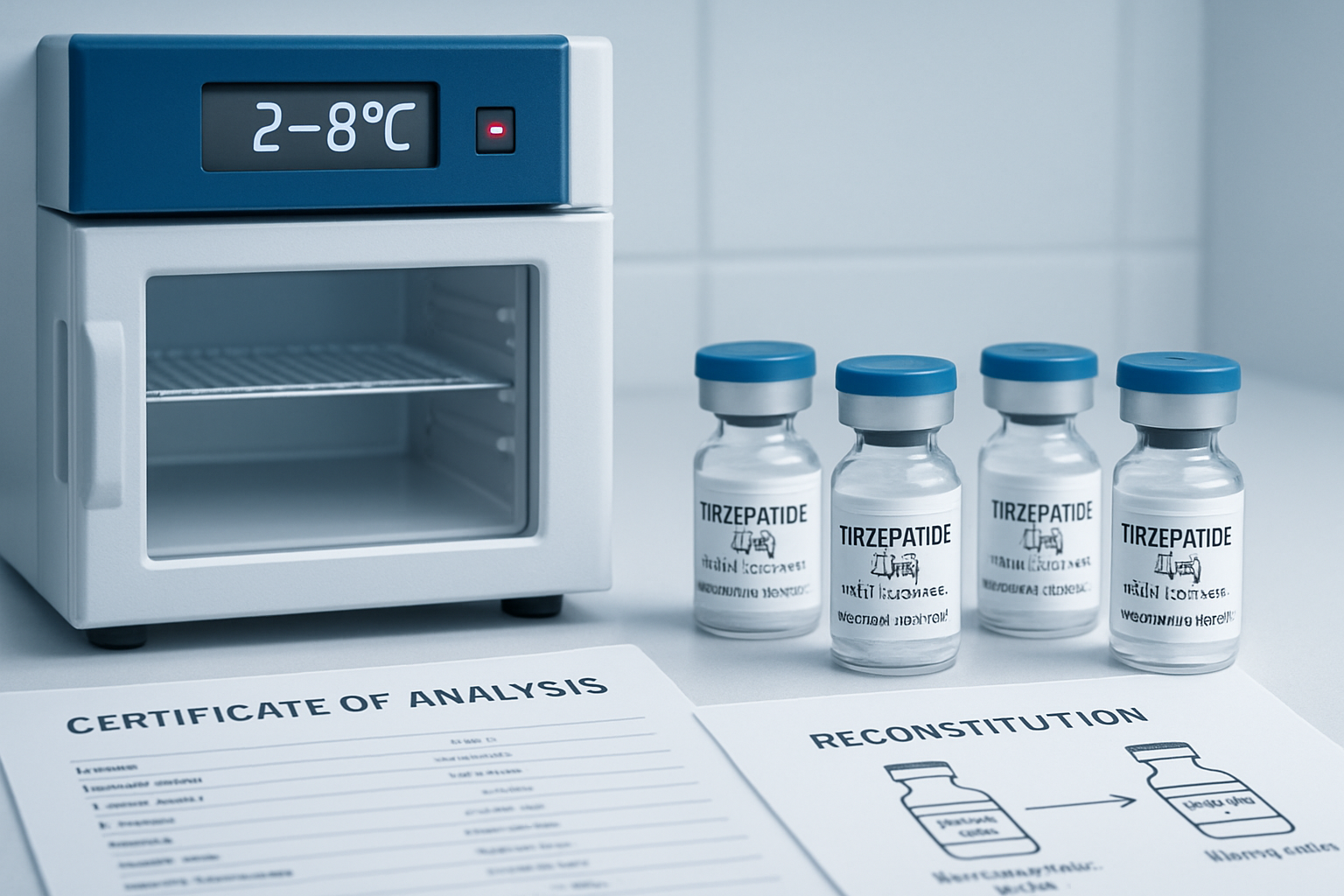
The field of tirzepatide long term use continues evolving as researchers explore novel applications and investigate unanswered questions about extended exposure.
Ultra-Long-Duration Studies
While 52-104 week studies provide valuable data, emerging research extends even further:
Multi-year protocols (2-5 years):
- Investigating potential cumulative effects
- Assessing very long-term safety profiles
- Examining sustained efficacy maintenance
- Evaluating reversibility after cessation
Lifetime exposure studies:
- Conducted in appropriate research models
- Examining generational effects
- Investigating developmental exposure implications
- Assessing lifespan impacts
Combination Research Protocols
Innovative research explores tirzepatide in combination with other compounds:
Synergistic combinations:
- Tirzepatide + metformin analogs
- Tirzepatide + SGLT2 inhibitor compounds
- Tirzepatide + growth hormone secretagogues
- Tirzepatide + anti-inflammatory peptides
Mechanistic investigations:
- Pathway interaction studies
- Receptor cross-talk research
- Downstream signaling analysis
- Tissue-specific effects
Tissue-Specific Research
Advanced research examines tirzepatide’s effects on specific tissue systems:
Adipose tissue biology:
- Brown fat activation
- White fat browning
- Adipokine secretion patterns
- Mitochondrial function
Hepatic research:
- Steatosis prevention/reversal
- Inflammatory marker modulation
- Fibrosis pathway investigation
- Metabolic flux analysis
Cardiovascular research:
- Endothelial function
- Vascular inflammation
- Atherosclerosis models
- Cardiac remodeling
Neurological research:
- Central appetite regulation
- Reward pathway modulation
- Neuroprotective potential
- Cognitive function markers
Sourcing Quality Tirzepatide for Long-Term Research
The success of extended tirzepatide long term use protocols depends fundamentally on peptide quality. Researchers must implement rigorous sourcing standards to ensure experimental validity.
Supplier Selection Criteria
When selecting tirzepatide suppliers for long-term research, evaluate multiple quality indicators:
Purity Standards
✅ Minimum requirements:
- ≥98% purity via HPLC analysis
- Confirmed molecular weight via mass spectrometry
- Minimal impurities and degradation products
- Batch-to-batch consistency documentation
✅ Advanced quality markers:
- Third-party testing verification
- Detailed impurity profiling
- Stability data across storage conditions
- Reconstitution stability studies
Documentation and Transparency
Reputable suppliers provide comprehensive documentation:
- Certificates of Analysis (COA): Batch-specific analytical data
- Safety Data Sheets (SDS): Handling and safety information
- Storage recommendations: Temperature, light, humidity specifications
- Reconstitution protocols: Validated procedures for optimal stability
Researchers can access comprehensive product information and COAs from established research peptide suppliers.
Supply Chain Reliability
Long-term research requires consistent peptide access:
Inventory stability: Suppliers maintaining adequate stock prevent protocol disruptions Shipping reliability: Temperature-controlled shipping protects peptide integrity International availability: Global shipping options support international research collaborations Customer support: Technical expertise assists with protocol optimization
Red Flags in Peptide Sourcing
Avoid suppliers exhibiting these warning signs:
❌ No COA provided or generic/non-specific documentation ❌ Unusually low pricing suggesting compromised quality ❌ Lack of proper “Research Use Only” labeling ❌ No storage or handling guidance ❌ Poor customer service or technical support ❌ Unclear sourcing or manufacturing information ❌ No return or quality guarantee policies
Cost Considerations for Extended Research
Tirzepatide long term use protocols require budget planning accounting for:
Peptide costs: Extended studies require multiple pen peptides/batches
- Calculate total peptide requirements across full study duration
- Account for dose escalation schedules
- Include buffer stock for protocol extensions
Ancillary supplies:
- Bacteriostatic water for reconstitution
- Sterile syringes and needles
- Storage containers and labels
- Temperature monitoring equipment
Quality control costs:
- Periodic peptide re-analysis
- Stability testing
- Contamination screening
Budget Optimization: Bulk purchasing from reliable suppliers often provides cost advantages for long-term research, but only if proper storage capabilities exist to maintain peptide quality throughout the extended timeline.
Troubleshooting Common Long-Term Research Challenges
Even well-designed tirzepatide long term use protocols encounter occasional challenges. Systematic troubleshooting approaches minimize experimental disruptions.
Tolerability Issues in Extended Protocols
Challenge: Gastrointestinal effects persisting beyond expected adaptation period
Solutions:
- Extend stabilization periods at current dose before further escalation
- Reduce dose temporarily, then re-escalate more gradually
- Evaluate environmental stressors that may compound effects
- Assess food/water intake patterns for contributing factors
- Consider individual variation in research model sensitivity
Challenge: Injection site reactions developing in long-term studies
Solutions:
- Verify proper injection technique (subcutaneous depth, angle)
- Expand injection site rotation to additional anatomical locations
- Assess reconstituted peptide for particulates or contamination
- Verify appropriate needle gauge for research model size
- Check peptide storage conditions for degradation
Efficacy Plateau or Decline
Challenge: Initial response diminishing over extended timeline
Potential causes and solutions:
Peptide degradation:
- Verify storage conditions maintained throughout study
- Test peptide concentration via analytical methods
- Replace with fresh batch and compare responses
Physiological adaptation:
- Assess whether plateau represents new homeostatic set-point
- Evaluate receptor expression/sensitivity markers
- Consider dose adjustment if within protocol parameters
Environmental variables:
- Review housing conditions for changes
- Assess seasonal influences on metabolic baselines
- Verify diet composition consistency
Data Variability in Extended Studies
Challenge: Increased measurement variability in later study phases
Mitigation strategies:
Measurement standardization:
- Implement strict timing protocols (same time of day)
- Use identical equipment throughout study duration
- Maintain consistent personnel performing measurements
- Regular equipment calibration and validation
Statistical approaches:
- Use appropriate mixed-effects models accounting for time
- Implement repeated-measures analysis techniques
- Consider baseline-adjusted analyses
- Account for within-subject correlation
Future Perspectives: The Evolution of Tirzepatide Research
As the scientific community accumulates more data on tirzepatide long term use, several trends and future directions emerge that will shape research in coming years.
Personalized Research Approaches
Emerging evidence suggests individual variability in tirzepatide response:
Genetic factors: Polymorphisms in GIP and GLP-1 receptors may influence response magnitude Microbiome interactions: Gut microbiota composition potentially modulates peptide effects Metabolic phenotypes: Baseline metabolic characteristics predict response patterns
Future research will likely incorporate these variables into experimental design, enabling more nuanced understanding of tirzepatide’s mechanisms.
Advanced Analytical Techniques
Technological advances enable deeper investigation of tirzepatide’s long-term effects:
Multi-omics approaches:
- Transcriptomics: Gene expression changes across extended timelines
- Proteomics: Protein-level alterations in target tissues
- Metabolomics: Comprehensive metabolic pathway mapping
- Lipidomics: Detailed lipid species analysis
Advanced imaging:
- High-resolution tissue imaging
- Real-time metabolic flux measurements
- Non-invasive longitudinal monitoring
- Molecular imaging of receptor occupancy
Regulatory Landscape Evolution
The regulatory framework governing research peptides continues evolving:
Quality standards: Increasing emphasis on peptide purity and documentation Traceability requirements: Enhanced chain-of-custody documentation International harmonization: Standardization across regulatory jurisdictions Ethical oversight: Strengthened institutional review processes
Researchers must stay informed of regulatory developments affecting long-term peptide research protocols.
Tirzepatide long term use in research settings represents a sophisticated undertaking requiring meticulous attention to protocol design, quality assurance, and systematic monitoring. The extensive body of evidence accumulated through extended-duration studies demonstrates tirzepatide’s sustained efficacy profile, generally favorable safety characteristics, and valuable applications across diverse metabolic research domains.
Key Implementation Principles
Successful long-term tirzepatide research protocols incorporate several essential elements:
1. Gradual dose escalation: Four-week titration intervals optimize tolerability while minimizing protocol disruptions
2. Rigorous quality control: Sourcing high-purity peptides with comprehensive documentation ensures experimental validity
3. Systematic monitoring: Regular assessment schedules detect emerging variables before they compromise research outcomes
4. Proper storage protocols: Temperature-controlled conditions maintain peptide integrity throughout extended timelines
5. Comprehensive documentation: Detailed records enable retrospective analysis and support research reproducibility
Practical Next Steps for Researchers
For investigators planning tirzepatide long term use protocols:
✅ Define research objectives: Clarify specific questions requiring extended-duration investigation
✅ Design comprehensive protocols: Incorporate dose escalation, monitoring schedules, and quality control measures
✅ Secure institutional approval: Obtain necessary ethical and regulatory clearances before protocol initiation
✅ Source quality peptides: Select suppliers providing high-purity tirzepatide with comprehensive documentation—explore research-grade options
✅ Implement systematic monitoring: Establish regular assessment schedules tracking key parameters
✅ Maintain detailed records: Document all protocol elements, deviations, and observations
✅ Plan for contingencies: Develop troubleshooting strategies for common challenges
The Broader Research Context
Tirzepatide’s dual-receptor mechanism positions it as a valuable tool for investigating complex metabolic interactions that single-pathway compounds cannot adequately address. As research extends into multi-year protocols and explores novel applications, the peptide continues revealing insights into GIP/GLP-1 pathway biology, metabolic regulation, and potential therapeutic targets.
The growing body of long-term research data strengthens our understanding of sustained dual-agonist exposure, informing both basic science investigations and translational research directions. For the research community, access to high-quality tirzepatide formulations with proper documentation and support enables the rigorous investigations necessary to advance metabolic science.
Commitment to Research Excellence
Whether investigating metabolic pathways, exploring tissue-specific effects, or conducting comparative peptide studies, tirzepatide long term use demands unwavering commitment to research quality. By implementing evidence-based protocols, maintaining rigorous quality standards, and adhering to ethical research principles, investigators contribute to the expanding knowledge base surrounding this remarkable dual-action peptide.
For researchers seeking reliable access to research-grade tirzepatide and comprehensive support for extended-duration protocols, PEPTIDE PRO provides high-purity formulations, detailed documentation, and professional service supporting the scientific community’s research objectives.