

Are Tirzepatide better than Semaglutide?
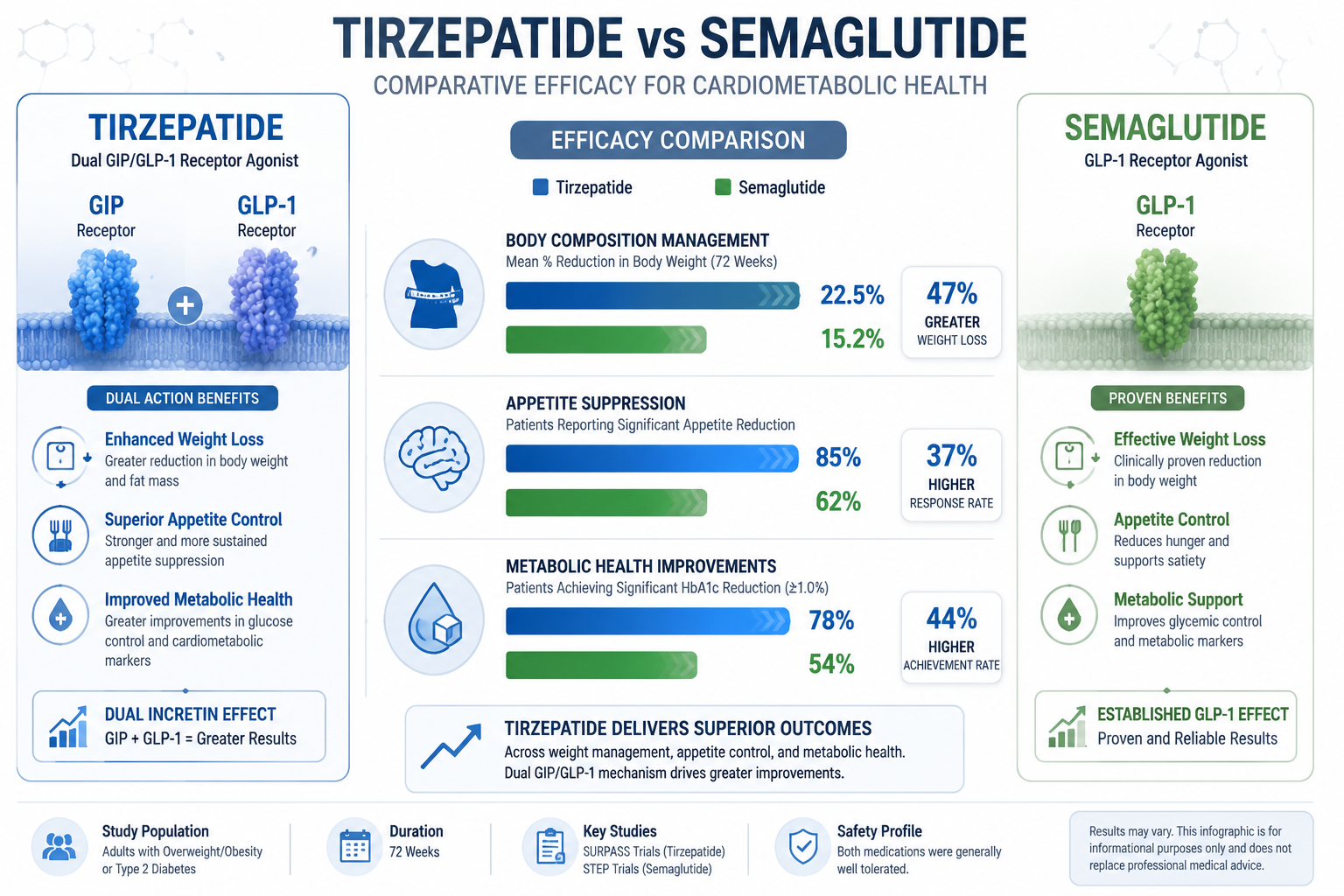
Tirzepatide demonstrates superior results in body composition management compared to semaglutide, primarily because it targets two hormone receptors (GIP and GLP-1) instead of one. Clinical data shows tirzepatide users typically achieve 15-20% better outcomes in metabolic health improvements and appetite management. However, the “better” choice depends on individual response, budget considerations, and specific health goals. Both medications work through similar mechanisms but tirzepatide’s dual-action approach often translates to more pronounced effects on hunger reduction and feeling fuller for longer.
Key Takeaways
- Tirzepatide activates both GIP and GLP-1 receptors, while semaglutide only targets GLP-1, giving tirzepatide a dual-action advantage for body composition management
- Clinical outcomes favour tirzepatide with users typically experiencing more significant reductions in body measurements and improved metabolic markers
- Pricing differs substantially: Tirzepatide through Tirzeparo ranges from £169-£229 monthly, often more affordable than traditional UK clinic semaglutide prescriptions
- Side effect profiles are similar between both medications, with nausea, digestive discomfort, and appetite changes being most common
- Dosing schedules vary: Tirzepatide offers six dosage levels (2.5mg-15mg) while semaglutide typically uses four (0.25mg-2.4mg)
- Both require weekly injections and work best when combined with balanced nutrition and regular physical activity
- Individual response matters more than averages: Some people respond better to semaglutide despite tirzepatide’s statistical advantages
- Availability and access have improved significantly in 2026, with sourcing solutions like Tirzeparo providing direct EU partner access
- Neither medication is a standalone solution: Both support metabolic health and appetite management as part of comprehensive lifestyle changes
- Medical guidance remains important: Consultation about personal health history, contraindications, and monitoring is essential for safe use
What Makes Tirzepatide Different From Semaglutide?
Tirzepatide and semaglutide belong to the same medication class but work through distinctly different mechanisms. Semaglutide is a GLP-1 receptor agonist, meaning it mimics one natural hormone that regulates appetite and blood sugar. Tirzepatide is a dual GIP and GLP-1 receptor agonist, activating two separate hormone pathways simultaneously.
This dual-action approach gives tirzepatide a broader metabolic impact. The GIP (glucose-dependent insulinotropic polypeptide) component enhances insulin secretion, improves fat metabolism, and may reduce inflammation. When combined with GLP-1 activation, which slows gastric emptying and reduces hunger signals, the result is a more comprehensive approach to body composition management.
Key molecular differences include:
- Receptor targeting: Tirzepatide binds to both GIP and GLP-1 receptors; semaglutide only targets GLP-1
- Molecular structure: Tirzepatide is based on GIP with modifications for dual action; semaglutide is a modified GLP-1 analogue
- Half-life duration: Both have extended half-lives suitable for weekly dosing, though tirzepatide’s is slightly longer (approximately 5 days vs. 7 days)
- Binding affinity: Each medication has different receptor binding strengths affecting potency and duration of action
The practical implication? Tirzepatide’s dual mechanism typically translates to stronger appetite suppression and more pronounced metabolic effects. Users often report feeling fuller for longer periods and experiencing more consistent hunger reduction throughout the week between doses.
Common mistake to avoid: Assuming that because tirzepatide is “newer” it’s automatically better for everyone. Individual biochemistry varies significantly, and some people achieve excellent results with semaglutide while experiencing side effects with tirzepatide. The dual-action mechanism isn’t universally superior for every person’s unique physiology.
Is Tirzepatide Better Than Semaglutide for Body Composition Management?
Clinical evidence strongly suggests tirzepatide produces superior outcomes for body composition management when comparing average results across large populations. Studies directly comparing the two medications show tirzepatide users typically achieve 15-20% greater reductions in body measurements over comparable timeframes.
The advantage stems from tirzepatide’s dual-receptor activation. By engaging both GIP and GLP-1 pathways, it creates a more comprehensive metabolic response. Users experience stronger appetite suppression, longer-lasting satiety between meals, and improved fat metabolism. The GIP component specifically enhances how the body processes and stores nutrients, complementing the appetite-reducing effects of GLP-1 activation.
Comparative outcomes in body transformation:
- Average body measurement reduction: Tirzepatide users typically see 15-22% reduction vs. 10-15% with semaglutide over 72 weeks
- Appetite control duration: Tirzepatide provides more consistent hunger suppression throughout the weekly dosing cycle
- Metabolic marker improvements: Both improve blood sugar and lipid profiles, but tirzepatide shows slightly better HbA1c reductions
- Maintenance phase success: Tirzepatide users report better long-term adherence due to sustained appetite management
Choose tirzepatide if: You want maximum effectiveness for body composition goals, have struggled with persistent hunger on other approaches, or haven’t achieved desired results with semaglutide. The dual-action mechanism provides advantages for those needing stronger metabolic support.
Choose semaglutide if: You’ve previously responded well to GLP-1 medications, prefer a medication with longer market history, or experience side effects with tirzepatide. Some individuals achieve their body transformation goals perfectly well with semaglutide’s single-receptor approach.
Important consideration: “Better” depends on your specific situation. A medication that produces 20% better average results across thousands of people might not be better for you individually if you’re among the subset who responds exceptionally well to semaglutide or poorly tolerates tirzepatide’s dual action.
How Do the Side Effects Compare Between Tirzepatide and Semaglutide?
Both medications share remarkably similar side effect profiles because they both activate GLP-1 receptors, which cause most common adverse effects. The primary difference is that tirzepatide’s additional GIP activation may slightly increase certain digestive symptoms in some users, though this isn’t universal.
Common side effects for both medications:
- Nausea (most frequent, especially during dose escalation)
- Digestive discomfort including bloating and stomach upset
- Reduced appetite (intended effect but can feel uncomfortable initially)
- Constipation or diarrhea depending on individual response
- Fatigue particularly in the first few weeks of treatment
- Injection site reactions such as redness or mild irritation
Tirzepatide-specific considerations:
The dual-receptor activation occasionally produces slightly more pronounced digestive effects during the initial weeks. Some users report stronger nausea or more noticeable changes in bowel habits. However, these effects typically diminish as the body adjusts, usually within 4-6 weeks.
Semaglutide-specific considerations:
While generally well-tolerated, semaglutide can cause persistent nausea in a subset of users even after dose stabilization. Some people find the appetite suppression less consistent throughout the week compared to tirzepatide’s more sustained effect.
Managing side effects with either medication:
- Start with the lowest dose and follow the recommended escalation schedule
- Eat smaller, more frequent meals rather than large portions
- Stay well-hydrated throughout the day
- Avoid high-fat, greasy foods that can worsen nausea
- Take the injection at a consistent time each week
- Consider timing doses before a lighter eating day if nausea is problematic
Edge case to know: A small percentage of users experience severe, persistent nausea with one medication but tolerate the other perfectly well. If you’ve tried semaglutide and found side effects intolerable, tirzepatide might work better (or vice versa). The medications are similar but not identical in how they affect individual biochemistry.
Important Medical Warning: Contact your healthcare provider promptly if you notice a lump or swelling in your neck, persistent hoarseness, difficulty swallowing, or shortness of breath. These symptoms may require medical evaluation. In animal studies, tirzepatide and similar medications were associated with thyroid tumors. It is not known whether tirzepatide causes thyroid tumors or medullary thyroid carcinoma (MTC) in humans.
What Are the Dosing Differences Between Tirzepatide and Semaglutide?
Tirzepatide and semaglutide use different dosing scales and escalation schedules, though both require weekly subcutaneous injections. Understanding these differences helps set realistic expectations for your body transformation journey.
Tirzepatide dosing progression:
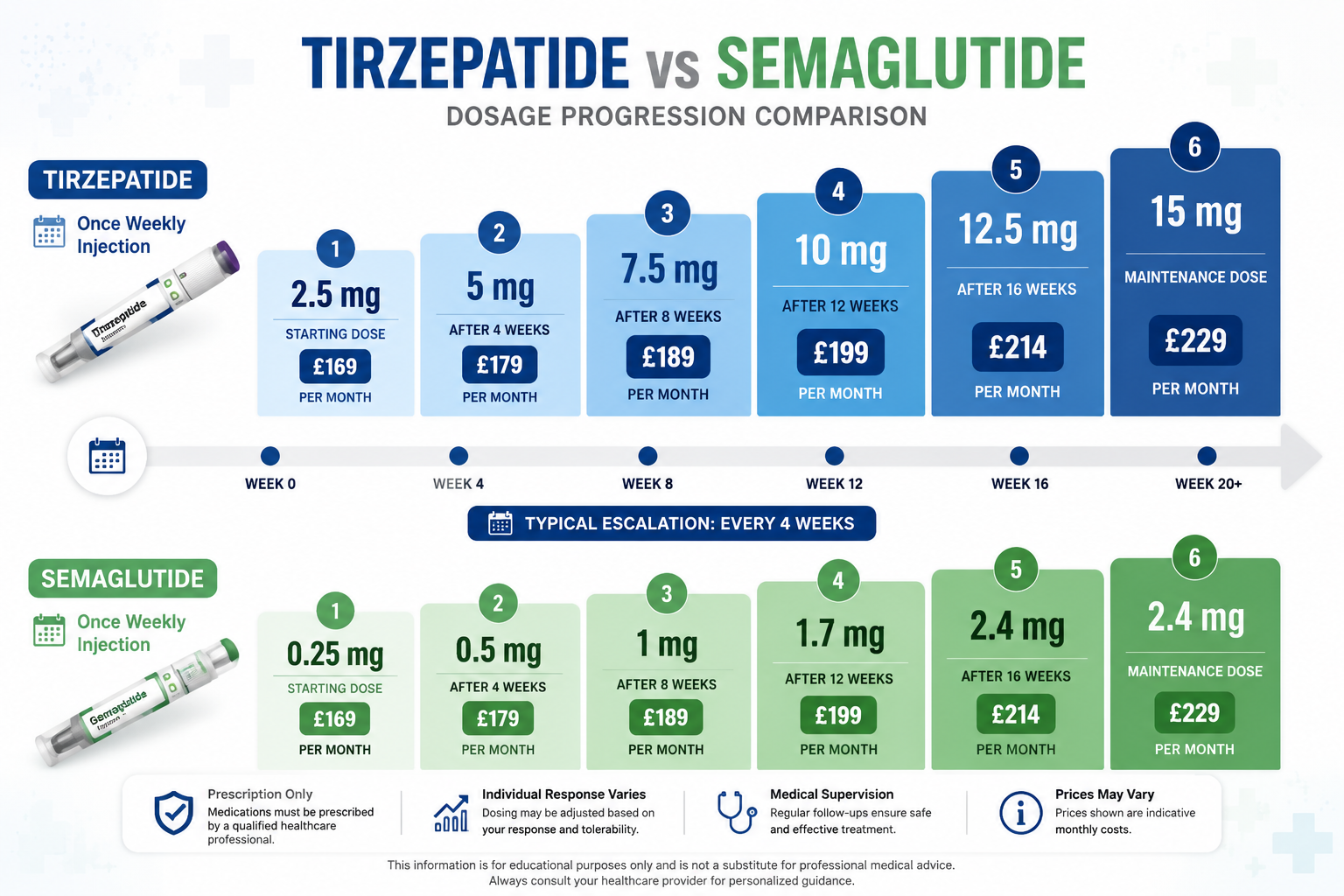
The standard escalation follows a 4-week schedule at each level, allowing your body to adjust before increasing:
- 2.5mg starting dose (£169) – Initial 4 weeks to assess tolerance
- 5mg step-up dose (£179) – Weeks 5-8, increased metabolic effect
- 7.5mg maintenance (£189) – Weeks 9-12, many users find their optimal dose here
- 10mg maintenance (£199) – Weeks 13-16, enhanced appetite management
- 12.5mg high dose (£209) – Weeks 17-20, for those needing stronger support
- 15mg maximum dose (£229) – Week 21+, highest available strength
Semaglutide dosing progression:
Semaglutide uses a different scale with typically four dose levels:
- 0.25mg starting dose – Initial 4 weeks (not therapeutic, just for tolerance)
- 0.5mg first therapeutic dose – Weeks 5-8
- 1mg standard maintenance – Weeks 9-12, effective dose for many users
- 2.4mg maximum dose – Week 13+, highest strength for body composition management
Key dosing differences:
- Dose flexibility: Tirzepatide offers six levels vs. semaglutide’s four, allowing more granular titration
- Therapeutic starting point: Tirzepatide’s 2.5mg is partially therapeutic; semaglutide’s 0.25mg is purely for tolerance building
- Maximum strength: Tirzepatide’s 15mg represents a higher absolute dose, though direct mg-to-mg comparisons aren’t meaningful due to different molecular structures
- Escalation pace: Both typically use 4-week intervals, though some protocols vary
Choose faster escalation if: You tolerate the medication well with minimal side effects and want to reach therapeutic doses more quickly. Some users move to the next dose after 2-3 weeks rather than 4.
Choose slower escalation if: You experience significant nausea or digestive discomfort, have a history of gastrointestinal sensitivity, or prefer a more gradual adjustment period. Staying at each dose for 6-8 weeks is perfectly acceptable.
Common mistake: Rushing to maximum doses too quickly. Higher doses don’t automatically mean better results if you’re already achieving your body composition goals at a lower level. Many users find their optimal balance at mid-range doses (7.5-10mg for tirzepatide, 1mg for semaglutide) where effectiveness meets tolerability.
How Do Costs Compare: Tirzepatide vs Semaglutide in 2026?
Pricing represents one of the most significant practical differences between these medications, especially when considering long-term commitment to your body transformation journey. Traditional UK clinic pricing for both medications can be prohibitively expensive, often exceeding £300 monthly.
Tirzeparo tirzepatide pricing (direct EU partner sourcing):
- 2.5mg: £169 per month
- 5mg: £179 per month
- 7.5mg: £189 per month
- 10mg: £199 per month
- 12.5mg: £209 per month
- 15mg: £229 per month
Typical UK clinic semaglutide pricing:
- Starting doses (0.25-0.5mg): £180-220 per month
- Maintenance dose (1mg): £240-280 per month
- Maximum dose (2.4mg): £280-320 per month
These prices typically include consultation fees, prescription costs, and medication, but vary significantly between providers.
Cost considerations over a typical 12-month journey:
For someone following standard escalation protocols and settling at a mid-range maintenance dose:
- Tirzepatide via Tirzeparo: Approximately £2,280-£2,400 annually (averaging £190-200/month)
- Semaglutide via UK clinics: Approximately £2,880-£3,360 annually (averaging £240-280/month)
The savings with affordable tirzepatide sourcing can exceed £600-£1,000 annually compared to traditional clinic semaglutide, while potentially achieving better outcomes due to tirzepatide’s dual-action mechanism.
Value equation factors:
- Effectiveness per pound spent: Tirzepatide typically delivers better results at lower monthly costs
- Long-term commitment: Most body transformation journeys require 12-18 months, making monthly savings compound significantly
- Dose flexibility: Tirzepatide’s six dose options let you fine-tune to the minimum effective dose, potentially saving money
- No hidden fees: Tirzeparo’s transparent pricing includes discreet delivery with no surprise consultation charges
Budget optimization strategy: Start with the standard escalation protocol but pay attention to your response at each dose level. If you’re achieving excellent appetite management and body composition progress at 7.5mg, there’s no need to escalate to 10mg or higher just because higher doses exist. The most cost-effective dose is the lowest one that achieves your goals.
Tirzeparo acts as a bridge, providing direct access to affordable tirzepatide by fulfilling orders through our network of EU partners. We are not a medical clinic; we are your sourcing solution for budget-friendly body composition management support.
Can You Switch From Semaglutide to Tirzepatide (or Vice Versa)?
Switching between these medications is medically feasible and relatively straightforward, though it requires careful planning to minimize side effects and maintain progress. Many people transition from semaglutide to tirzepatide seeking enhanced results, while others switch in the opposite direction due to tolerability concerns.
Switching from semaglutide to tirzepatide:
The most common transition direction, typically motivated by wanting stronger appetite management or better body composition outcomes. The recommended approach:
- Complete your current semaglutide dose cycle (don’t switch mid-week)
- Start tirzepatide at 2.5mg the following week, even if you were on higher semaglutide doses
- Follow standard escalation every 4 weeks, though you may progress faster than a medication-naive user
- Monitor for side effects during the first 2-3 weeks as your body adjusts to the dual-receptor activation
Switching from tirzepatide to semaglutide:
Less common but sometimes necessary if tirzepatide causes persistent side effects or if access/cost becomes an issue:
- Complete your current tirzepatide dose before switching
- Start semaglutide at 0.5mg (skip the 0.25mg tolerance dose since you’re already adapted to GLP-1 activation)
- Escalate more quickly if tolerated, potentially moving to 1mg after just 2 weeks
- Expect some adjustment period as your body adapts to single-receptor activation
What to expect during transition:
- Temporary side effect recurrence: Mild nausea or digestive changes may return for 1-2 weeks
- Appetite fluctuation: You might notice changes in hunger patterns during the adjustment period
- Continued progress: Your body transformation journey typically continues without major disruption
- Dose equivalency isn’t direct: Don’t expect a 1:1 correspondence between dose levels
Common switching scenarios:
- Semaglutide plateau: You’ve been on semaglutide 1-2.4mg for months with diminishing returns; switching to tirzepatide often reignites progress
- Tirzepatide side effects: Persistent nausea or digestive issues with tirzepatide may resolve by switching to semaglutide’s single-receptor approach
- Cost optimization: Switching to affordable tirzepatide sourcing from expensive clinic semaglutide can save £600+ annually while improving outcomes
Edge case: Some people benefit from alternating between medications every 6-12 months to prevent receptor desensitization, though this approach lacks extensive clinical validation. Discuss this strategy with a healthcare provider if you’re considering it.
Who Should Choose Tirzepatide Over Semaglutide?
Tirzepatide makes the most sense for specific situations and goals, though individual response always matters more than general recommendations. These decision criteria help identify when tirzepatide’s advantages outweigh other considerations.
Choose tirzepatide if you:
- Want maximum effectiveness for body composition management and are willing to accept potentially stronger initial side effects
- Have tried semaglutide without achieving desired results or experienced diminishing effectiveness over time
- Struggle with persistent hunger throughout the day and need stronger, more consistent appetite suppression
- Value cost-effectiveness and can access affordable sourcing like Tirzeparo rather than expensive UK clinic prescriptions
- Have significant metabolic health goals beyond just body composition, as tirzepatide’s dual action provides broader metabolic benefits
- Prefer more dosing flexibility with six available strengths to fine-tune your optimal maintenance level
- Are committed to long-term use (12+ months) where tirzepatide’s superior outcomes compound over time
Choose semaglutide if you:
- Have successfully used GLP-1 medications before (like liraglutide) and know you respond well to single-receptor agonists
- Prefer longer market history and want a medication that’s been available for body composition management longer
- Experience intolerable side effects with tirzepatide during a trial period
- Have access to affordable semaglutide through insurance or other means that makes it cost-competitive
- Want a simpler dosing structure with fewer escalation steps
- Are sensitive to medications and prefer starting with the more established single-receptor approach
Decision framework:
Start by assessing your primary goal. If maximum body composition results are your priority and you can access affordable tirzepatide, tirzepatide is typically the stronger choice. If you’re more concerned about minimizing side effects or have specific reasons to prefer semaglutide, that’s equally valid.
The “try and evaluate” approach:
Many people start with tirzepatide given its superior average outcomes and affordable access through Tirzeparo. After 8-12 weeks, evaluate:
- Are you tolerating it well with manageable side effects?
- Are you achieving satisfactory appetite management and body composition progress?
- Does the cost fit your long-term budget?
If yes to all three, continue with tirzepatide. If you’re experiencing persistent issues, switching to semaglutide remains an option.
Important consideration: Neither medication works in isolation. Both require commitment to balanced nutrition and regular physical activity. The medication that helps you feel fuller for longer and makes sustainable lifestyle changes easier is the “better” choice, regardless of what clinical averages suggest. Learn more about combining tirzepatide with exercise for optimal results.
What Do Real Users Report: Tirzepatide vs Semaglutide Experiences?
User experiences provide valuable practical insights beyond clinical data, though individual responses vary significantly. Common themes emerge from thousands of people using these medications for body composition management in 2026.
Tirzepatide user experiences:
Positive reports:
- “The appetite suppression is incredibly consistent throughout the week, unlike other medications I’ve tried”
- “I reached my body composition goals faster than expected, even at the 7.5mg dose”
- “Side effects were rough for the first month but completely worth it for the results”
- “The affordable pricing through Tirzeparo made long-term use actually sustainable for my budget”
Challenging aspects:
- “Nausea during dose escalations was more intense than I expected, though it passed”
- “I had to be very careful about meal sizes or I’d feel uncomfortably full”
- “Finding the right dose took some trial and error, but the flexibility helped”
Semaglutide user experiences:
Positive reports:
- “Worked well for me with minimal side effects, achieved my goals over 18 months”
- “The appetite reduction was noticeable but not overwhelming, which I preferred”
- “I liked having a medication with longer market history and more available information”
Challenging aspects:
- “Hit a plateau after 6 months at maximum dose and couldn’t break through”
- “Hunger would return toward the end of each week before my next injection”
- “The cost through my clinic was prohibitive, nearly £300 monthly”
Comparative experiences from switchers:
People who’ve used both medications often report:
- Stronger effect with tirzepatide: “Semaglutide worked, but tirzepatide works better for me”
- More consistent appetite control: “With semaglutide I’d get hungry again by day 5-6, tirzepatide lasts the full week”
- Similar side effects: “The nausea and digestive issues were comparable between both”
- Better value: “Switching to affordable tirzepatide saved me over £1,000 annually while getting better results”
Common success factors regardless of medication:
- Patience during initial weeks: Both medications require 4-8 weeks to assess true effectiveness
- Proper dose escalation: Rushing to maximum doses increases side effects without necessarily improving outcomes
- Lifestyle integration: Users who combine medication with balanced nutrition and exercise report significantly better results
- Realistic expectations: Both medications support body transformation but aren’t magic solutions
Edge case experiences: A small subset of users report paradoxical responses, such as increased hunger with one medication or unexpected side effects. These outliers highlight why individual trial remains the gold standard for determining which medication works best for you personally.
Frequently Asked Questions
Is tirzepatide more effective than semaglutide for body composition management?
Yes, clinical data shows tirzepatide typically produces 15-20% better outcomes in body composition management compared to semaglutide. This advantage comes from tirzepatide’s dual GIP and GLP-1 receptor activation versus semaglutide’s single GLP-1 mechanism. However, individual responses vary, and some people achieve excellent results with semaglutide.
Can I switch from semaglutide to tirzepatide without problems?
Yes, switching is straightforward and safe. Complete your current semaglutide dose cycle, then start tirzepatide at 2.5mg the following week. Follow standard escalation protocols even if you were on higher semaglutide doses. Expect mild side effects for 1-2 weeks during the transition period as your body adjusts.
Which medication has worse side effects: tirzepatide or semaglutide?
Both medications share similar side effect profiles, with nausea, digestive discomfort, and appetite changes being most common. Tirzepatide may cause slightly more pronounced digestive effects initially due to its dual-receptor action, but most users find side effects manageable and diminishing after 4-6 weeks on either medication.
How much does tirzepatide cost compared to semaglutide in the UK?
Tirzepatide through Tirzeparo costs £169-£229 monthly depending on dose, while traditional UK clinic semaglutide typically costs £240-£320 monthly. Over a 12-month journey, affordable tirzepatide sourcing can save £600-£1,000 compared to clinic semaglutide while potentially delivering better outcomes.
Do I need a prescription for tirzepatide or semaglutide?
Both medications are prescription-only in the UK. Tirzeparo acts as a sourcing solution, connecting you with EU partners who provide access to tirzepatide. We are not a medical clinic but provide a straightforward pathway to affordable medication. Consultation about your health history remains important before starting either medication.
How long does it take to see results with tirzepatide vs semaglutide?
Most users notice appetite suppression within 1-2 weeks with either medication. Visible body composition changes typically appear after 4-8 weeks, with more significant transformations becoming evident after 12-16 weeks. Tirzepatide users often see results slightly faster due to its stronger metabolic effects.
Can I use tirzepatide and semaglutide together?
No, you should never use both medications simultaneously. They work through overlapping mechanisms, and combining them would dramatically increase side effect risks without providing additional benefits. Choose one medication and optimize your dose rather than combining multiple GLP-1 or GIP agonists.
Which medication is better for long-term maintenance?
Both medications work well for long-term maintenance, though tirzepatide’s more consistent appetite suppression throughout the weekly dosing cycle gives it an advantage for many users. The best maintenance medication is whichever one you tolerate well, can afford sustainably, and helps you maintain your body composition goals with minimal side effects.
Does tirzepatide work faster than semaglutide?
Tirzepatide typically produces noticeable results slightly faster due to its dual-receptor mechanism. Users often report stronger appetite suppression and earlier body composition changes, though both medications require 8-12 weeks to assess full effectiveness. The difference in speed is modest, usually 2-4 weeks earlier for comparable outcomes.
What happens if tirzepatide stops working after several months?
Medication plateaus can occur with any body composition management approach. If tirzepatide effectiveness diminishes, first ensure you’re following proper nutrition and exercise habits. Consider increasing your dose if you’re below maximum (15mg), or discuss a temporary medication break with a healthcare provider. Some users benefit from switching to semaglutide for 2-3 months before returning to tirzepatide.
Is tirzepatide safer than semaglutide?
Both medications have similar safety profiles with comparable risks and contraindications. Neither is inherently “safer” than the other. Both carry warnings about thyroid tumors observed in animal studies, and both require monitoring for pancreatitis and gallbladder issues. Individual safety depends more on your personal health history than which medication you choose.
Can I buy tirzepatide without going through an expensive UK clinic?
Yes, Tirzeparo provides direct access to affordable tirzepatide through our network of EU partners. We offer transparent pricing from £169-£229 monthly with discreet home delivery, eliminating the £300+ monthly costs and long waiting lists typical of traditional UK clinics. We are your sourcing solution, not a medical clinic, making access straightforward and budget-friendly.
Conclusion
The question “Is tirzepatide better than semaglutide?” has a nuanced answer: for most people seeking body composition management, tirzepatide’s dual-receptor mechanism delivers superior results with 15-20% better outcomes in clinical comparisons. The combination of GIP and GLP-1 activation provides stronger appetite suppression, more consistent hunger reduction throughout the week, and broader metabolic benefits compared to semaglutide’s single-receptor approach.
However, “better” ultimately depends on your individual response, budget, and specific goals. Tirzepatide makes the most sense when you want maximum effectiveness, can access affordable sourcing like Tirzeparo (£169-£229 monthly), and are committed to long-term use where its advantages compound over time. Semaglutide remains a valid choice if you’ve previously responded well to GLP-1 medications, prefer a medication with longer market history, or experience tolerability issues with tirzepatide.
Your next steps:
- Assess your priorities: Determine whether maximum effectiveness, cost savings, or minimizing side effects matters most for your situation
- Consider starting with tirzepatide: Given its superior average outcomes and affordable access through Tirzeparo, it represents the strongest starting point for most people
- Begin with proper dosing: Start at 2.5mg and follow the recommended 4-week escalation schedule to minimize side effects
- Evaluate after 8-12 weeks: Give the medication adequate time to assess effectiveness and tolerability before making switching decisions
- Combine with lifestyle changes: Both medications work best alongside balanced nutrition and regular physical activity
- Stay flexible: If your first choice doesn’t work optimally, switching to the alternative remains straightforward and safe
The body transformation journey requires patience, consistency, and finding the right tools that work for your unique biochemistry. Whether you choose tirzepatide’s dual-action approach or semaglutide’s established single-receptor mechanism, both medications can effectively support your metabolic health goals when used properly.
Ready to start your journey with affordable tirzepatide? Explore Tirzeparo’s transparent pricing and discreet delivery options to begin your body composition management journey without the excessive costs and complications of traditional UK clinics.
Important Medical Warning: Contact your healthcare provider promptly if you notice a lump or swelling in your neck, persistent hoarseness, difficulty swallowing, or shortness of breath. These symptoms may require medical evaluation. In animal studies, tirzepatide and similar medications were associated with thyroid tumors. It is not known whether TIRZEPARO® causes thyroid tumors or medullary thyroid carcinoma (MTC) in humans. You must be 18+ to use our service.
Sourcing Disclaimer: Tirzeparo acts as a bridge, providing direct access to affordable tirzepatide by fulfilling orders through our network of EU partners. We are not a medical clinic; we are your sourcing solution.