


The weight-loss pharmaceutical landscape is witnessing unprecedented demand across the United Kingdom, with patients and researchers alike searching for the next breakthrough treatment. As semaglutide and tirzepatide dominate headlines and prescription queues, a new contender has emerged from clinical trials with remarkable efficacy data: retatrutide. However, those looking to buy retatrutide in the UK: pricing, supply & what to know face a complex regulatory landscape that demands careful navigation. This comprehensive guide examines the current status of retatrutide availability, anticipated pricing structures, supply chain considerations, and critical information every potential user must understand before considering this investigational peptide.
Key Takeaways
- Retatrutide is not legally available for purchase or prescription in the UK as of 2025, remaining in Phase 3 clinical trials with no MHRA approval
- Projected UK availability is estimated between 2027-2028, contingent on successful trial completion and regulatory approval processes
- Any current sellers claiming to offer retatrutide in the UK are operating illegally, with enforcement actions already taken against illicit manufacturers
- Clinical trial data demonstrates exceptional efficacy with 24% average weight loss over 48 weeks, surpassing currently approved alternatives
- Research-grade peptides for laboratory use only are available through regulated suppliers like PEPTIDE PRO, strictly for non-human research applications
Understanding Retatrutide: The Triple-Agonist Innovation
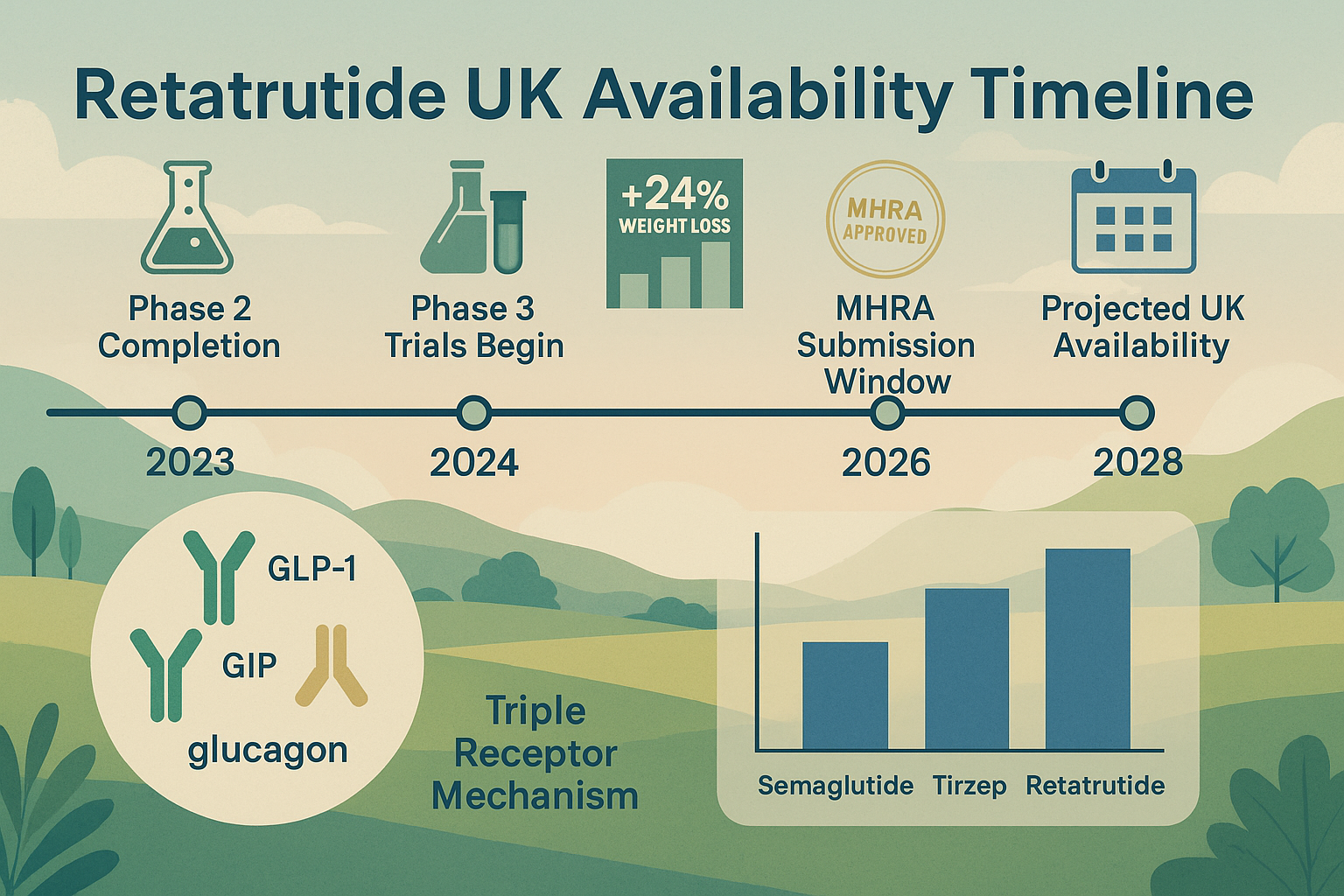
Retatrutide represents a significant advancement in metabolic peptide therapy, distinguished by its unique triple-receptor mechanism of action. Developed by pharmaceutical giant Eli Lilly, this investigational compound simultaneously activates three distinct receptor pathways: glucagon-like peptide-1 (GLP-1), glucose-dependent insulinotropic polypeptide (GIP), and glucagon receptors[4][8].
This triple-agonist approach differentiates retatrutide from current market leaders. Semaglutide (marketed as Wegovy) functions solely as a GLP-1 receptor agonist, while tirzepatide (Mounjaro) combines GLP-1 and GIP activity. By adding glucagon receptor activation to the formula, retatrutide theoretically enhances metabolic efficiency, energy expenditure, and fat oxidation beyond what dual-agonist therapies can achieve.
Clinical Trial Results: Unprecedented Efficacy Data
The Phase 2 clinical trial results published in The New England Journal of Medicine generated considerable excitement within the medical community. Participants receiving the highest dose of retatrutide achieved an average weight loss of 24-24.2% of their initial body weight after 48 weeks of treatment[1][2]. This represents a substantial improvement over existing therapies:
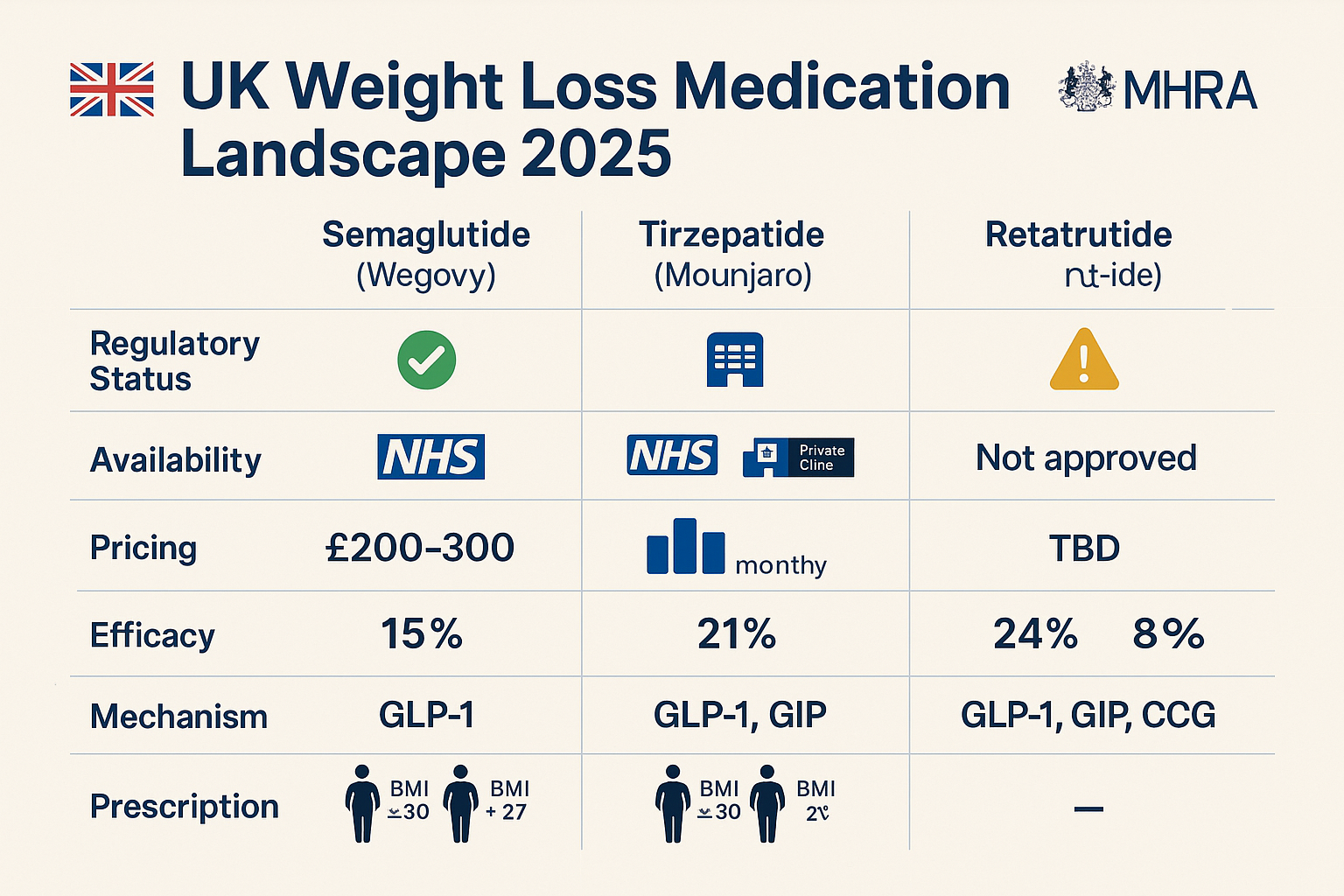
| Medication | Mechanism | Average Weight Loss (48 weeks) | Regulatory Status (UK) |
|---|---|---|---|
| Semaglutide (Wegovy) | GLP-1 agonist | 15-17% | MHRA approved, NHS restricted |
| Tirzepatide (Mounjaro) | GLP-1/GIP dual agonist | 20-22% | MHRA approved, NHS restricted |
| Retatrutide | GLP-1/GIP/Glucagon triple agonist | 24-24.2% | Phase 3 trials, not approved |
These results positioned retatrutide as potentially the most effective pharmaceutical weight-loss intervention studied to date, explaining the intense interest from both medical professionals and patients seeking advanced metabolic therapies.
Current Regulatory Status in the United Kingdom
Understanding the regulatory framework surrounding retatrutide is essential for anyone researching this compound. The current status creates significant limitations for UK residents seeking access.
MHRA and NICE Approval Status
As of December 2025, retatrutide has not received approval from the Medicines and Healthcare products Regulatory Agency (MHRA), the UK’s pharmaceutical regulatory authority[5]. Without MHRA approval, no medication can be legally marketed, prescribed, or dispensed for human use within the United Kingdom.
Similarly, the National Institute for Health and Care Excellence (NICE) has not evaluated retatrutide for cost-effectiveness or clinical benefit, as this assessment only occurs after MHRA approval is secured[5]. NICE evaluations determine whether the NHS will fund a medication and under what circumstances.
NHS and Private Prescription Availability
The absence of MHRA approval means retatrutide cannot be legally prescribed through any legitimate channel in the UK—neither NHS services nor private prescription providers[2][3]. Any healthcare professional prescribing retatrutide would be operating outside regulatory boundaries and potentially facing professional sanctions.
This contrasts sharply with approved alternatives like semaglutide and tirzepatide, which are available through:
- NHS specialist weight management services (with strict eligibility criteria)
- Regulated private clinics offering medically supervised treatment programs
- Licensed online prescription services operating under appropriate medical oversight
Those interested in research-grade peptides for legitimate laboratory applications can explore options through PEPTIDE PRO’s extensive catalogue, which provides high-purity compounds clearly labelled “For Research Use Only.”
Phase 3 Clinical Trial Timeline
Eli Lilly initiated Phase 3 clinical trials for retatrutide in late 2024 or early 2025[1]. These large-scale studies typically require 2-4 years to complete, involving thousands of participants across multiple international sites. The trials assess:
- ✅ Long-term safety profiles across diverse populations
- ✅ Cardiovascular outcomes and metabolic health markers
- ✅ Sustained weight loss maintenance beyond initial treatment periods
- ✅ Optimal dosing protocols for various patient demographics
- ✅ Comparative effectiveness against existing standard treatments
Following successful Phase 3 completion, Eli Lilly would submit comprehensive data packages to regulatory authorities including the MHRA. The review process typically requires 12-18 months, placing realistic UK availability estimates between 2027 and 2028 at the earliest[1][2][7].
The Illicit Market: Risks and Enforcement Actions
The gap between clinical promise and legal availability has created a dangerous illicit market for retatrutide in the UK. Understanding these risks is crucial for patient safety.
Illegal Sales Operations
Any website, supplier, or individual claiming to sell retatrutide for human use in the UK is operating illegally[5]. These operations typically exhibit several warning signs:
🚫 No requirement for valid prescriptions
🚫 Vague sourcing information or claims of “pharmaceutical grade” without verification
🚫 Prices significantly below expected pharmaceutical costs
🚫 Shipping from unregulated international locations
🚫 Marketing directly to consumers rather than medical professionals
🚫 Lack of proper pharmaceutical licensing or regulatory registration
Recent Enforcement Activity
UK regulatory authorities actively monitor and shut down illegal operations. On October 27, 2025, regulators closed an illicit manufacturing site producing unlicensed retatrutide and tirzepatide pens[6]. This enforcement action demonstrates:
- Active surveillance of the illicit peptide market
- Coordination between MHRA, trading standards, and law enforcement
- Serious consequences for illegal manufacturers and distributors
- Ongoing risks to consumers purchasing from unregulated sources
Counterfeit and Contamination Risks
Products obtained through illegal channels pose severe health risks:
| Risk Category | Potential Consequences |
|---|---|
| Counterfeit compounds | No active ingredient, ineffective treatment, wasted resources |
| Contaminated products | Bacterial contamination, toxic impurities, serious infections |
| Incorrect dosing | Overdose risks, inadequate efficacy, unpredictable effects |
| Unknown composition | Allergic reactions, drug interactions, organ damage |
| Lack of sterility | Injection site infections, systemic bacterial infections, sepsis |
For those conducting legitimate research, sourcing from established suppliers with proper quality controls is essential. PEPTIDE PRO’s commitment to quality includes research-grade purity standards, proper storage protocols, and comprehensive product documentation—though strictly for laboratory research applications only.
Anticipated UK Pricing Structure for Retatrutide
While no official UK pricing exists for retatrutide given its unapproved status, examining comparable medications provides insight into potential future costs[1][5].
Pricing Comparisons with Approved Alternatives
Current UK pricing for similar weight-loss medications offers a baseline for projections:
Semaglutide (Wegovy):
- Private prescription: £200-£300 per month
- NHS provision: Free at point of use (for eligible patients)
- Annual private cost: £2,400-£3,600
Tirzepatide (Mounjaro):
- Private prescription: £229-£299 per month
- NHS provision: Limited availability through specialist services
- Annual private cost: £2,748-£3,588
Given retatrutide’s superior efficacy in clinical trials, pharmaceutical pricing strategies typically support a premium positioning. Realistic estimates suggest:
- Initial private pricing: £250-£350 per month (£3,000-£4,200 annually)
- NHS negotiated pricing: Significantly lower through bulk procurement agreements
- Long-term market pricing: Potential reduction as competition increases and patents approach expiration
NHS Funding Considerations
If approved, NHS funding for retatrutide would likely follow restrictive criteria similar to current policies for tirzepatide and semaglutide[2]:
Probable Eligibility Requirements:
- BMI ≥40 kg/m² (or ≥37.5 kg/m² for certain ethnic groups at higher metabolic risk)
- Multiple weight-related comorbidities (type 2 diabetes, hypertension, sleep apnoea)
- Documented failure of conventional weight loss interventions
- Participation in specialist weight management programmes
- Regular monitoring and review appointments
NICE Cost-Effectiveness Analysis:
NICE evaluations consider quality-adjusted life years (QALYs) gained versus treatment costs. Retatrutide’s superior efficacy may justify higher costs if it delivers:
- Greater reduction in obesity-related complications
- Improved cardiovascular outcomes
- Reduced long-term healthcare expenditure
- Enhanced quality of life metrics
However, budget impact assessments could limit initial NHS availability even with positive NICE guidance, as occurred with tirzepatide rollout in 2024-2025.
Private Market Dynamics
The private prescription market in the UK operates with different economic considerations:
Factors Influencing Private Pricing:
- Manufacturing and importation costs
- Clinic consultation and monitoring fees (£50-£150 per appointment)
- Supply chain logistics and cold-chain storage requirements
- Market competition from established alternatives
- Patient willingness to pay for superior efficacy
Private clinics may offer various pricing models:
- Pay-as-you-go: Monthly prescriptions with ongoing consultations
- Treatment packages: 3-6 month bundles with discounted rates
- Comprehensive programmes: Including nutritional support, exercise guidance, and psychological counselling
Those interested in understanding peptide handling and storage principles for research contexts can review PEPTIDE PRO’s educational resources, which provide valuable information on proper compound management.
Supply Chain and Distribution Considerations
Understanding pharmaceutical supply chains helps contextualize availability challenges and future distribution patterns.
Manufacturing and Cold-Chain Requirements
Peptide medications like retatrutide require sophisticated manufacturing and distribution infrastructure:
Manufacturing Complexity:
- Specialized peptide synthesis facilities
- Stringent quality control and purity testing
- Sterile production environments
- Regulatory compliance with Good Manufacturing Practice (GMP) standards
Cold-Chain Distribution:
- Continuous refrigeration (2-8°C) throughout supply chain
- Temperature monitoring and validation
- Specialized pharmaceutical logistics providers
- Pharmacy-level storage capabilities
These requirements limit distribution to established pharmaceutical channels and create barriers to rapid market expansion following approval.
Projected UK Distribution Channels
Upon MHRA approval, retatrutide distribution would likely follow established patterns:
Primary Distribution Routes:
- Hospital pharmacy networks for specialist obesity services
- Community pharmacies with appropriate storage facilities
- Specialist weight management clinics with direct pharmaceutical accounts
- Licensed online prescription services with regulated dispensing protocols
Geographic Availability:
Initial availability may concentrate in:
- Major urban centres with specialist obesity services
- University hospital networks participating in clinical research
- Private clinic clusters in London, Manchester, Birmingham, Edinburgh
- Gradual expansion to regional centres based on demand and infrastructure
Import and Parallel Trade Considerations
The UK’s post-Brexit regulatory framework affects pharmaceutical importation:
- MHRA-approved products can be prescribed and dispensed normally
- EU-approved medications may be imported under specific conditions
- Parallel import licenses allow approved medications from other markets
- Special import provisions exist for unlicensed medications in exceptional circumstances
However, these pathways would only become relevant after retatrutide receives regulatory approval in at least one major market (UK, EU, or USA).
For researchers requiring peptides for laboratory applications, PEPTIDE PRO offers fast UK delivery with same-day dispatch for orders placed before 1pm Monday-Friday, demonstrating the efficiency possible with proper logistics infrastructure.
Legal Alternatives Currently Available in the UK
While awaiting retatrutide approval, several evidence-based options exist for those seeking medically supervised weight management support.
Approved GLP-1 Receptor Agonists
Semaglutide (Wegovy):
- First GLP-1 medication approved specifically for weight management
- Weekly subcutaneous injection
- Average weight loss: 15-17% over 68 weeks
- Available through NHS (restricted criteria) and private providers
- Established safety profile with extensive real-world data
Liraglutide (Saxenda):
- Daily subcutaneous injection
- Average weight loss: 8-10% over 56 weeks
- Available through private prescription
- Longer track record than semaglutide
- Lower efficacy but proven cardiovascular benefits
Dual-Agonist Therapy
Tirzepatide (Mounjaro):
- GLP-1/GIP dual receptor agonist
- Weekly subcutaneous injection
- Average weight loss: 20-22% over 72 weeks
- Recently approved for NHS use (limited availability)
- Currently the most effective approved option in the UK
Comprehensive Weight Management Programmes
Pharmaceutical interventions achieve optimal results when integrated into comprehensive programmes including:
Behavioural Components:
- Structured dietary guidance and meal planning
- Progressive exercise prescription
- Cognitive behavioural therapy for eating patterns
- Sleep optimization and stress management
- Long-term maintenance strategies
Medical Monitoring:
- Regular body composition assessments
- Metabolic health markers (glucose, lipids, liver function)
- Cardiovascular risk evaluation
- Medication adjustment based on response
- Management of potential side effects
Multidisciplinary Support:
- Specialist physicians or endocrinologists
- Registered dietitians
- Exercise physiologists
- Clinical psychologists
- Ongoing peer support groups
Research Peptides for Laboratory Use
For researchers investigating metabolic peptides in controlled laboratory settings, PEPTIDE PRO provides research-grade compounds including:
- High-purity peptides produced under strict quality conditions
- Comprehensive product documentation including Certificates of Analysis (COAs)
- Proper storage guidance for maintaining compound stability
- Clear labelling as “For Research Use Only – Not for human or animal consumption”
This ensures legitimate research can proceed while maintaining clear boundaries around human therapeutic use.
What to Know Before Considering Retatrutide
For those monitoring retatrutide development and planning for potential future availability, several key considerations merit attention.
Realistic Timeline Expectations
Current Status (2025):
- Phase 3 clinical trials ongoing
- No regulatory submissions yet filed
- Minimum 2-3 years before potential approval
Projected Milestones:
- 2026: Phase 3 trial data completion and analysis
- 2026-2027: Regulatory submissions to MHRA, FDA, EMA
- 2027-2028: Regulatory review and potential approval
- 2028+: NHS evaluation, funding decisions, and gradual rollout
Uncertainty Factors:
- Trial results may reveal unexpected safety concerns
- Regulatory reviews can extend beyond typical timelines
- Manufacturing scale-up challenges could delay launch
- NHS budget constraints might limit initial availability
Eligibility Criteria Considerations
If approved, retatrutide would likely face similar restrictions as current weight-loss medications:
Medical Criteria:
- Severe obesity classification (BMI ≥40 or ≥37.5 with risk factors)
- Documented weight-related health complications
- Previous attempts at lifestyle modification
- Absence of contraindications (pregnancy, certain cancers, medullary thyroid disease history)
Practical Requirements:
- Willingness to commit to long-term treatment (typically 1-2 years minimum)
- Ability to attend regular monitoring appointments
- Financial capacity for private treatment (if pursuing outside NHS)
- Understanding of potential side effects and management strategies
Side Effect Profile
While retatrutide’s complete safety profile continues to emerge from ongoing trials, the triple-agonist mechanism suggests potential side effects similar to existing GLP-1-based therapies:
Common Side Effects (based on class effects):
- Gastrointestinal symptoms (nausea, vomiting, diarrhea, constipation)
- Reduced appetite and early satiety
- Injection site reactions
- Fatigue during initial titration
- Potential gallbladder complications with rapid weight loss
Monitoring Requirements:
- Regular assessment of gastrointestinal tolerance
- Gallbladder imaging if symptoms develop
- Thyroid function monitoring
- Pancreatic enzyme evaluation
- Cardiovascular health markers
Cost-Benefit Analysis
Evaluating whether retatrutide represents value requires considering multiple factors:
Potential Benefits:
- Superior weight loss efficacy (24% vs. 15-22% for alternatives)
- Possible improved metabolic health outcomes
- Reduced obesity-related complication risks
- Enhanced quality of life and functional capacity
Associated Costs:
- Direct medication expenses (£3,000-£4,200 annually estimated)
- Consultation and monitoring fees
- Potential side effect management
- Long-term treatment commitment
- Lifestyle programme integration costs
Comparison Framework:
Consider retatrutide against:
- Current approved medications (cost vs. efficacy trade-offs)
- Bariatric surgery (one-time cost vs. ongoing medication)
- Intensive lifestyle interventions alone (lower cost, lower efficacy)
- Health consequences of untreated severe obesity
For detailed information on PEPTIDE PRO’s terms and conditions regarding research peptide supply, researchers can review comprehensive policies covering proper use, storage, and handling protocols.
Preparing for Future Availability
Those interested in potentially accessing retatrutide when it becomes legally available can take several preparatory steps.
Establishing Medical Relationships
Build Healthcare Partnerships:
- Consult with GP regarding weight management goals and current options
- Seek referral to specialist obesity services if meeting criteria
- Establish relationship with private weight management clinic if considering private route
- Document weight history, previous interventions, and health complications
Medical Documentation:
- Maintain records of BMI measurements over time
- Document diagnosed weight-related conditions (diabetes, hypertension, sleep apnoea)
- Record previous weight loss attempts and outcomes
- Compile medication history and current treatments
Financial Planning
Private Treatment Preparation:
- Research private clinic options and pricing structures
- Consider health savings accounts or medical payment plans
- Investigate whether private health insurance might cover weight-loss medications
- Budget for comprehensive programme costs (medication + monitoring + support)
NHS Pathway Understanding:
- Learn current NHS eligibility criteria for weight-loss medications
- Understand referral pathways through GP to specialist services
- Recognize potential waiting times for NHS specialist appointments
- Identify local tier 3 and tier 4 weight management services
Staying Informed
Monitor Development:
- Follow Eli Lilly press releases regarding trial progress
- Watch for MHRA regulatory announcements
- Subscribe to specialist obesity medicine publications
- Join patient advocacy groups focused on obesity treatment access
Reliable Information Sources:
- MHRA website for regulatory updates
- NICE guidance publications
- NHS England service specifications
- Peer-reviewed medical journals
- Professional obesity medicine societies
For researchers tracking peptide developments in laboratory contexts, contacting PEPTIDE PRO provides access to expert knowledge regarding research-grade compound availability and specifications.
Lifestyle Foundation Building
Regardless of future medication access, establishing healthy lifestyle patterns maximizes outcomes:
Dietary Foundations:
- Work with registered dietitian to develop sustainable eating patterns
- Practice portion awareness and mindful eating techniques
- Establish regular meal timing and structure
- Reduce ultra-processed food consumption
- Increase whole food, plant-forward choices
Physical Activity Development:
- Begin progressive exercise programme appropriate to current fitness
- Incorporate both cardiovascular and resistance training
- Build daily movement habits beyond structured exercise
- Address barriers to physical activity (time, access, motivation)
- Set realistic, incremental activity goals
Behavioural Skills:
- Develop stress management strategies beyond food
- Improve sleep quality and consistency
- Build social support networks
- Practice self-monitoring (weight, food intake, activity)
- Address emotional eating patterns
These foundations ensure optimal response to any future pharmaceutical intervention while providing immediate health benefits.
The Research Perspective: Laboratory Applications
While retatrutide remains unavailable for human therapeutic use, legitimate research applications continue advancing scientific understanding of metabolic peptides.
Research-Grade Peptide Standards
High-quality research requires compounds meeting rigorous purity and consistency standards:
Quality Markers:
- ≥98% purity via HPLC analysis
- Comprehensive Certificates of Analysis (COAs)
- Proper lyophilization and storage
- Clear chain of custody documentation
- Appropriate sterility testing for applicable research
Research Applications:
- Receptor binding studies and mechanism investigation
- Metabolic pathway elucidation
- Comparative efficacy assessments in appropriate models
- Formulation development and stability testing
- Pharmacokinetic and pharmacodynamic characterization
Responsible Research Practices
Legitimate peptide research adheres to strict ethical and regulatory frameworks:
Institutional Requirements:
- Appropriate ethics committee approvals
- Institutional review board oversight
- Compliance with relevant research regulations
- Proper documentation and record-keeping
- Clear distinction between research and therapeutic use
Storage and Handling:
- Temperature-controlled storage (typically -20°C for lyophilized peptides)
- Proper reconstitution protocols using appropriate solvents
- Sterile technique for applicable research contexts
- Accurate record-keeping of compound usage
- Safe disposal of research materials
PEPTIDE PRO’s educational resources provide detailed guidance on proper peptide handling, reconstitution principles, and storage requirements for research applications.
Distinguishing Research from Human Use
Critical boundaries separate legitimate research from inappropriate human experimentation:
Research Peptides Are:
- ✅ For laboratory investigation only
- ✅ Not approved for human consumption
- ✅ Not manufactured to therapeutic-grade standards
- ✅ Not subject to clinical safety testing
- ✅ Clearly labelled “For Research Use Only”
Research Peptides Are NOT:
- ❌ Suitable for human self-administration
- ❌ Equivalent to pharmaceutical-grade medications
- ❌ Legally prescribable by healthcare providers
- ❌ Covered by medical insurance or healthcare systems
- ❌ Subject to the same regulatory oversight as approved drugs
This distinction protects both researchers conducting legitimate scientific work and potential users from unsafe, unregulated practices.
Frequently Asked Questions
Can I legally buy retatrutide in the UK right now?
No. Retatrutide has not been approved by the MHRA and cannot be legally purchased, prescribed, or used for human consumption in the UK as of 2025[5]. Any seller claiming to offer retatrutide for human use is operating illegally.
When will retatrutide be available in the UK?
Realistic estimates place potential UK availability between 2027 and 2028, contingent on successful Phase 3 trial completion and MHRA regulatory approval[1][2][7]. This timeline remains subject to change based on trial results and regulatory review processes.
How much will retatrutide cost in the UK?
Official pricing has not been established. Based on comparable medications, private prescription costs may range from £250-£350 per month (£3,000-£4,200 annually)[1]. NHS pricing would be significantly lower through negotiated agreements, though access would be restricted to eligible patients.
Is retatrutide better than semaglutide or tirzepatide?
Phase 2 clinical trial data suggests superior weight loss efficacy (24% vs. 15-17% for semaglutide and 20-22% for tirzepatide)[1][2]. However, complete safety profiles, long-term outcomes, and real-world effectiveness remain under investigation in ongoing Phase 3 trials.
What are the risks of buying retatrutide from unregulated sources?
Significant risks include counterfeit products with no active ingredient, contaminated compounds causing infections, incorrect dosing leading to adverse effects, unknown composition creating unpredictable reactions, and lack of medical supervision for side effect management[5][6].
Can I participate in retatrutide clinical trials in the UK?
Clinical trial participation depends on specific study protocols, eligibility criteria, and recruitment status. Interested individuals should consult with their healthcare provider or visit clinical trial registries to identify active studies accepting participants.
Where can I get research-grade peptides for laboratory use?
Legitimate suppliers like PEPTIDE PRO provide high-purity research-grade peptides clearly labelled “For Research Use Only” with proper documentation, quality controls, and storage guidance for laboratory applications.
Conclusion: Navigating the Path Forward
The journey to buy retatrutide in the UK: pricing, supply & what to know currently leads to a clear conclusion—legal access remains years away, pending clinical trial completion and regulatory approval. While the compound’s exceptional efficacy data generates understandable excitement, patient safety demands adherence to established pharmaceutical development and regulatory pathways.
Key Actions for Those Interested in Retatrutide:
Immediate Steps:
- Avoid illegal sources claiming to sell retatrutide for human use
- Explore approved alternatives (semaglutide, tirzepatide) through legitimate medical channels
- Establish medical relationships with healthcare providers specializing in weight management
- Build lifestyle foundations that will enhance any future pharmaceutical intervention
- Stay informed through reliable sources about regulatory developments
Medium-Term Preparation:
- Document medical history and weight-related health conditions
- Investigate NHS pathways and private clinic options for future access
- Plan financially for potential treatment costs if pursuing private route
- Monitor clinical trial progress and regulatory submissions
- Consider current approved options rather than waiting for future availability
For Researchers:
- Source peptides from reputable suppliers like PEPTIDE PRO for legitimate laboratory research
- Maintain clear boundaries between research applications and human therapeutic use
- Follow proper protocols for peptide storage, handling, and documentation
- Contribute to scientific understanding through rigorous, ethical research practices
The Broader Context
Retatrutide represents the ongoing evolution of metabolic medicine, with triple-agonist mechanisms potentially offering superior outcomes for severe obesity. However, pharmaceutical development requires patience, rigorous testing, and regulatory oversight to ensure both efficacy and safety.
The current landscape offers effective, approved alternatives through proper medical channels. Those seeking weight management support should engage with healthcare providers to explore evidence-based options available today rather than pursuing illegal, unregulated products that pose serious health risks.
As 2025 progresses toward 2026 and beyond, monitoring regulatory developments will help interested individuals prepare for potential future access. Until MHRA approval is secured and legitimate supply chains established, the only legal path to retatrutide in the UK is through participation in clinical trials or, for qualified researchers, through properly sourced research-grade compounds used exclusively in laboratory settings.
For comprehensive information about research-grade peptides, quality standards, and proper handling protocols, visit PEPTIDE PRO or review their privacy policy and ethical safety guidelines. Remember: all research peptides are strictly for laboratory use only—not for human or animal consumption.
References
[1] Clinical trial data and timeline projections from pharmaceutical development reports, 2024-2025
[2] UK weight management medication availability and efficacy comparisons, NHS and private sector analysis, 2025
[3] MHRA regulatory framework for weight-loss medications, UK prescription pathways documentation
[4] Eli Lilly retatrutide development programme, triple-agonist mechanism research publications
[5] MHRA and NICE approval status documentation, UK pharmaceutical regulatory requirements
[6] UK regulatory enforcement action, October 27, 2025, illicit peptide manufacturing site closure
[7] Pharmaceutical development timeline estimates, regulatory submission and review processes
[8] Triple-agonist peptide research, GLP-1/GIP/glucagon receptor mechanism studies, New England Journal of Medicine publications