

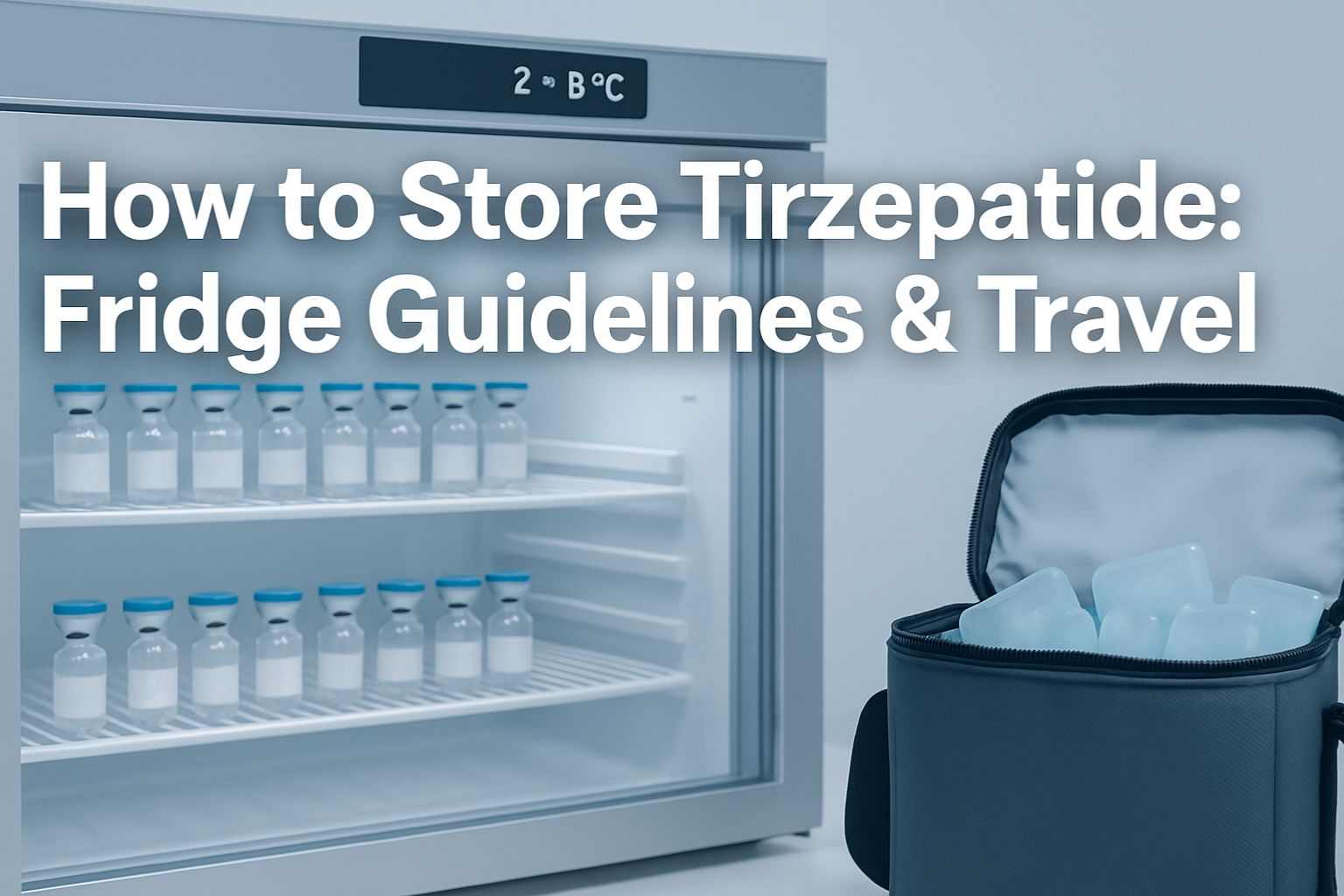
Proper storage of research peptides can mean the difference between maintaining molecular integrity and compromising your entire experimental protocol. When working with tirzepatide—a dual glucose-dependent insulinotropic polypeptide (GIP) and glucagon-like peptide-1 (GLP-1) receptor agonist—understanding how to store tirzepatide (fridge guidelines & travel) becomes essential for preserving peptide stability and ensuring consistent research outcomes. Whether you’re managing laboratory inventory or transporting samples between facilities, temperature control and storage protocols directly impact peptide viability[1].
Tirzepatide’s molecular structure makes it particularly sensitive to environmental conditions, requiring strict adherence to manufacturer specifications throughout its lifecycle. From the moment your research-grade peptides arrive from PEPTIDE PRO until final reconstitution and use, every storage decision affects peptide integrity. This comprehensive guide examines evidence-based storage protocols, refrigeration requirements, travel considerations, and common mistakes that compromise peptide quality.
Key Takeaways
- Lyophilized tirzepatide should be stored at 2-8°C (refrigerated) for optimal long-term stability, though short-term room temperature storage may be acceptable for unopened pen peptides
- Reconstituted tirzepatide requires continuous refrigeration at 2-8°C and should be used within 28 days to maintain peptide integrity
- Never freeze tirzepatide—freezing temperatures destroy the peptide structure and render samples unusable
- Travel storage requires insulated medical cooler bags with temperature monitoring to maintain the 2-8°C range during transport
- Light protection is essential—store tirzepatide in original packaging or amber pen peptides away from direct sunlight and UV exposure
Understanding Tirzepatide’s Storage Requirements
The Science Behind Peptide Stability
Tirzepatide is a synthetic peptide consisting of 39 amino acids with specific structural modifications that enhance its pharmacological properties[2]. Like all peptides, tirzepatide’s biological activity depends on maintaining its three-dimensional conformation—the precise folding pattern that allows it to interact with target receptors. Environmental stressors including temperature fluctuations, light exposure, pH changes, and physical agitation can disrupt this delicate structure through processes called denaturation and aggregation.
Temperature sensitivity represents the primary concern for tirzepatide storage. Elevated temperatures accelerate chemical degradation pathways, including:
- Deamidation: Conversion of asparagine and glutamine residues to aspartic and glutamic acid
- Oxidation: Modification of methionine and cysteine residues
- Hydrolysis: Peptide bond cleavage leading to fragmentation
- Aggregation: Formation of insoluble peptide clusters
Conversely, freezing temperatures cause ice crystal formation that physically disrupts peptide structure and creates concentration gradients during freeze-thaw cycles. Research demonstrates that even a single freeze-thaw cycle can reduce peptide activity by 20-40%[3].
Manufacturer Specifications and Regulatory Standards
Pharmaceutical-grade tirzepatide storage guidelines are established through extensive stability testing under International Council for Harmonisation (ICH) protocols. While research-grade peptides from suppliers like PEPTIDE PRO are labeled “For Research Use Only,” following pharmaceutical storage standards ensures optimal peptide preservation.
Standard storage conditions for tirzepatide include:
| Peptide Form | Temperature Range | Maximum Duration | Light Protection |
|---|---|---|---|
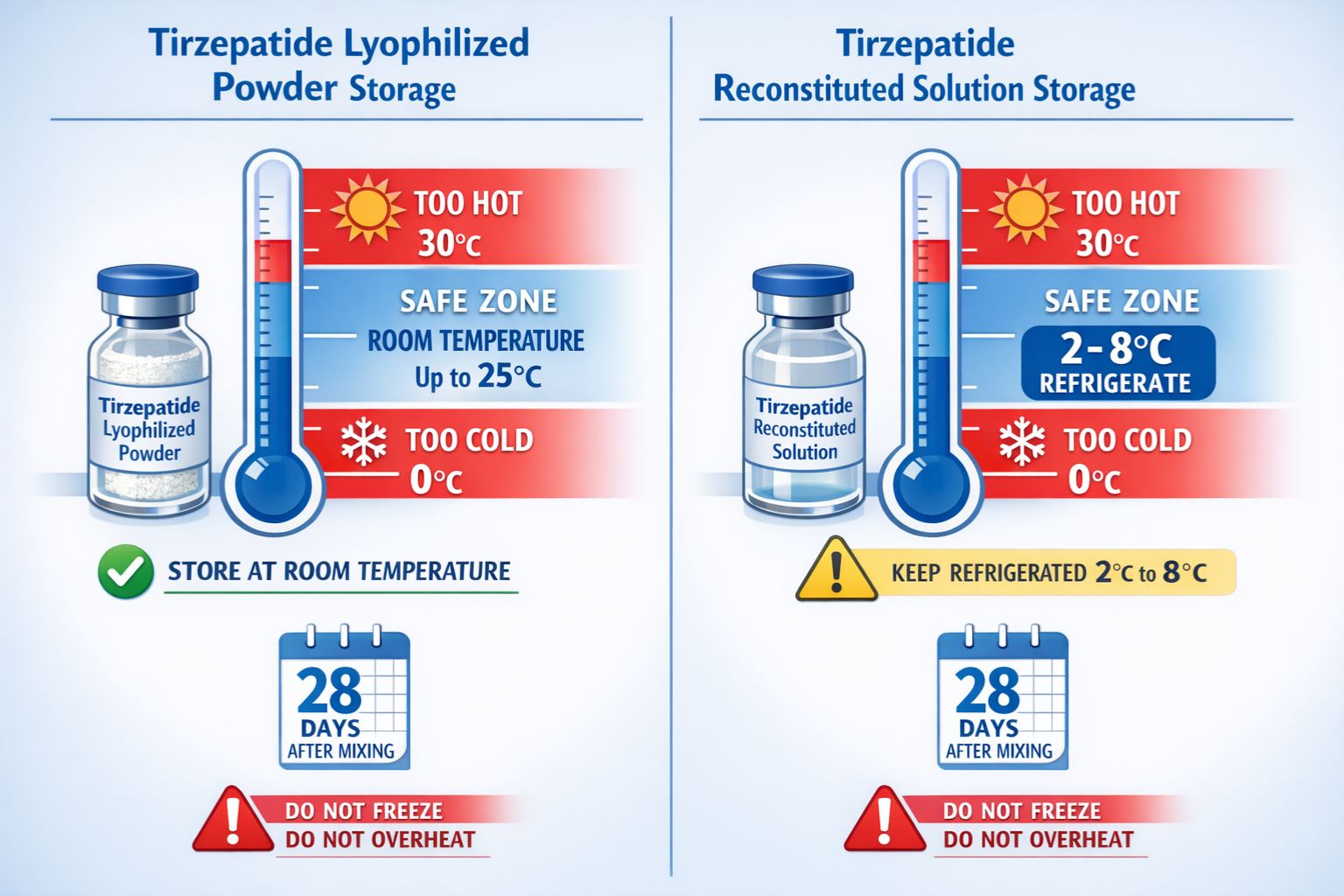
| Lyophilized (unopened) | 2-8°C (refrigerated) | 24-36 months | Original packaging |
| Lyophilized (unopened) | Room temperature (20-25°C) | Up to 21 days | Protected from light |
| Reconstituted solution | 2-8°C (refrigerated) | 28 days maximum | Amber pen peptide or wrapped |
| During use | Room temperature | Up to 24 hours | Minimize light exposure |
These specifications reflect controlled studies measuring peptide purity, potency, and degradation products over time. Deviating from recommended conditions accelerates degradation and introduces experimental variability.
Lyophilized vs. Reconstituted Storage Differences
The physical state of tirzepatide dramatically affects storage requirements and stability timelines. Understanding these differences is crucial for proper inventory management and experimental planning.
Lyophilized (freeze-dried) tirzepatide exists as a stable powder with minimal water content, significantly reducing chemical degradation rates. In this form:
- ✅ Extended shelf life: Properly stored lyophilized peptides remain stable for 2-3 years
- ✅ Temperature tolerance: Brief room temperature exposure (hours to days) typically causes minimal degradation
- ✅ Shipping stability: Can withstand temperature variations during transit when properly packaged
- ✅ Reduced microbial risk: Low moisture content prevents bacterial growth
Reconstituted tirzepatide (mixed with bacteriostatic water or other diluents) becomes significantly more vulnerable:
- ⚠️ Limited stability: Must be used within 28 days even under optimal refrigeration
- ⚠️ Strict temperature control: Requires continuous 2-8°C storage without interruption
- ⚠️ Contamination risk: Aqueous solutions support microbial growth if contaminated
- ⚠️ Increased degradation: Hydrolytic and oxidative processes accelerate in solution
When ordering from PEPTIDE PRO’s tirzepatide selection, peptides arrive in lyophilized form, providing maximum stability during shipping and allowing researchers to reconstitute only the quantities needed for immediate experimental protocols.
How to Store Tirzepatide in the Refrigerator: Complete Guidelines
Optimal Refrigerator Temperature Settings
Maintaining the correct temperature range represents the single most critical factor in tirzepatide storage. The recommended 2-8°C (36-46°F) range isn’t arbitrary—it reflects the temperature zone where peptide degradation rates remain minimal while preventing freezing.
Setting up your refrigerator for peptide storage:
🌡️ Temperature monitoring: Install a dedicated refrigerator thermometer separate from the built-in display. Digital models with min/max memory functions help identify temperature excursions during door openings or power fluctuations.
🌡️ Avoid temperature zones: Different refrigerator areas experience varying temperatures:
- Warmest: Door shelves (subject to room temperature air during openings)
- Coldest: Back wall near cooling elements and bottom shelves (risk of freezing)
- Most stable: Middle shelves toward the center (optimal for peptide storage)
🌡️ Calibration verification: Verify thermometer accuracy using an ice-water bath (should read 0°C) and compare against the refrigerator’s built-in sensor. Replace batteries annually and recalibrate quarterly.
🌡️ Temperature logging: For critical research applications, consider continuous temperature data loggers that record readings every 15-30 minutes and alert you to excursions beyond acceptable ranges.
Common refrigerator mistakes to avoid:
- ❌ Storing peptides in door compartments (temperature fluctuations with each opening)
- ❌ Placing pen peptides against the back wall (risk of freezing from direct contact with cooling elements)
- ❌ Overcrowding the refrigerator (restricts air circulation and creates temperature gradients)
- ❌ Using refrigerators with automatic defrost cycles that cause temperature spikes
Proper Placement and Organization
Strategic organization within your refrigerator protects tirzepatide from temperature variations, contamination risks, and accidental damage while facilitating inventory management and protocol compliance.
Best practices for refrigerator organization:
📦 Dedicated storage containers: Use clear, sealed containers or bins specifically designated for peptide storage. This creates a secondary barrier against contamination and prevents cross-contamination with other research materials.
📦 Middle shelf positioning: Place tirzepatide pen peptides on the middle shelf, approximately 6-8 inches from the back wall and away from the door. This location experiences the most stable temperatures with minimal fluctuation.
📦 Upright orientation: Store pen peptides in an upright position to minimize contact between the peptide and the rubber stopper, reducing potential leaching of stopper components into the solution.
📦 Separation from food items: If using a shared refrigerator, maintain complete physical separation between research materials and food/beverage items. Ideally, dedicate a separate refrigerator exclusively to research peptides.
📦 Inventory labeling system: Implement a clear labeling protocol including:
- Peptide name and concentration
- Lot/batch number
- Reconstitution date (if applicable)
- Expiration date
- “For Research Use Only” designation
📦 First-in, first-out (FIFO) rotation: Organize pen peptides by expiration date with the oldest stock positioned for easiest access, ensuring timely use before degradation occurs.
Light Protection and Container Selection
Ultraviolet and visible light exposure catalyzes oxidative degradation of sensitive amino acid residues in tirzepatide, particularly tryptophan, tyrosine, and methionine. Protecting peptides from light exposure extends stability and maintains experimental consistency.
Light protection strategies:
� Original packaging: Whenever possible, store unopened lyophilized tirzepatide in the original manufacturer packaging, which is designed to provide light protection. PEPTIDE PRO ships peptides in light-protective containers specifically engineered for this purpose.
� Amber pen peptides: Transfer reconstituted solutions to amber (brown) glass pen peptides that filter harmful wavelengths while allowing visual inspection of solution clarity. Amber glass blocks approximately 90-95% of UV light below 450nm.
� Aluminum foil wrapping: For clear glass pen peptides, wrap the exterior with aluminum foil, leaving only the cap exposed for easy identification. This provides complete light protection at minimal cost.
� Opaque secondary containers: Store wrapped or amber pen peptides inside opaque boxes or containers that provide an additional light barrier and protect against accidental breakage.
� Minimize light exposure during use: When removing tirzepatide from refrigeration for experimental procedures, limit exposure to bright laboratory lighting and complete protocols efficiently to reduce cumulative light exposure.
Container material considerations:
The container material contacting tirzepatide affects stability through several mechanisms:
- Borosilicate glass: Preferred material for peptide storage due to chemical inertness and minimal leaching
- Polypropylene: Acceptable for short-term storage but may allow oxygen permeation over extended periods
- Polystyrene: Generally unsuitable due to potential peptide adsorption to container surfaces
- Rubber stoppers: Select high-quality stoppers with minimal extractables; siliconized stoppers reduce particulate shedding
Preventing Freezing and Temperature Excursions
While refrigeration is essential, freezing represents one of the most damaging events for tirzepatide stability. Ice crystal formation physically disrupts peptide structure, while freeze-thaw cycles create concentration gradients and promote aggregation.
Freezing prevention measures:
❄️ Temperature buffer zones: Never place tirzepatide pen peptides in direct contact with refrigerator walls, cooling elements, or areas where frost accumulates. Maintain at least 3-4 inches of clearance from these cold zones.
❄️ Refrigerator selection: Choose refrigerators with:
- Consistent temperature distribution (fan-forced circulation)
- Minimal temperature variation (±1°C maximum)
- Separate freezer compartment (not combination units where cold air flows between sections)
- Frost-free operation that doesn’t cause temperature spikes
❄️ Backup power protection: For critical research applications, connect refrigerators to uninterruptible power supplies (UPS) or emergency generators to prevent temperature excursions during power outages.
❄️ Temperature excursion protocols: Establish standard operating procedures for responding to temperature deviations:
- Document the duration and temperature range of the excursion
- Assess whether peptide integrity may be compromised
- Consider re-testing peptide purity if excursions exceed acceptable limits
- Quarantine affected pen peptides pending stability assessment
Recovery from accidental freezing:
If tirzepatide accidentally freezes, the peptide is likely compromised and should not be used for critical experiments. Frozen peptides may show:
- Visible precipitation or cloudiness after thawing
- Reduced biological activity (often undetectable without functional assays)
- Increased aggregation (detectable by analytical methods like SEC-HPLC)
- Altered reconstitution properties
How to Store Tirzepatide During Travel: Safe Transport Solutions
Medical Cooler Bags and Temperature Control
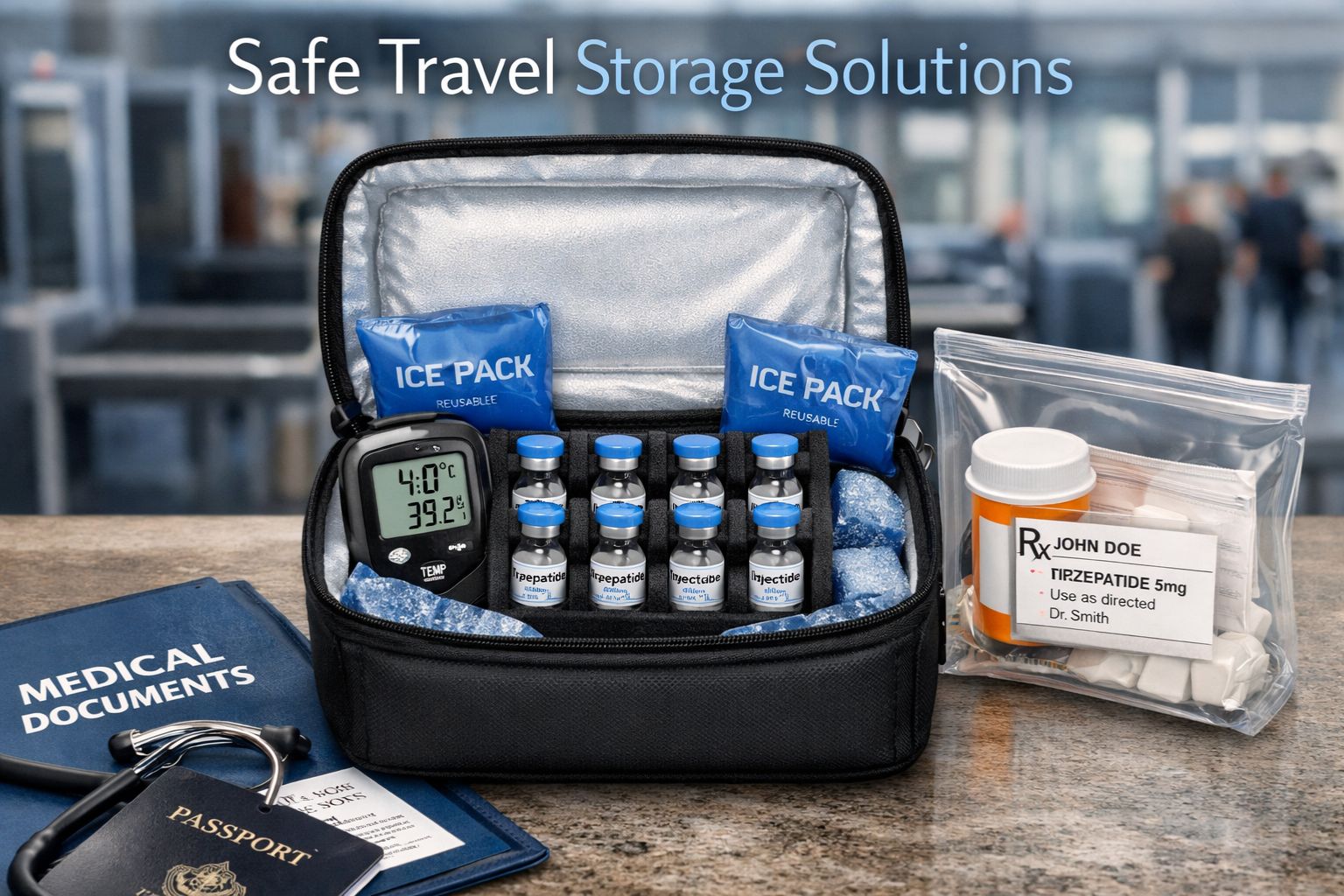
Transporting tirzepatide between laboratory facilities, to conference presentations, or during field research requires specialized equipment that maintains the critical 2-8°C temperature range throughout the journey. Unlike simple insulated bags, medical-grade cooler systems provide validated temperature control for extended periods.
Selecting appropriate travel containers:
🧊 Medical-grade cooler bags: Purpose-built pharmaceutical coolers feature:
- Multi-layer insulation (typically 3-5 layers of reflective and foam materials)
- Temperature maintenance for 8-48 hours depending on model and external conditions
- Rigid construction protecting contents from physical damage
- Temperature monitoring capabilities (built-in thermometers or data logger pockets)
- Sizes ranging from single-pen peptide carriers to multi-liter capacity units
🧊 Cooling element options:
- Gel ice packs: Reusable, TSA-compliant when frozen solid, available in various sizes
- Phase-change materials (PCMs): Engineered to maintain specific temperatures (e.g., +4°C) for extended periods
- Refrigerant packs: Commercial-grade cooling elements designed for pharmaceutical transport
- Avoid regular ice: Melting creates water that may leak and doesn’t maintain consistent temperatures
🧊 Layering strategy: Position cooling elements strategically to create a stable temperature envelope:
- Bottom layer: One or two frozen gel packs
- Insulating barrier: Bubble wrap or foam separator preventing direct contact between peptides and ice packs
- Peptide pen peptides: Positioned in the center of the cooler, away from all walls
- Top layer: Additional gel pack if needed for extended transport
- Fill empty space: Crumpled paper or foam to minimize air circulation
🧊 Pre-cooling protocol: Before packing tirzepatide, pre-cool the empty cooler bag by placing frozen gel packs inside for 30-60 minutes. This prevents the initial temperature shock when adding refrigerated peptides to a room-temperature container.
TSA Regulations and Air Travel Considerations
Air travel presents unique challenges for tirzepatide transport, including security screening requirements, cabin pressure changes, and extended duration away from controlled refrigeration. Understanding Transportation Security Administration (TSA) regulations and airline policies ensures smooth passage through checkpoints while maintaining peptide integrity.
TSA guidelines for traveling with peptides:
✈️ Medication exemption: Research peptides qualify for the medication exemption, allowing quantities exceeding the standard 3.4-ounce liquid limit when properly documented and declared.
✈️ Required documentation: Prepare and carry:
- Letter from your research institution on official letterhead describing the peptides and their research purpose
- Material Safety Data Sheets (MSDS) for tirzepatide
- Original manufacturer packaging or labels showing “For Research Use Only”
- Import/export permits if traveling internationally
- Contact information for your laboratory supervisor or principal investigator
✈️ Security screening process:
- Declare your research materials to TSA officers at the beginning of screening
- Request hand inspection rather than X-ray screening (X-rays don’t harm peptides, but hand inspection prevents delays)
- Keep cooler bag organized and easily accessible for inspection
- Allow extra time at security (15-30 additional minutes)
- Remain with your materials throughout the inspection process
✈️ Carry-on vs. checked baggage: Always transport tirzepatide in carry-on luggage. Checked baggage compartments experience:
- Extreme temperature variations (-20°C to +40°C)
- Rough handling and potential crushing
- Extended periods outside your control
- Risk of loss or delayed baggage
✈️ Frozen gel pack regulations: TSA permits frozen gel packs in carry-on bags when completely frozen solid. Partially melted packs must comply with liquid restrictions. Freeze packs solid the night before travel and pack immediately before departure.
International Travel and Customs Requirements
Crossing international borders with research peptides introduces additional regulatory layers including customs declarations, import permits, and country-specific restrictions on peptide transport.
International transport preparation:
🌍 Destination country research: Before traveling, investigate:
- Import permit requirements for research materials
- Restricted or prohibited substances lists (some countries regulate specific peptides)
- Customs declaration procedures and required documentation
- Quarantine or biosecurity regulations
- Professional licensing requirements for peptide possession
🌍 Documentation package: Assemble comprehensive paperwork including:
- Commercial invoice or proforma invoice describing materials and their value
- Certificate of Analysis (COA) from the manufacturer (PEPTIDE PRO provides COAs with all peptide shipments)
- Import permits obtained from destination country authorities
- Institutional review board (IRB) or ethics committee approval if applicable
- Carnet or temporary import documentation for materials returning to origin country
🌍 Packaging and labeling: Ensure all pen peptides display:
- Chemical name (tirzepatide)
- Concentration and volume
- “For Research Use Only – Not for Human Consumption”
- Hazard classifications (generally non-hazardous, but verify)
- Your institution’s name and contact information
🌍 Temperature monitoring during long flights: For international flights exceeding 8-12 hours:
- Use larger cooler bags with extended temperature maintenance (24-48 hours)
- Include additional frozen gel packs
- Consider using temperature data loggers that record conditions throughout the journey
- Plan for potential delays and extended time outside refrigeration
🌍 Arrival procedures: Upon reaching your destination:
- Immediately transfer tirzepatide to refrigeration (2-8°C)
- Check temperature logger data to verify the cold chain was maintained
- Inspect pen peptides for any signs of freezing, precipitation, or damage
- Document transport conditions in your research records
Short-Term Room Temperature Exposure
Despite best efforts, brief periods at room temperature are sometimes unavoidable during transport, security screening, or experimental procedures. Understanding acceptable exposure limits helps researchers make informed decisions about peptide viability.
Room temperature tolerance guidelines:
⏱️ Unopened lyophilized tirzepatide: Manufacturer data suggests unopened pen peptides can tolerate room temperature (20-25°C) exposure for up to 21 days without significant degradation. However, this should be considered emergency guidance rather than standard practice.
⏱️ Reconstituted tirzepatide: Once mixed with diluent, tirzepatide should not exceed room temperature exposure of:
- Ideal: Return to refrigeration within 1-2 hours
- Acceptable: Up to 24 hours for single-use scenarios
- Maximum: Discard if exposed to room temperature for more than 24 hours
⏱️ Cumulative exposure: Track the total cumulative time at room temperature rather than individual episodes. Multiple brief exposures (e.g., daily removal for experiments) accumulate and accelerate degradation.
⏱️ Temperature extremes: Exposure to temperatures above 30°C (86°F) significantly accelerates degradation. Avoid leaving tirzepatide in:
- Vehicles during warm weather (interior temperatures can exceed 60°C/140°F)
- Direct sunlight or near windows
- Uninsulated shipping containers
- Areas near heat sources (radiators, laboratory equipment)
Minimizing room temperature exposure:
- Prepare all materials before removing tirzepatide from refrigeration
- Use insulated containers even for short transport within buildings
- Return peptides to refrigeration immediately after completing procedures
- Consider using smaller aliquots so only the needed quantity leaves refrigeration
- Document exposure times in laboratory notebooks for quality control
Storage Duration and Expiration Guidelines
Shelf Life of Unopened Tirzepatide
Understanding the shelf life of lyophilized tirzepatide helps researchers plan inventory management, minimize waste, and ensure experimental consistency. Peptide stability is time-dependent even under optimal storage conditions, as slow degradation processes continue regardless of environmental control.
Manufacturer-specified shelf life:
📅 Refrigerated storage (2-8°C): Unopened lyophilized tirzepatide from reputable suppliers typically carries a shelf life of:
- 24-36 months from the manufacturing date when continuously refrigerated
- Stability data supporting these timeframes comes from real-time and accelerated stability studies
- Expiration dates appear on PEPTIDE PRO product labels and should be strictly observed
📅 Room temperature storage: While not recommended for long-term storage, unopened lyophilized tirzepatide may remain stable at room temperature (20-25°C) for:
- Up to 21 days based on manufacturer stability data
- This allowance accommodates shipping delays and temporary storage situations
- Extended room temperature storage accelerates degradation and should be avoided
📅 Factors affecting shelf life:
- Manufacturing quality: Higher purity peptides with fewer impurities demonstrate longer stability
- Packaging integrity: Hermetically sealed pen peptides with inert atmosphere (nitrogen or argon) extend shelf life
- Storage consistency: Temperature fluctuations and light exposure reduce effective shelf life
- Humidity control: Moisture ingress into lyophilized powder accelerates degradation
Extending shelf life through proper storage:
To maximize the usable lifetime of tirzepatide inventory:
- ✅ Maintain continuous refrigeration at 2-8°C without interruption
- ✅ Store in original sealed packaging until ready for use
- ✅ Protect from light exposure using opaque containers or wrapping
- ✅ Minimize handling and temperature excursions
- ✅ Implement FIFO inventory rotation
- ✅ Monitor refrigerator temperatures with data logging
- ✅ Keep humidity levels low (below 60% relative humidity)
Post-Reconstitution Stability Timeline
Reconstitution transforms stable lyophilized powder into an aqueous solution where degradation processes accelerate dramatically. The 28-day maximum usage window for reconstituted tirzepatide reflects validated stability data under optimal refrigerated storage.
Reconstitution stability factors:
💧 Diluent selection: The choice of reconstitution solution affects stability:
- Bacteriostatic water (0.9% benzyl alcohol): Most common choice, provides antimicrobial protection, supports 28-day stability when refrigerated
- Sterile water for injection: Lacks preservatives, should be used within 24-48 hours
- Buffered solutions: May enhance stability but require validation for specific peptides
- pH considerations: Tirzepatide stability is pH-dependent; maintain physiological pH (7.0-7.4)
💧 Concentration effects: Peptide concentration influences stability:
- Higher concentrations (>1 mg/mL): May increase aggregation risk but reduce surface adsorption losses
- Lower concentrations (<0.1 mg/mL): More susceptible to adsorption on container surfaces and oxidation
- Optimal range: Follow manufacturer recommendations for reconstitution concentration
💧 Storage container: After reconstitution, transfer to:
- Sterile amber glass pen peptides (preferred)
- Polypropylene pen peptides with minimal headspace
- Containers with appropriate closure systems preventing contamination
💧 28-day countdown: Begin tracking the stability timeline from the moment of reconstitution:
- Day 0: Reconstitution date—label pen peptide clearly with date and expiration (Day 28)
- Days 1-14: Optimal stability period; minimal degradation expected
- Days 15-28: Acceptable stability; increased monitoring recommended
- Day 29+: Discard unused solution regardless of appearance
Signs of degraded reconstituted tirzepatide:
Even within the 28-day window, monitor reconstituted solutions for degradation indicators:
- ⚠️ Visible particles or precipitation: Indicates aggregation or contamination
- ⚠️ Color change: Solution should remain clear and colorless; yellowing suggests oxidation
- ⚠️ Cloudiness or turbidity: Sign of protein aggregation or microbial contamination
- ⚠️ pH shift: If pH paper or meter available, verify pH remains in acceptable range
- ⚠️ Unusual odor: May indicate bacterial contamination
Any of these signs warrant discarding the solution immediately, regardless of time since reconstitution.
Recognizing Degraded or Compromised Peptides
Peptide degradation isn’t always visually apparent, making it essential to understand both obvious and subtle indicators of compromised tirzepatide. Using degraded peptides introduces experimental variability and may produce misleading research results.
Visual inspection criteria:
🔍 Lyophilized powder appearance:
- Normal: White to off-white powder, uniform texture, adhering to pen peptide bottom or sides as a cohesive cake
- Concerning: Discoloration (yellow, brown), melted or collapsed cake structure, moisture visible inside pen peptide
🔍 Reconstituted solution appearance:
- Normal: Clear, colorless solution with no visible particles
- Concerning: Cloudiness, color change, floating particles, precipitation, film on container surface
🔍 Container integrity:
- Normal: Intact seal, no cracks, proper vacuum in sealed pen peptides (slight resistance when piercing stopper)
- Concerning: Compromised seal, cracks in glass, loose stopper, no vacuum (easy needle penetration)
Analytical testing for degradation:
For critical research applications, visual inspection alone is insufficient. Analytical methods that detect peptide degradation include:
📊 High-Performance Liquid Chromatography (HPLC): Separates tirzepatide from degradation products and impurities
- Purity should remain >95% for research-grade peptides
- Additional peaks indicate degradation products
- Retention time shifts suggest structural modifications
📊 Mass Spectrometry (MS): Confirms molecular weight and detects modifications
- Intact tirzepatide shows expected molecular weight
- Mass shifts indicate oxidation, deamidation, or other modifications
- Fragmentation patterns reveal degradation mechanisms
📊 Circular Dichroism (CD) Spectroscopy: Assesses secondary structure integrity
- Characteristic CD spectrum confirms proper folding
- Spectrum changes indicate structural alterations
📊 Functional Assays: Measure biological activity
- Receptor binding assays
- Cell-based activity assays
- Comparison to freshly reconstituted reference standards
Documentation and Inventory Management
Implementing systematic documentation practices ensures traceability, supports quality control, and facilitates troubleshooting when experimental results appear inconsistent.
Essential record-keeping elements:
📝 Receiving documentation: When tirzepatide arrives from PEPTIDE PRO:
- Record receipt date, lot number, and expiration date
- Verify packaging integrity and temperature indicators
- Store Certificate of Analysis (COA) with batch records
- Assign internal inventory tracking number
📝 Storage log: Maintain a refrigerator log documenting:
- Daily or continuous temperature readings
- Temperature excursions and corrective actions
- Refrigerator maintenance and calibration dates
- Inventory additions and removals
📝 Reconstitution records: For each reconstituted pen peptide, document:
- Date and time of reconstitution
- Diluent type and volume used
- Final concentration achieved
- Expiration date (28 days from reconstitution)
- Researcher initials
- Any observations about reconstitution process
📝 Usage tracking: Record each time tirzepatide is used:
- Date and time of removal from refrigeration
- Duration at room temperature
- Volume used and remaining
- Associated experiment or protocol number
- Any unusual observations
📝 Disposal documentation: When discarding expired or compromised peptides:
- Date and reason for disposal
- Lot number and quantity disposed
- Disposal method (following institutional chemical waste procedures)
- Researcher responsible for disposal
Common Storage Mistakes and How to Avoid Them
Freezing Tirzepatide (The Critical Error)
Freezing represents the single most damaging storage error for tirzepatide, yet it remains surprisingly common due to refrigerator cold spots, improper placement, and lack of temperature monitoring. Understanding why freezing is so destructive helps researchers implement effective prevention strategies.
Why freezing destroys peptides:
❌ Ice crystal formation: As water freezes, it forms crystalline structures that:
- Physically disrupt peptide folding and structure
- Create high local concentrations of salts and peptides in unfrozen regions
- Generate mechanical stress that can break peptide bonds
- Cause irreversible aggregation when ice melts
❌ pH shifts during freezing: Ice formation concentrates solutes in remaining liquid, causing:
- Dramatic pH changes (often becoming more acidic)
- Altered ionic strength affecting peptide stability
- Precipitation of buffer components
❌ Freeze-thaw damage: Repeated freezing and thawing cycles:
- Compound structural damage with each cycle
- Promote aggregate formation
- Create heterogeneous peptide populations
- Reduce biological activity progressively
Prevention strategies:
✅ Temperature mapping: Conduct a thorough temperature mapping study of your refrigerator:
- Place thermometers in multiple locations (top, middle, bottom shelves, door, back, center)
- Record temperatures every hour for 24-48 hours
- Identify cold spots where temperatures approach 0°C
- Designate safe zones (consistently 2-8°C) for peptide storage
- Mark danger zones with visible warnings
✅ Proper placement: Based on temperature mapping:
- Store tirzepatide in the warmest acceptable zone (typically middle shelves, center position)
- Maintain 4-6 inches clearance from back wall and cooling elements
- Never place pen peptides in direct contact with refrigerator surfaces
- Use insulated containers or racks that elevate pen peptides above shelf surface
✅ Refrigerator selection and maintenance:
- Choose models with fan-forced circulation for uniform temperature distribution
- Avoid frost-free models that cycle temperatures during defrost cycles
- Schedule regular maintenance to ensure proper operation
- Replace door seals when worn to prevent temperature fluctuations
✅ Alarm systems: Install temperature alarms that:
- Alert when temperature drops below 1°C or rises above 9°C
- Provide audible and remote notifications (email, text message)
- Include battery backup for continued monitoring during power outages
- Log alarm events for quality assurance documentation
Recovery protocols if freezing occurs:
If tirzepatide accidentally freezes, assume the peptide is compromised:
- Do not use for critical experiments where data quality is essential
- Document the incident including duration of freezing and temperature reached
- Quarantine the pen peptide with clear labeling indicating the freezing event
- Consider analytical testing to assess degradation extent if the peptide is valuable
- Review prevention measures to prevent recurrence
Improper Light Exposure
Light-induced degradation occurs silently and progressively, often going unnoticed until experimental results become inconsistent. Photodegradation affects specific amino acid residues in tirzepatide, altering its structure and biological activity.
Mechanisms of photodegradation:
� Ultraviolet (UV) radiation (wavelengths below 400nm):
- Directly excites aromatic amino acids (tryptophan, tyrosine, phenylalanine)
- Generates reactive oxygen species (ROS) that oxidize methionine and cysteine
- Causes peptide bond cleavage through radical formation
- Most damaging wavelength range: 250-300nm
� Visible light (wavelengths 400-700nm):
- Less energetic than UV but can still cause oxidation over time
- Particularly damaging in the blue spectrum (400-500nm)
- Effects are cumulative with extended exposure
- Fluorescent laboratory lighting contains significant UV components
� Photosensitization: Some buffer components or impurities can absorb light and transfer energy to peptides, accelerating degradation even at longer wavelengths.
Comprehensive light protection:
️ Primary protection (during storage):
- Keep tirzepatide in original packaging until ready for use
- Use amber glass pen peptides for reconstituted solutions
- Wrap clear pen peptides completely in aluminum foil
- Store wrapped pen peptides in opaque secondary containers
- Position storage containers away from windows and light sources
️ Secondary protection (during use):
- Minimize time under bright laboratory lighting
- Use amber or red lighting in preparation areas when possible
- Cover working solutions with foil between aliquoting steps
- Complete reconstitution and transfer procedures efficiently
- Return protected pen peptides to refrigeration promptly
️ Laboratory lighting considerations:
- Install UV filters on fluorescent fixtures in peptide storage and preparation areas
- Use LED lighting which emits minimal UV radiation
- Position work areas away from windows receiving direct sunlight
- Consider amber or red safety lighting for peptide handling areas
Temperature Fluctuations and Door Openings
Frequent temperature cycling—even within the acceptable 2-8°C range—accelerates peptide degradation through repeated conformational stress. Each temperature change causes molecular expansion and contraction that can disrupt peptide structure over time.
Impact of temperature variability:
📈 Degradation kinetics: Chemical degradation rates approximately double with each 10°C temperature increase (Q10 rule). While brief temperature excursions to 15°C may seem minor, they significantly accelerate degradation when repeated frequently.
📈 Condensation formation: Temperature cycling causes condensation inside pen peptides when warm air contacts cold surfaces, introducing moisture that:
- Degrades lyophilized peptides through hydrolysis
- Dilutes reconstituted solutions unpredictably
- Promotes microbial growth
- Leaches components from rubber stoppers
📈 Thermal stress: Repeated heating and cooling cycles:
- Cause conformational fluctuations in peptide structure
- Promote aggregation through partial unfolding events
- Create microenvironments with altered pH and ionic strength
- Accumulate damage over multiple cycles
Minimizing temperature fluctuations:
️ Refrigerator access protocols:
- Limit door openings to essential access only
- Remove multiple items simultaneously rather than making repeated trips
- Keep door open for minimal duration (under 30 seconds when possible)
- Organize refrigerator contents for quick location of needed items
- Consider using dedicated peptide refrigerators separate from frequently accessed units
️ Thermal mass stabilization:
- Fill empty refrigerator space with water bottles or gel packs
- Increased thermal mass reduces temperature swings during door openings
- Maintains more stable temperatures during brief power outages
- Provides backup cooling if refrigeration fails
️ Strategic scheduling:
- Plan experiments to minimize refrigerator access
- Retrieve all needed materials in a single access event
- Prepare aliquots during one session rather than accessing stock pen peptides repeatedly
- Schedule maintenance and cleaning during periods when peptide inventory is minimal
️ Dedicated storage solutions:
- Use small under-counter refrigerators for frequently accessed materials
- Reserve larger units for long-term peptide storage with minimal access
- Consider pass-through refrigerators with separate access doors for different zones
- Install glass-door refrigerators allowing visual inventory without opening
Contamination Risks During Handling
Microbial and chemical contamination can occur during reconstitution, aliquoting, and routine handling, compromising peptide integrity and introducing experimental variables. Aseptic technique and proper equipment selection are essential for maintaining peptide purity.
Contamination sources and prevention:
🧪 Microbial contamination:
- Sources: Non-sterile equipment, airborne microorganisms, contaminated diluents, improper technique
- Prevention:
- Use sterile technique for all reconstitution and transfer procedures
- Work in a laminar flow hood or biosafety cabinet when available
- Use sterile, individually packaged syringes and needles
- Reconstitute with bacteriostatic water containing preservatives
- Never reuse syringes or needles
- Disinfect pen peptide stoppers with 70% isopropanol before each needle insertion
🧪 Chemical contamination:
- Sources: Residues from cleaning agents, plasticizers from containers, leachates from rubber stoppers
- Prevention:
- Use pharmaceutical-grade containers and closures
- Rinse glassware with high-purity water after cleaning
- Avoid contact between peptides and plastic surfaces when possible
- Select syringes and filters validated for peptide compatibility
- Store reconstituted peptides in glass rather than plastic containers
🧪 Cross-contamination:
- Sources: Using same equipment for different peptides, inadequate labeling, workspace contamination
- Prevention:
- Use dedicated equipment for each peptide when possible
- Implement clear labeling systems with color coding
- Clean and decontaminate work surfaces between procedures
- Maintain separate storage areas for different peptide types
- Document all transfers and aliquoting in laboratory notebooks
🧪 Particulate contamination:
- Sources: Rubber stopper fragments (coring), dust, fiber from materials
- Prevention:
- Use proper needle insertion technique (bevel up, 45-degree angle) to prevent coring
- Filter solutions through 0.22μm sterile filters if particulates are observed
- Work in clean environments with minimal air movement
- Inspect pen peptides visually before each use
- Discard solutions showing visible particles
Specialized Storage Scenarios
Long-Term Research Studies
Extended research protocols spanning months or years require enhanced storage strategies that maintain peptide integrity throughout the study duration while ensuring consistency between early and late time points.
Long-term storage planning:
📆 Aliquoting strategy: Divide bulk tirzepatide into single-use aliquots to:
- Minimize freeze-thaw cycles (if frozen storage is unavoidable)
- Reduce contamination risk from repeated access
- Ensure consistent peptide quality across all experimental time points
- Facilitate inventory management and usage tracking
📆 Stability testing protocol: For studies exceeding 6-12 months:
- Reserve reference aliquots for periodic stability assessment
- Test peptide purity by HPLC at 3, 6, 12-month intervals
- Compare biological activity to freshly prepared standards
- Document any degradation trends affecting data interpretation
- Adjust protocols if significant degradation is detected
📆 Redundancy and backup: Protect against catastrophic loss:
- Store backup aliquots in a separate refrigerator or facility
- Maintain detailed inventory records in multiple locations
- Implement alarm systems with redundant notification methods
- Establish protocols for emergency transfer if primary storage fails
- Consider commercial biorepository services for irreplaceable samples
📆 Consistency documentation: Maintain comprehensive records linking:
- Specific peptide lot numbers to experimental time points
- Storage conditions and any excursions to data collection dates
- Analytical testing results to batch quality
- Any protocol modifications to potential data impacts
Multi-Site Collaborative Research
Collaborative research involving peptide sharing between institutions introduces additional complexity in maintaining storage consistency and ensuring all sites work with equivalent materials.
Inter-institutional peptide management:
🤝 Standardized protocols: Establish written agreements specifying:
- Storage temperature ranges and monitoring requirements
- Reconstitution procedures and diluent specifications
- Aliquoting and labeling standards
- Documentation and record-sharing procedures
- Quality control testing responsibilities
🤝 Shipping procedures: When transferring tirzepatide between sites:
- Use validated shipping containers with temperature monitoring
- Ship via expedited services (overnight or 2-day maximum)
- Include temperature data loggers documenting cold chain maintenance
- Provide advance notification to receiving site for immediate refrigeration
- Document shipping conditions in shared research records
🤝 Quality assurance: Implement cross-site verification:
- Share Certificates of Analysis from the original supplier (PEPTIDE PRO COAs)
- Conduct parallel stability testing at each site
- Compare analytical results periodically to detect site-specific issues
- Establish reference standards shared across all locations
- Schedule regular communication to discuss storage and handling practices
🤝 Centralized vs. distributed storage:
- Centralized: One site maintains master stock and distributes aliquots as needed
- Advantages: Consistent storage conditions, simplified quality control
- Disadvantages: Shipping delays, dependency on single site
- Distributed: Each site maintains its own stock from the same lot
- Advantages: Immediate access, reduced shipping requirements
- Disadvantages: Potential for storage inconsistencies, higher costs
Field Research Applications
Research conducted outside traditional laboratory settings—field studies, remote locations, resource-limited environments—demands creative solutions for maintaining tirzepatide storage requirements without reliable electricity or refrigeration infrastructure.
Field storage solutions:
️ Portable refrigeration options:
- 12V DC refrigerators: Powered by vehicle batteries or solar panels, maintain 2-8°C reliably
- Absorption refrigerators: Operate on propane, electricity, or 12V DC, suitable for remote camps
- Thermoelectric coolers: Lightweight, quiet, less temperature-stable but acceptable for short-term use
- Passive cooling systems: Zeer pots or evaporative coolers in dry climates
️ Extended cold chain maintenance:
- Vacuum-insulated containers: Maintain temperatures for 5-7 days with proper ice pack management
- Phase-change material (PCM) packs: Engineered to hold specific temperatures longer than regular ice
- Layered insulation approach: Combine multiple insulation types (foam, reflective, vacuum) for maximum duration
- Buried storage: In permafrost or consistently cold soil, create insulated underground storage chambers
️ Temperature monitoring in the field:
- Battery-powered data loggers: Record temperatures continuously for post-field verification
- Wireless monitors: Transmit temperature data via satellite or cellular networks for real-time monitoring
- Min/max thermometers: Simple, reliable backup for electronic systems
- Temperature-sensitive indicators: Visual confirmation that temperature limits weren’t exceeded
️ Contingency planning:
- Calculate maximum field duration based on cooling capacity
- Establish resupply schedules for ice packs or refrigerants
- Identify backup refrigeration sources along research routes
- Prepare protocols for emergency peptide transfer if cooling fails
- Consider using only lyophilized peptides for field work, reconstituting immediately before use
Best Practices for Research Laboratories
Standard Operating Procedures (SOPs)
Formalized standard operating procedures ensure consistent peptide handling across all laboratory personnel, reduce errors, and facilitate training of new researchers. Well-designed SOPs serve as both instructional documents and quality assurance tools.
Essential SOP components for tirzepatide storage:
📋 Receipt and initial storage:
- Verification of packaging integrity and temperature indicators
- Documentation of lot number, expiration date, and quantity
- Immediate transfer to designated refrigerator location
- Entry into inventory management system
- Notification of principal investigator or laboratory manager
📋 Daily storage monitoring:
- Temperature check and recording procedures
- Acceptable temperature range (2-8°C)
- Response protocols for out-of-range temperatures
- Frequency of checks (minimum twice daily for manual systems)
- Alarm testing procedures (weekly or monthly)
📋 Reconstitution procedures:
- Required equipment and materials list
- Step-by-step aseptic technique instructions
- Diluent selection and volume calculations
- Labeling requirements (date, concentration, expiration, researcher initials)
- Documentation in laboratory notebook or electronic system
📋 Aliquoting and dispensing:
- Sterile technique requirements
- Container selection and preparation
- Volume verification procedures
- Labeling standards for aliquots
- Storage location assignment
📋 Usage and access:
- Authorization requirements for accessing peptide stocks
- Documentation of each use (date, amount, purpose, researcher)
- Maximum time outside refrigeration
- Return-to-storage verification
- Inventory update procedures
📋 Disposal:
- Criteria for discarding peptides (expiration, contamination, degradation)
- Chemical waste disposal procedures
- Documentation requirements
- Inventory system updates
- Decontamination of containers
Training and Competency Assessment
Even the most comprehensive SOPs are ineffective without proper training and verification that personnel can execute procedures correctly. Structured training programs ensure all laboratory members maintain consistent peptide handling practices.
Training program elements:
🔬 Initial training for new laboratory members:
- Review of peptide chemistry and degradation mechanisms
- Demonstration of proper storage and handling techniques
- Aseptic technique instruction and practice
- Temperature monitoring and documentation procedures
- Emergency response protocols
🔬 Competency assessment:
- Observed performance of reconstitution procedures
- Accuracy of documentation and record-keeping
- Knowledge assessment through written or oral examination
- Periodic re-assessment (annually or after protocol changes)
- Remedial training for identified deficiencies
🔬 Continuing education:
- Updates on new storage technologies or best practices
- Review of incidents or near-misses affecting peptide quality
- Discussion of recent literature on peptide stability
- Sharing of lessons learned from other laboratories
- Annual refresher training on critical procedures
🔬 Documentation of training:
- Training records for each laboratory member
- Dates and topics of training sessions
- Competency assessment results
- Trainer signatures and trainee acknowledgments
- Integration with institutional training requirements
Quality Control and Monitoring
Systematic quality control programs detect storage problems before they compromise research data, provide objective evidence of proper peptide handling, and support regulatory compliance for laboratories subject to oversight.
Quality control framework:
✅ Environmental monitoring:
- Continuous temperature recording with data loggers
- Weekly review of temperature records
- Monthly calibration verification of thermometers
- Quarterly validation of alarm systems
- Annual refrigerator performance qualification
✅ Peptide quality testing:
- Visual inspection before each use
- Periodic analytical testing (HPLC, MS) for critical studies
- Functional assays comparing to reference standards
- Stability studies for extended storage periods
- Documentation of all quality control results
✅ Inventory audits:
- Monthly physical inventory counts
- Reconciliation with electronic inventory systems
- Verification of expiration dates and removal of expired materials
- Assessment of storage organization and labeling
- Identification of slow-moving inventory for prioritized use
✅ Incident investigation:
- Documentation of all temperature excursions
- Root cause analysis for storage failures
- Corrective and preventive action (CAPA) implementation
- Communication of incidents to affected researchers
- Trending of incidents to identify systemic issues
✅ External audits:
- Periodic review by institutional quality assurance personnel
- Participation in proficiency testing programs when available
- Peer review with collaborating laboratories
- Regulatory inspections (if applicable)
- Implementation of audit findings and recommendations
Frequently Asked Questions
Can tirzepatide be stored at room temperature?
Unopened lyophilized tirzepatide can tolerate limited room temperature storage (20-25°C) for up to 21 days according to manufacturer stability data. However, this should be considered emergency guidance rather than standard practice. Refrigeration at 2-8°C is always preferred for optimal stability and maximum shelf life.
Reconstituted tirzepatide should not be stored at room temperature for extended periods. While brief exposure (1-2 hours) during experimental procedures is acceptable, reconstituted solutions should be refrigerated at 2-8°C and can tolerate a maximum of 24 hours at room temperature before degradation becomes significant.
For research applications requiring the highest peptide quality and consistency, maintain continuous refrigeration for both lyophilized and reconstituted tirzepatide. When ordering from PEPTIDE PRO, peptides arrive in temperature-controlled packaging designed to maintain optimal conditions during transit.
What happens if tirzepatide freezes?
Freezing is one of the most damaging events for tirzepatide stability. When peptide solutions freeze, ice crystal formation physically disrupts the three-dimensional protein structure, causes pH shifts in unfrozen regions, and promotes irreversible aggregation. Even a single freeze-thaw cycle can reduce biological activity by 20-40%.
If tirzepatide accidentally freezes:
- Assume the peptide is compromised and should not be used for critical experiments
- Visual signs may include cloudiness, precipitation, or color changes after thawing
- Degradation may not be visually apparent but still affects biological activity
- Document the incident and consider analytical testing to assess damage extent
- Review storage procedures to prevent recurrence
Prevention strategies:
- Store tirzepatide away from refrigerator back walls and cooling elements
- Conduct temperature mapping to identify cold spots
- Use temperature alarms that alert when approaching freezing
- Maintain refrigerator temperatures in the middle of the acceptable range (4-6°C)
How long can reconstituted tirzepatide be stored?
Reconstituted tirzepatide should be used within 28 days when stored continuously at 2-8°C in appropriate containers. This timeline is based on stability studies demonstrating that peptide purity and biological activity remain acceptable for this duration under optimal conditions.
Factors affecting reconstituted stability:
- Diluent type: Bacteriostatic water (containing 0.9% benzyl alcohol) provides antimicrobial protection supporting 28-day stability; sterile water without preservatives should be used within 24-48 hours
- Storage temperature: Continuous refrigeration at 2-8°C is essential; room temperature exposure accelerates degradation
- Container selection: Amber glass pen peptides provide optimal protection from light; minimize headspace to reduce oxidation
- Sterile technique: Proper aseptic procedures prevent microbial contamination that shortens usable lifetime
Best practices:
- Label each reconstituted pen peptide with the date of reconstitution and calculated expiration date (28 days later)
- Inspect solutions visually before each use for cloudiness, particles, or color changes
- Discard any solution showing signs of degradation regardless of time since reconstitution
- Consider preparing smaller volumes for short-term studies to minimize waste
Is it safe to travel with tirzepatide on airplanes?
Yes, traveling with tirzepatide on commercial flights is permissible when proper procedures are followed. Research peptides qualify for TSA medication exemptions, allowing quantities exceeding standard liquid limits when appropriately documented and declared.
Air travel requirements:
- Carry-on only: Never place tirzepatide in checked baggage due to extreme temperature variations and rough handling
- Medical cooler bag: Use insulated containers with frozen gel packs maintaining 2-8°C
- Documentation: Carry institutional letters, MSDS, and original packaging showing “For Research Use Only”
- TSA declaration: Inform security officers at the beginning of screening and request hand inspection
- Temperature monitoring: Include data loggers to verify cold chain maintenance throughout the journey
International travel considerations:
- Research destination country import requirements and restrictions
- Obtain necessary permits before traveling
- Prepare comprehensive documentation including COAs and institutional approvals
- Allow extra time at customs for inspection and declaration
- Plan for immediate refrigeration upon arrival
For detailed guidance on research peptide handling, PEPTIDE PRO provides comprehensive support and documentation with every order.
Can I refreeze tirzepatide if it thaws during transport?
No, you should never refreeze tirzepatide under any circumstances. Tirzepatide should not be frozen in the first place—the recommended storage temperature is 2-8°C (refrigerated, not frozen). If tirzepatide accidentally freezes and then thaws, the peptide structure has likely been compromised and refreezing would cause additional damage.
If tirzepatide experiences freezing during transport:
- The peptide should be considered compromised and unsuitable for critical research applications
- Freezing causes irreversible structural damage through ice crystal formation and pH shifts
- Refreezing would compound the damage with additional freeze-thaw stress
- Visual inspection may not reveal degradation, but biological activity is likely reduced
Proper transport protocols prevent freezing:
- Use insulated medical cooler bags with temperature monitoring
- Position gel packs to maintain 2-8°C without creating freezing zones
- Include insulating barriers between ice packs and peptide pen peptides
- Monitor temperatures throughout transport with data loggers
- Plan transport duration within the capacity of your cooling system
If you receive tirzepatide from PEPTIDE PRO with evidence of freezing during shipping (indicated by temperature monitors or visual inspection), contact customer support immediately for replacement.
What is the best container for storing reconstituted tirzepatide?
Amber (brown) glass pen peptides represent the optimal container choice for reconstituted tirzepatide, providing both chemical inertness and light protection. Specifically:
Ideal container characteristics:
- Material: Type I borosilicate glass (chemically inert, minimal leaching)
- Color: Amber glass filtering 90-95% of UV light below 450nm
- Closure: High-quality rubber stopper with minimal extractables, preferably siliconized
- Size: Appropriate volume minimizing headspace (air space above solution)
- Sterility: Pre-sterilized or autoclaved before use
Alternative acceptable options:
- Clear glass pen peptides: Acceptable if wrapped completely in aluminum foil for light protection
- Polypropylene pen peptides: Suitable for short-term storage (days to weeks) but may allow oxygen permeation over extended periods
- Syringes: Acceptable for single-use aliquots stored briefly, but not recommended for multi-day storage
Containers to avoid:
- Polystyrene (potential peptide adsorption to surfaces)
- Containers with poor closure systems allowing contamination
- Reused containers that may harbor contaminants
- Containers previously holding other compounds
Additional considerations:
- Fill containers to minimize headspace and reduce oxidation
- Use sterile technique when transferring to storage containers
- Label clearly with peptide name, concentration, date, and expiration
- Store in secondary containment (sealed bag or box) for additional protection
Proper storage of tirzepatide—whether for short-term experimental use or long-term research protocols—requires meticulous attention to temperature control, light protection, and handling procedures. Understanding how to store tirzepatide (fridge guidelines & travel) ensures that your research-grade peptides from PEPTIDE PRO maintain optimal stability, purity, and biological activity throughout their usable lifetime.
Key principles to remember:
🔬 Temperature is paramount: Maintain continuous refrigeration at 2-8°C for both lyophilized and reconstituted tirzepatide, never allowing freezing or prolonged exposure to elevated temperatures.
🔬 Time limits matter: Use reconstituted tirzepatide within 28 days even under optimal storage conditions, and track cumulative room temperature exposure for all peptide forms.
🔬 Light protection is essential: Store tirzepatide in amber pen peptides or light-protective wrapping, minimizing exposure to both UV and visible light throughout handling.
🔬 Travel requires planning: Use medical-grade cooler bags with temperature monitoring, maintain the cold chain continuously, and prepare comprehensive documentation for security screening and customs.
🔬 Documentation supports quality: Implement systematic record-keeping for receipt, storage, reconstitution, usage, and disposal of all tirzepatide inventory.
Next Steps for Optimal Peptide Management
Immediate actions:
- Assess your current storage setup: Conduct temperature mapping of your refrigerator to identify optimal and problematic storage zones
- Implement monitoring systems: Install continuous temperature data loggers and alarm systems if not already in place
- Review handling procedures: Ensure all laboratory personnel follow consistent protocols for reconstitution, aliquoting, and storage
- Organize inventory: Label all existing tirzepatide pen peptides with receipt dates, reconstitution dates (if applicable), and expiration dates
Long-term improvements:
- Develop formal SOPs: Create written standard operating procedures for all aspects of tirzepatide storage and handling
- Establish training programs: Implement structured training and competency assessment for all personnel handling peptides
- Schedule quality audits: Conduct periodic reviews of storage practices, temperature records, and inventory management
- Plan for specialized needs: If your research involves travel or field work, acquire appropriate transport equipment and develop detailed protocols
Sourcing high-quality research peptides:
When selecting peptide suppliers, prioritize vendors offering:
- ✅ Comprehensive Certificates of Analysis (COA) documenting purity and identity
- ✅ Proper storage and shipping in temperature-controlled packaging
- ✅ Detailed storage guidance and technical support
- ✅ Consistent quality across multiple lots
- ✅ Responsive customer service for questions and concerns
PEPTIDE PRO provides research-grade tirzepatide and a comprehensive range of other peptides with same-day dispatch for orders placed before 1pm (Monday-Friday), ensuring minimal time in transit and optimal temperature maintenance. Every shipment includes detailed storage instructions, COAs, and access to expert technical support for questions about handling and storage.
By implementing the evidence-based storage practices outlined in this guide, researchers can maximize peptide stability, ensure experimental consistency, and protect their investment in high-quality research materials. Whether storing tirzepatide for weeks in a laboratory refrigerator or transporting it across continents for collaborative research, proper storage protocols form the foundation of reliable, reproducible scientific investigation.
For additional guidance on peptide reconstitution, handling, and storage, PEPTIDE PRO’s technical support team remains available to assist with protocol development and troubleshooting specific to your research applications.
References
[1] Manning MC, Chou DK, Murphy BM, Payne RW, Katayama DS. Stability of protein pharmaceuticals: an update. Pharm Res. 2010;27(4):544-575.
[2] Frias JP, Davies MJ, Rosenstock J, et al. Tirzepatide versus semaglutide once weekly in patients with type 2 diabetes. N Engl J Med. 2021;385(6):503-515.
[3] Wang W. Instability, stabilization, and formulation of liquid protein pharmaceuticals. Int J Pharm. 1999;185(2):129-188.