

The research peptide market has experienced unprecedented growth in 2025, with retatrutide emerging as one of the most sought-after compounds for metabolic and obesity research applications. However, this surge in demand has created a challenging landscape where quality varies dramatically between suppliers, and researchers face significant risks when sourcing compounds without proper due diligence. Understanding Retatrutide Peptide for Sale: What to Check Before Buying isn’t just about finding the lowest price—it’s about ensuring research integrity, reproducibility, and safety in laboratory environments.
When evaluating retatrutide peptide for sale, researchers must navigate a complex marketplace filled with varying purity levels, questionable storage practices, and suppliers who may not adhere to proper quality control standards. The consequences of purchasing substandard peptides extend beyond wasted research budgets; they can compromise entire studies, produce unreliable data, and potentially create safety hazards in laboratory settings.
Key Takeaways
- Purity verification is non-negotiable: Always demand Certificates of Analysis (COA) with HPLC testing results showing ≥98% purity for research-grade retatrutide
- Proper storage and handling matter: Retatrutide must be stored at controlled temperatures (2-8°C) and shipped with appropriate cold-chain protocols
- Supplier credentials determine quality: Choose established suppliers with transparent quality processes, proper labeling, and clear research-use-only designations
- Documentation protects your research: Comprehensive product information, batch tracking, and reconstitution guidance are essential for reproducible results
- Price shouldn’t compromise quality: Exceptionally low prices often indicate compromised purity, improper handling, or questionable sourcing practices
Understanding Retatrutide: Why Quality Matters in Research Applications
Retatrutide represents a triple agonist peptide targeting GIP, GLP-1, and glucagon receptors, making it a compound of significant interest in metabolic research. As a 39-amino acid synthetic peptide, its structural integrity and purity directly impact research outcomes and data reliability[1].
The Science Behind Retatrutide’s Research Applications
Retatrutide’s mechanism involves simultaneous activation of three distinct receptor pathways, creating complex metabolic effects that researchers are actively studying. This triple-agonist approach represents a novel direction in metabolic research, with preliminary studies suggesting potential applications in:
- Obesity and weight management research 🔬
- Metabolic syndrome investigations
- Glucose homeostasis studies
- Energy expenditure analysis
- Lipid metabolism research
The compound’s complexity means that even minor variations in purity or structural integrity can significantly alter research outcomes. A retatrutide sample with 95% purity versus 99% purity may produce substantially different results in controlled studies, making quality verification absolutely critical.
Why Purity Standards Are Critical for Research Integrity
Research-grade peptides must meet stringent purity requirements to ensure reproducible, reliable results. When examining Retatrutide Peptide for Sale: What to Check Before Buying, purity should be the primary consideration. Here’s why:
Impurities can introduce confounding variables that make it impossible to attribute observed effects solely to retatrutide. These contaminants might include:
- Truncated peptide sequences
- Deletion sequences
- Modified amino acids
- Synthesis by-products
- Degradation products
High-purity retatrutide (≥98%) ensures that researchers can confidently attribute experimental results to the compound itself rather than unknown contaminants. This is particularly important for dose-response studies, where precise concentration control is essential.
At PEPTIDE PRO, all research peptides undergo rigorous quality control processes to ensure they meet the exacting standards required for scientific investigation.
Essential Quality Indicators When Evaluating Retatrutide Peptide for Sale
Understanding what separates premium research-grade retatrutide from inferior products requires knowledge of specific quality markers and verification methods. When considering Retatrutide Peptide for Sale: What to Check Before Buying, these indicators should guide your decision-making process.
Certificates of Analysis (COA): Your Quality Assurance Foundation
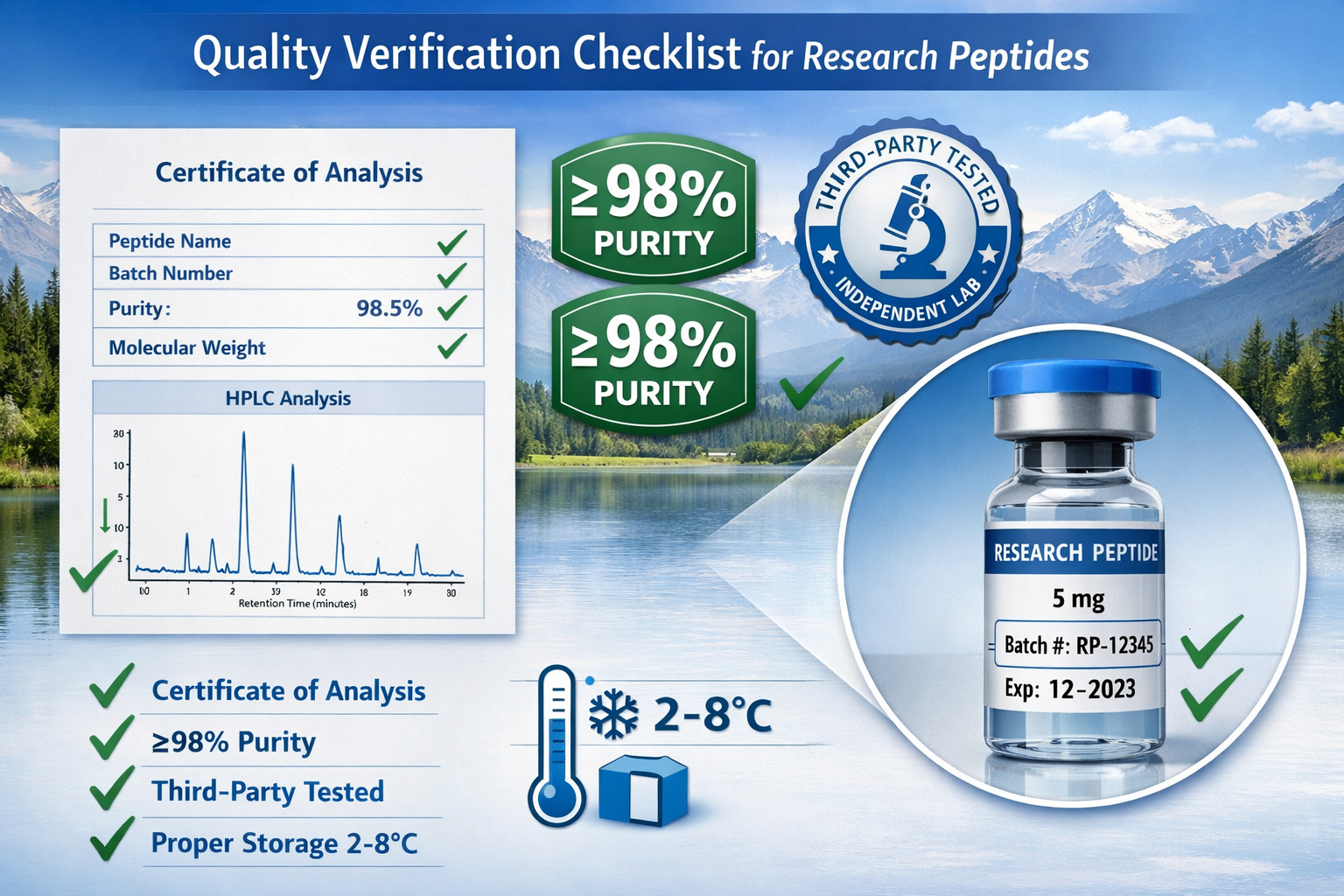
A Certificate of Analysis represents the most important documentation when purchasing research peptides. A legitimate COA should include:
| COA Component | What to Verify | Why It Matters |
|---|---|---|
| HPLC Analysis | Chromatogram showing single major peak | Confirms peptide identity and purity |
| Purity Percentage | ≥98% for research-grade | Ensures minimal contaminants |
| Mass Spectrometry | Molecular weight confirmation | Verifies correct peptide sequence |
| Batch Number | Matches product label | Enables traceability |
| Testing Date | Recent (within 6-12 months) | Confirms current quality status |
| Laboratory Information | Third-party or accredited facility | Validates independent verification |
Red flags to watch for: Generic COAs without batch-specific information, missing HPLC chromatograms, suspiciously perfect purity claims (>99.9%), or COAs that can’t be independently verified.
Proper Labeling and Product Information
Professional suppliers provide comprehensive labeling that includes:
✅ Chemical name and sequence information ✅ Batch/lot number for traceability ✅ Manufacturing and expiry dates ✅ Storage requirements (typically 2-8°C for lyophilized form) ✅ Reconstitution guidelines ✅ Clear “For Research Use Only” designation ✅ Net peptide content (mg) ✅ Molecular weight and formula
Products lacking this essential information should be avoided, as they indicate poor quality control practices and potentially unreliable sourcing.
Storage and Handling Standards
Peptides are delicate molecules that degrade under improper conditions. When evaluating Retatrutide Peptide for Sale: What to Check Before Buying, inquire about:
Pre-shipment storage: Reputable suppliers maintain peptides in controlled environments with consistent temperatures and humidity levels. Lyophilized retatrutide should be stored at -20°C or colder before shipment.
Shipping protocols: Quality suppliers use temperature-controlled packaging with:
- Insulated containers
- Ice packs or dry ice (depending on duration)
- Temperature monitoring indicators
- Expedited shipping options
Shelf life considerations: Properly stored lyophilized retatrutide typically remains stable for 2-3 years when kept at -20°C. Once reconstituted, stability decreases significantly, requiring refrigeration (2-8°C) and use within recommended timeframes.
PEPTIDE PRO’s commitment to quality includes strict temperature control throughout the entire supply chain, from manufacturing to delivery.
Third-Party Testing and Verification
Independent laboratory testing provides an additional layer of quality assurance. Premium suppliers often conduct:
- HPLC (High-Performance Liquid Chromatography): Separates and quantifies peptide components
- Mass Spectrometry: Confirms molecular weight and structure
- Amino Acid Analysis: Verifies sequence composition
- Endotoxin Testing: Ensures absence of bacterial contamination
- Sterility Testing: Confirms microbiological safety
Suppliers who invest in comprehensive third-party testing demonstrate commitment to quality that extends beyond minimum requirements.
Supplier Evaluation: Critical Factors in Choosing a Retatrutide Source
The supplier you choose directly impacts research quality, reproducibility, and safety. When examining Retatrutide Peptide for Sale: What to Check Before Buying, thorough supplier vetting is essential.
Reputation and Track Record
Established history: Suppliers with years of operation and consistent quality delivery demonstrate reliability. Research their background:
- How long have they been in business?
- What is their specialization (peptides specifically or general chemicals)?
- Do they have verifiable customer testimonials from research institutions?
- Are they referenced in scientific publications or research protocols?
Customer feedback: Genuine reviews from researchers provide valuable insights into:
- Product consistency across batches
- Customer service responsiveness
- Shipping reliability
- Problem resolution practices
“PEPTIDE PRO delivers quality, consistency and first-class service — our preferred source for research peptides.” — Dr. A. Roberts, Senior Research Associate, UK
Transparency and Communication
Professional suppliers maintain open communication channels and provide: Accessible customer support: Multiple contact methods (email, phone, contact forms) 📋 Technical expertise: Staff who understand peptide chemistry and can answer specific questions 📊 Detailed product information: Comprehensive specifications beyond basic descriptions 🔍 Willingness to provide documentation: COAs, storage guidelines, and handling protocols upon request
Suppliers who are evasive about quality documentation, testing methods, or sourcing practices should raise immediate concerns.
Regulatory Compliance and Ethical Standards
Legitimate research peptide suppliers operate within clear regulatory frameworks:
Research-use-only designation: All products should be clearly labeled “For Research Use Only — Not for Human or Animal Consumption.” This designation is legally required and indicates the supplier understands regulatory requirements.
Restricted substances protocols: Professional suppliers implement verification processes to ensure peptides are used for legitimate research purposes, including:
- Institutional affiliation verification
- Research project documentation
- Appropriate licensing confirmation
Quality management systems: Look for suppliers who follow recognized quality standards such as:
- ISO certification
- GMP (Good Manufacturing Practice) compliance
- cGMP (current Good Manufacturing Practice) adherence
Pricing Considerations and Value Assessment
While cost shouldn’t be the primary factor, understanding pricing dynamics helps identify potential quality issues:
Realistic pricing: Research-grade peptides require expensive synthesis, purification, and testing processes. Prices significantly below market averages often indicate:
- Lower purity levels
- Inadequate testing
- Improper storage
- Questionable sourcing
Price transparency: Reputable suppliers provide clear pricing without hidden fees for essential services like:
- COA provision
- Proper packaging
- Basic customer support
Value beyond price: Consider the total value proposition:
- Batch consistency (reducing experimental variability)
- Technical support (saving research time)
- Reliable shipping (preventing degradation)
- Documentation quality (supporting research records)
When you explore PEPTIDE PRO’s catalogue, you’ll find transparent pricing that reflects the true cost of maintaining research-grade quality standards.
Geographic and Logistical Considerations
Shipping speed and reliability: Peptide stability during transit is critical. Consider:
- Same-day dispatch options (orders before 1pm)
- Weekend and holiday shipping policies
- International shipping capabilities
- Tracking and insurance options
Customs and import regulations: International orders may face:
- Import documentation requirements
- Customs clearance delays
- Additional fees or duties
- Regulatory restrictions on specific peptides
Local vs. international suppliers: UK-based researchers benefit from domestic suppliers through:
- Faster delivery times
- Reduced shipping costs
- Simplified regulatory compliance
- Easier communication across time zones
PEPTIDE PRO offers fast UK delivery with same-day dispatch for orders placed before 1pm Monday through Friday, ensuring peptides spend minimal time in transit.
Red Flags: Warning Signs of Substandard Retatrutide Products
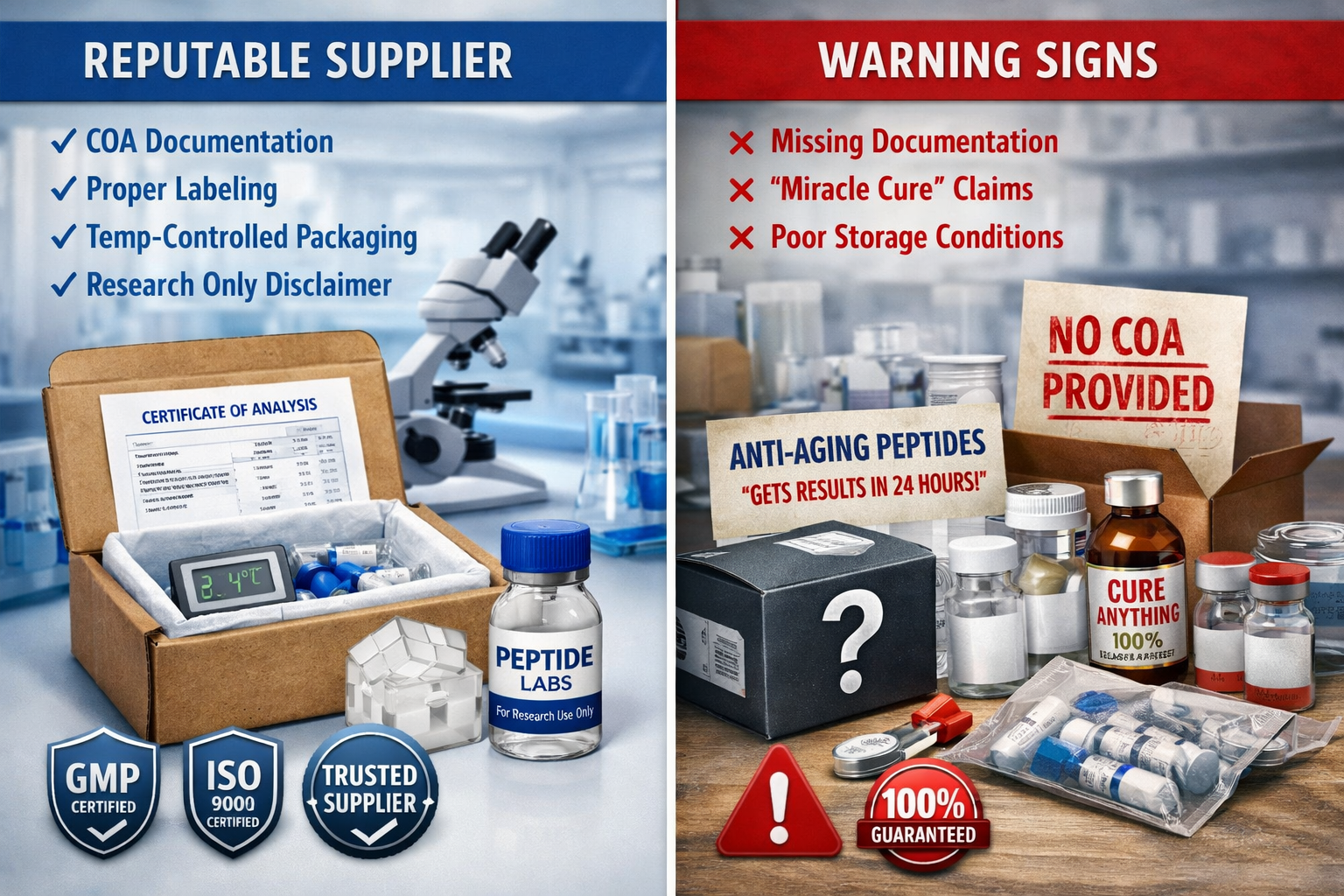
Identifying problematic suppliers before making a purchase protects research integrity and budget. When evaluating Retatrutide Peptide for Sale: What to Check Before Buying, watch for these warning signs:
Documentation and Transparency Issues
🚩 Missing or generic COAs: Suppliers who can’t provide batch-specific Certificates of Analysis or offer only generic templates
🚩 Reluctance to share testing data: Evasive responses when asked about purity testing, HPLC results, or mass spectrometry confirmation
🚩 Unverifiable claims: Purity percentages or quality assertions without supporting documentation
🚩 Inconsistent information: Product descriptions that contradict technical specifications or COA data
Unrealistic Marketing Claims
🚩 Human use suggestions: Any implication that peptides are suitable for human consumption violates regulatory standards and indicates an unethical supplier
🚩 Therapeutic benefit claims: Statements about treating, curing, or preventing diseases exceed the scope of research-use-only products
🚩 Guaranteed results: Promises of specific research outcomes that no legitimate supplier can make
🚩 Comparison to pharmaceutical products: Suggestions that research peptides are equivalent to approved medications
Quality and Handling Concerns
🚩 Absence of storage requirements: Products shipped without clear storage instructions or temperature specifications
🚩 Inadequate packaging: Room-temperature shipping for compounds requiring cold chain maintenance
🚩 No expiry dates: Missing manufacturing or expiration information prevents proper inventory management
🚩 Suspiciously low prices: Costs significantly below market rates often indicate compromised quality
Customer Service and Support Deficiencies
🚩 Poor communication: Delayed responses, incomplete answers, or difficulty reaching customer support
🚩 No technical expertise: Inability to answer basic questions about peptide handling, reconstitution, or storage
🚩 Unclear return policies: Absence of quality guarantees or procedures for addressing defective products
🚩 Limited contact information: Only email contact or anonymous communication channels
Website and Business Legitimacy Issues
🚩 Unprofessional presentation: Poorly designed websites with grammatical errors, broken links, or incomplete information
🚩 Missing business information: No physical address, company registration details, or verifiable business credentials
🚩 Payment security concerns: Unsecured checkout processes or requests for unusual payment methods
🚩 Absence of educational resources: Lack of handling guidelines, reconstitution protocols, or storage recommendations
Legitimate suppliers like PEPTIDE PRO provide comprehensive support, transparent business information, and extensive educational resources to support researchers.
Practical Steps: Your Retatrutide Purchasing Checklist
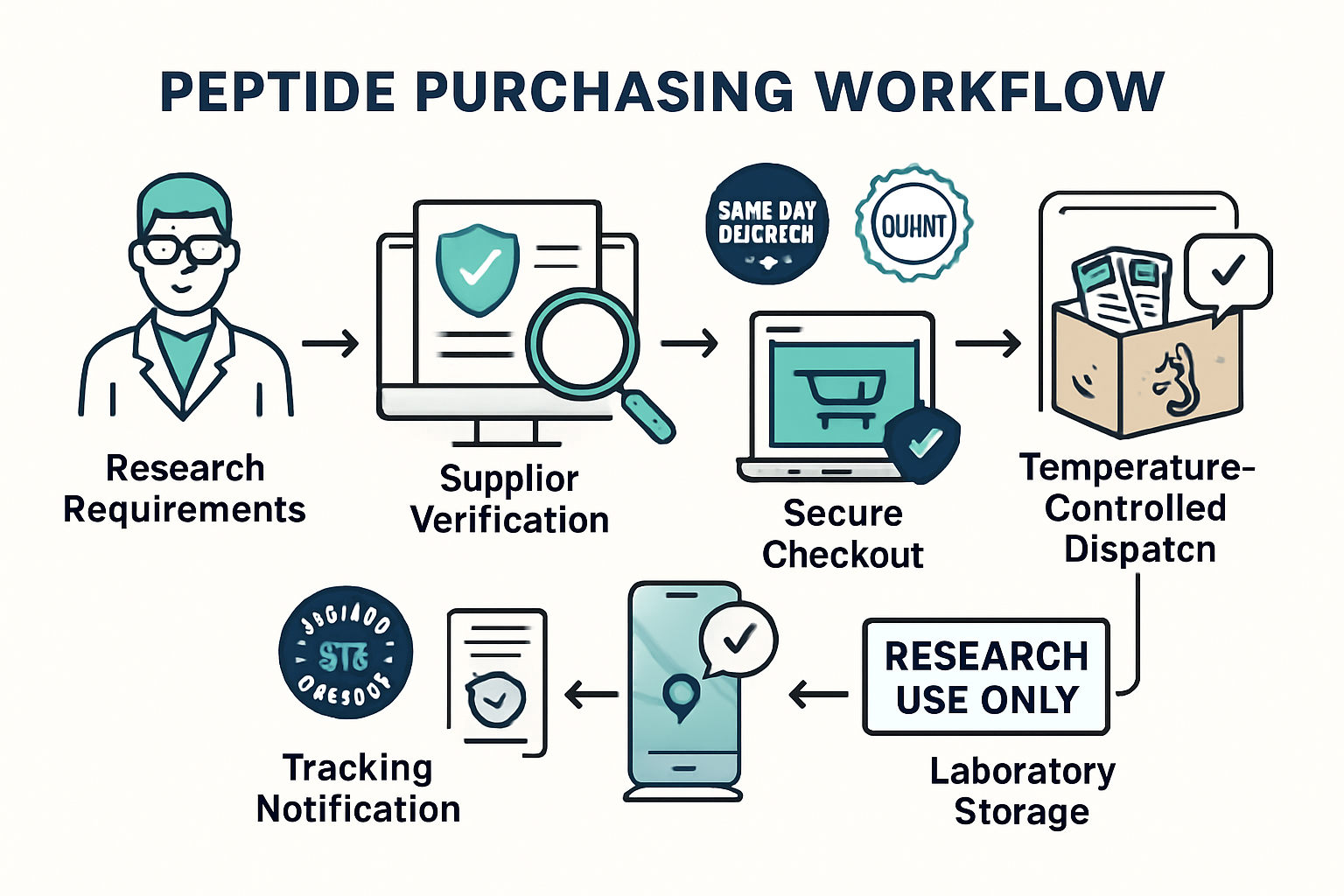
Implementing a systematic evaluation process ensures consistent quality when sourcing retatrutide for research applications. Use this comprehensive checklist when considering Retatrutide Peptide for Sale: What to Check Before Buying:
Pre-Purchase Research Phase
Step 1: Define Your Research Requirements
- Determine required quantity based on experimental design
- Calculate appropriate concentration for your protocols
- Establish budget parameters that accommodate quality standards
- Review institutional procurement policies and requirements
Step 2: Identify Potential Suppliers
- Compile list of established peptide suppliers
- Verify business registration and legitimacy
- Review customer testimonials and independent reviews
- Check for industry certifications or quality accreditations
- Assess website professionalism and information completeness
Step 3: Request Product Information
- Ask for product specifications and technical data
- Request sample COAs (batch-specific when possible)
- Inquire about synthesis methods and purification processes
- Clarify storage requirements and shelf life
- Obtain reconstitution guidelines and handling protocols
Quality Verification Phase
Step 4: Evaluate Documentation
- Review COA for HPLC chromatogram clarity
- Verify purity percentage meets research requirements (≥98%)
- Confirm mass spectrometry data matches expected molecular weight
- Check batch number traceability
- Ensure testing date is recent and relevant
Step 5: Assess Supplier Practices
- Confirm “For Research Use Only” designation on all materials
- Verify proper labeling with complete product information
- Evaluate customer support responsiveness and expertise
- Review shipping methods and temperature control measures
- Understand return/replacement policies for quality issues
Step 6: Compare Value Propositions
- Analyze pricing relative to quality indicators
- Consider total cost including shipping and handling
- Evaluate batch consistency guarantees
- Assess additional services (technical support, documentation)
- Review delivery timeframes and reliability
Purchase and Receipt Phase
Step 7: Place Order with Documentation
- Maintain records of product specifications requested
- Document batch numbers and order details
- Confirm shipping method and expected delivery date
- Verify tracking information provision
- Retain all communication with supplier
Step 8: Inspect Upon Delivery
- Check packaging integrity and temperature indicators
- Verify product labeling matches order specifications
- Confirm batch number corresponds to provided COA
- Inspect pen peptide for physical damage or contamination
- Document receipt date and storage conditions immediately
Step 9: Conduct Initial Quality Assessment
- Verify appearance matches expected characteristics (typically white lyophilized powder)
- Check for proper seal integrity
- Confirm storage requirements are clearly stated
- Review reconstitution instructions before use
- Store immediately under appropriate conditions
Ongoing Quality Management
Step 10: Maintain Research Records
- File COAs with batch numbers in research documentation
- Track storage conditions and duration
- Document reconstitution dates and methods
- Monitor experimental results for consistency
- Note any quality concerns or variations
Step 11: Evaluate Supplier Performance
- Assess product consistency across multiple orders
- Review customer service interactions
- Monitor delivery reliability and packaging quality
- Compare experimental reproducibility between batches
- Maintain supplier performance records for future reference
When you order from PEPTIDE PRO, this systematic approach is supported by comprehensive documentation, transparent quality processes, and professional customer service at every stage.
Storage, Handling, and Reconstitution Best Practices
Proper handling after purchase is equally important as initial quality verification. Even the highest-purity retatrutide can degrade if improperly stored or reconstituted.
Optimal Storage Conditions
Lyophilized (powder) form:
- Temperature: -20°C to -80°C for long-term storage
- Protection: Shield from light using amber pen peptides or foil wrapping
- Humidity control: Store in desiccated environment to prevent moisture absorption
- Duration: Typically stable for 2-3 years under optimal conditions
Reconstituted (solution) form:
- Temperature: 2-8°C (standard refrigeration)
- Protection: Minimize light exposure during storage
- Duration: Use within 2-4 weeks for optimal stability
- Aliquoting: Divide into single-use portions to avoid freeze-thaw cycles
Reconstitution Guidelines
Solvent selection: Bacteriostatic water is commonly used for research peptides, though specific protocols may require:
- Sterile water (for immediate use)
- Buffered solutions (pH-specific requirements)
- Specific diluents based on experimental design
Reconstitution process:
- Equilibrate to room temperature: Allow lyophilized peptide to reach room temperature before opening (prevents condensation)
- Calculate volume: Determine appropriate concentration for your research protocol
- Add solvent slowly: Direct liquid down the pen peptide wall rather than directly onto the peptide cake
- Gentle mixing: Swirl gently or allow to dissolve naturally; avoid vigorous shaking that can denature peptides
- Visual inspection: Ensure complete dissolution with clear solution (cloudiness may indicate aggregation)
- Immediate storage: Refrigerate reconstituted solution promptly
Avoiding Common Handling Errors
❌ Freeze-thaw cycles: Repeated freezing and thawing degrades peptide structure ✅ Solution: Aliquot into single-use portions before initial freezing
❌ Temperature fluctuations: Inconsistent storage temperatures accelerate degradation ✅ Solution: Use dedicated storage with temperature monitoring
❌ Prolonged room temperature exposure: Extended time at ambient temperature reduces stability ✅ Solution: Minimize handling time outside controlled storage
❌ Contamination: Introduction of microorganisms or foreign substances ✅ Solution: Use sterile technique and dedicated equipment
❌ Improper sealing: Exposure to air and moisture ✅ Solution: Ensure pen peptides are properly sealed after each use
For detailed guidance on reconstitution and storage protocols, consult supplier-provided resources or institutional guidelines.
Legal and Ethical Considerations for Research Peptide Purchases
Understanding the regulatory framework surrounding research peptides protects both researchers and institutions from legal complications.
Research-Use-Only Designation
All retatrutide peptides sold for research purposes must carry clear “For Research Use Only” labeling. This designation means:
Permitted uses:
- In vitro laboratory studies
- Cellular research applications
- Animal model investigations (with appropriate ethical approval)
- Analytical method development
- Educational demonstrations in controlled settings
Prohibited uses:
- Human consumption or administration
- Veterinary treatment applications
- Cosmetic or therapeutic use
- Any application outside approved research protocols
Institutional Requirements
Most research institutions require:
Procurement approval: Peptide purchases may need authorization from:
- Laboratory supervisors or principal investigators
- Institutional procurement departments
- Research ethics committees (for animal studies)
- Environmental health and safety offices
Documentation maintenance: Researchers typically must maintain:
- Purchase records and COAs
- Storage location logs
- Usage tracking and inventory management
- Disposal records for expired or unused materials
Protocol compliance: Ensure retatrutide use aligns with:
- Approved research protocols
- Institutional biosafety guidelines
- Regulatory authority requirements
- Funding agency stipulations
Researcher Responsibilities
Proper use verification: Suppliers may request:
- Institutional affiliation confirmation
- Research project descriptions
- Professional credentials verification
- End-use declarations
Accurate representation: Researchers must:
- Provide truthful information about intended use
- Maintain proper storage and handling standards
- Follow institutional and regulatory guidelines
- Report any adverse events or safety concerns
Ethical sourcing: Choose suppliers who:
- Operate within legal frameworks
- Implement appropriate verification processes
- Maintain quality and safety standards
- Support legitimate research advancement
PEPTIDE PRO’s commitment to responsible supply includes clear research-use-only labeling and appropriate verification processes to ensure peptides support legitimate scientific investigation.
Comparing Retatrutide Suppliers: Key Differentiators
Not all suppliers offering retatrutide peptide for sale provide equivalent quality or service. Understanding key differentiators helps researchers make informed decisions.
Quality Assurance Approaches
Tier 1 Suppliers (Premium Research-Grade):
- Comprehensive third-party testing (HPLC, MS, amino acid analysis)
- Batch-specific COAs with detailed chromatograms
- ≥98% purity guarantees
- Strict storage and handling protocols
- Temperature-controlled shipping as standard
- Extensive product documentation
Tier 2 Suppliers (Standard Research-Grade):
- Basic purity testing (HPLC)
- Generic or batch-specific COAs
- ≥95% purity claims
- Standard storage recommendations
- Cold shipping available but may require additional fees
- Basic product information
Tier 3 Suppliers (Questionable Quality):
- Limited or no testing documentation
- Missing or generic COAs
- Unverified purity claims
- Minimal storage guidance
- Room-temperature shipping
- Incomplete product information
Service and Support Differences
| Service Aspect | Premium Suppliers | Standard Suppliers | Budget Suppliers |
|---|---|---|---|
| Technical Support | Expert staff available | Basic support | Limited/none |
| Response Time | Same day | 1-3 business days | Variable/slow |
| Documentation | Comprehensive | Adequate | Minimal |
| Shipping Options | Multiple, including expedited | Standard options | Limited |
| Dispatch Speed | Same-day available | 2-3 business days | Variable |
| Quality Guarantee | Replacement/refund policy | Limited guarantee | None |
| Educational Resources | Extensive guides | Basic information | None |
Price-Quality Relationship
Understanding the cost structure of research-grade peptides helps evaluate whether pricing reflects true quality:
Legitimate cost factors:
- Synthesis complexity and yield
- Purification processes (multiple HPLC runs)
- Quality testing (analytical methods)
- Proper storage infrastructure
- Temperature-controlled shipping
- Quality documentation preparation
- Customer support and expertise
Warning signs in pricing:
- Prices 50%+ below established suppliers (likely indicates compromised quality)
- Identical pricing across all peptides (suggests lack of quality differentiation)
- Frequent “sales” or discounts (may indicate inventory clearance of aging stock)
- No price transparency (hidden fees for essential services)
Geographic and Logistical Advantages
UK-based suppliers (for UK researchers):
- Faster delivery (1-2 days vs. 1-2 weeks international)
- Lower shipping costs
- Simplified customs and import procedures
- Better communication (time zones, language)
- Easier returns or issue resolution
- Familiarity with UK research regulations
International suppliers:
- May offer specialized peptides unavailable domestically
- Potentially different pricing structures
- Longer shipping times with greater degradation risk
- Customs complexity and potential delays
- Communication challenges
- More complicated return processes
For UK-based researchers, PEPTIDE PRO’s UK operations provide the advantages of domestic supply with international-quality standards.
The PEPTIDE PRO Difference: Quality Standards for Research Excellence
When evaluating Retatrutide Peptide for Sale: What to Check Before Buying, understanding what sets premium suppliers apart helps researchers make confident decisions.
Commitment to Purity and Consistency
PEPTIDE PRO maintains exceptional purity standards through:
Rigorous quality control: Every batch undergoes comprehensive testing including:
- High-Performance Liquid Chromatography (HPLC)
- Mass Spectrometry verification
- Amino acid composition analysis
- Purity verification ≥98%
Controlled handling: Research-grade peptides are:
- Produced under strict quality conditions
- Stored in temperature-controlled environments
- Handled using contamination-prevention protocols
- Packaged in appropriate containers with proper sealing
Batch consistency: Standardized processes ensure:
- Reproducible results across orders
- Minimal variation between batches
- Reliable experimental outcomes
- Confidence in research data
Fast, Reliable Delivery
Time-sensitive research demands reliable logistics:
Same-day dispatch: Orders placed before 1pm Monday through Friday are dispatched the same day, minimizing storage time before shipment.
Temperature-appropriate packaging: All peptides ship in packaging designed to maintain proper temperatures during transit, protecting compound integrity.
Tracking and transparency: Full tracking information provided with every order enables researchers to plan receipt and storage.
UK and international options: Fast UK delivery with international shipping capabilities support researchers worldwide.
Comprehensive Support and Resources
Research success extends beyond product quality to include:
Educational resources: Detailed guidance on:
- Proper reconstitution techniques
- Storage requirements and best practices
- Handling protocols to prevent degradation
- Workflow optimization for research applications
Expert customer service: Professional support team provides:
- Prompt responses to inquiries
- Technical expertise on peptide handling
- Relevant advice for research applications
- Problem resolution when issues arise
Transparent documentation: Every product includes:
- Batch-specific Certificates of Analysis
- Complete product specifications
- Clear storage and handling instructions
- Research-use-only designation
Responsible and Ethical Operations
Clear labeling: All products prominently display “For Research Use Only” with explicit statements that peptides are not for human or animal consumption.
Quality transparency: Full product information, COAs, and storage guidance provided without hesitation.
Professional standards: Operations aligned with industry best practices and regulatory requirements.
When you explore PEPTIDE PRO’s extensive range of research peptides, you’re accessing a curated portfolio of high-quality compounds suitable for diverse research applications.
Frequently Asked Questions About Purchasing Retatrutide
What purity level should I look for in research-grade retatrutide?
Research-grade retatrutide should have a minimum purity of ≥98% as verified by HPLC analysis. This purity level ensures minimal contaminants that could affect experimental results. Always request batch-specific Certificates of Analysis showing actual HPLC chromatograms rather than generic purity claims.
How can I verify a Certificate of Analysis is legitimate?
Legitimate COAs include: batch-specific information matching your product label, detailed HPLC chromatogram showing peptide peaks, mass spectrometry data confirming molecular weight, testing laboratory information, and recent testing dates. Be wary of generic COAs that lack specific batch numbers or detailed analytical data.
What is the typical shelf life of lyophilized retatrutide?
When stored properly at -20°C to -80°C in a desiccated environment protected from light, lyophilized retatrutide typically remains stable for 2-3 years. Once reconstituted, stability decreases significantly, and solutions should be stored at 2-8°C and used within 2-4 weeks for optimal results.
Why do prices vary so much between suppliers?
Price variations reflect differences in: synthesis quality and purity levels, testing comprehensiveness, storage and handling standards, shipping methods (temperature-controlled vs. standard), customer support quality, and documentation completeness. Exceptionally low prices often indicate compromised quality, inadequate testing, or improper handling.
Is it safe to purchase retatrutide from international suppliers?
While legitimate international suppliers exist, purchasing domestically offers advantages including: faster delivery times, reduced degradation risk during shipping, simplified customs procedures, easier communication and support, and more straightforward returns or issue resolution. Always verify international suppliers thoroughly and ensure they provide proper temperature-controlled shipping.
What should I do if my retatrutide arrives at room temperature?
Contact the supplier immediately to report the temperature excursion. Peptides exposed to elevated temperatures may have compromised stability and purity. Reputable suppliers should offer replacement or refund for products that weren’t maintained under appropriate conditions during shipping. Do not use peptides that have experienced significant temperature abuse.
Can I use retatrutide for human health purposes?
No. Research-grade retatrutide is labeled “For Research Use Only” and is not approved for human consumption or therapeutic use. It is intended exclusively for in vitro laboratory research, cellular studies, and approved animal model investigations. Using research peptides for human health purposes is illegal and dangerous.
How do I know if a supplier is reputable?
Reputable suppliers demonstrate: established business history with verifiable credentials, transparent quality documentation (batch-specific COAs), professional customer service with technical expertise, proper research-use-only labeling, realistic pricing that reflects quality costs, comprehensive product information and handling guidelines, and positive reviews from research institutions.
Conclusion: Making Informed Decisions for Research Excellence
Navigating the landscape of Retatrutide Peptide for Sale: What to Check Before Buying requires diligence, knowledge, and commitment to quality standards that support research integrity. The decisions researchers make when sourcing peptides directly impact experimental outcomes, data reliability, and ultimately, scientific advancement.
Key Principles for Successful Retatrutide Procurement
Prioritize quality over cost: While budget considerations are important, compromising on purity, testing, or handling standards to save money ultimately costs more through wasted research time, unreliable data, and potentially compromised studies.
Demand comprehensive documentation: Legitimate suppliers provide detailed COAs, product specifications, and handling guidelines without hesitation. Missing or incomplete documentation is a red flag that should prompt reconsideration.
Verify supplier credentials: Established suppliers with transparent operations, professional customer service, and commitment to research-use-only standards demonstrate the reliability essential for consistent research outcomes.
Implement systematic evaluation: Using a structured checklist for supplier and product assessment ensures consistent quality across orders and protects against the risks of substandard peptides.
Maintain proper handling practices: Even the highest-quality retatrutide can degrade if improperly stored or reconstituted. Following best practices for handling, storage, and preparation is essential for realizing the full value of premium peptides.
The Value of Trusted Partnerships
Developing relationships with reliable peptide suppliers creates long-term benefits:
- Consistency: Familiar suppliers provide reproducible quality across multiple orders
- Efficiency: Established relationships streamline ordering and reduce verification time
- Support: Trusted suppliers offer technical expertise and problem-solving assistance
- Reliability: Proven track records reduce risk and uncertainty in research planning
Moving Forward with Confidence
The research peptide market will continue evolving in 2025 and beyond, with increasing demand for compounds like retatrutide driving both innovation and challenges. By applying the principles outlined in this guide—thorough supplier evaluation, rigorous quality verification, proper handling practices, and commitment to ethical standards—researchers can navigate this landscape with confidence.
Your next steps:
- Assess your current supplier against the quality indicators and red flags discussed in this guide
- Review your handling and storage practices to ensure you’re maximizing peptide stability and research value
- Implement the purchasing checklist for your next retatrutide order to systematize quality verification
- Explore reputable suppliers like PEPTIDE PRO that demonstrate commitment to purity, transparency, and research support
Remember that every research project deserves the foundation of high-quality materials. When evaluating Retatrutide Peptide for Sale: What to Check Before Buying, the time invested in thorough supplier evaluation and quality verification pays dividends through reliable results, reproducible experiments, and meaningful scientific contributions.
The pursuit of research excellence begins with the materials that form the foundation of investigation. Choose wisely, verify thoroughly, and handle properly—your research deserves nothing less.
References
[1] Jastreboff AM, et al. (2023). “Triple–Hormone-Receptor Agonist Retatrutide for Obesity — A Phase 2 Trial.” New England Journal of Medicine, 389(6), 514-526.
[2] Rosenstock J, et al. (2023). “Retatrutide, a GIP, GLP-1 and glucagon receptor agonist, for people with type 2 diabetes: a randomised, double-blind, placebo and active-controlled, parallel-group, phase 2 trial conducted in the USA.” The Lancet, 402(10401), 529-544.
[3] Hartman ML, et al. (2020). “Effects of Novel Dual GIP and GLP-1 Receptor Agonist Tirzepatide on Biomarkers of Nonalcoholic Steatohepatitis in Patients With Type 2 Diabetes.” Diabetes Care, 43(6), 1352-1355.
[4] Müller TD, et al. (2019). “Glucagon-like peptide 1 (GLP-1).” Molecular Metabolism, 30, 72-130.
[5] European Medicines Agency. (2022). “Guideline on the quality, non-clinical and clinical aspects of peptide-based medicinal products.” EMA/CHMP/BWP/534898/2008 Rev. 1.