

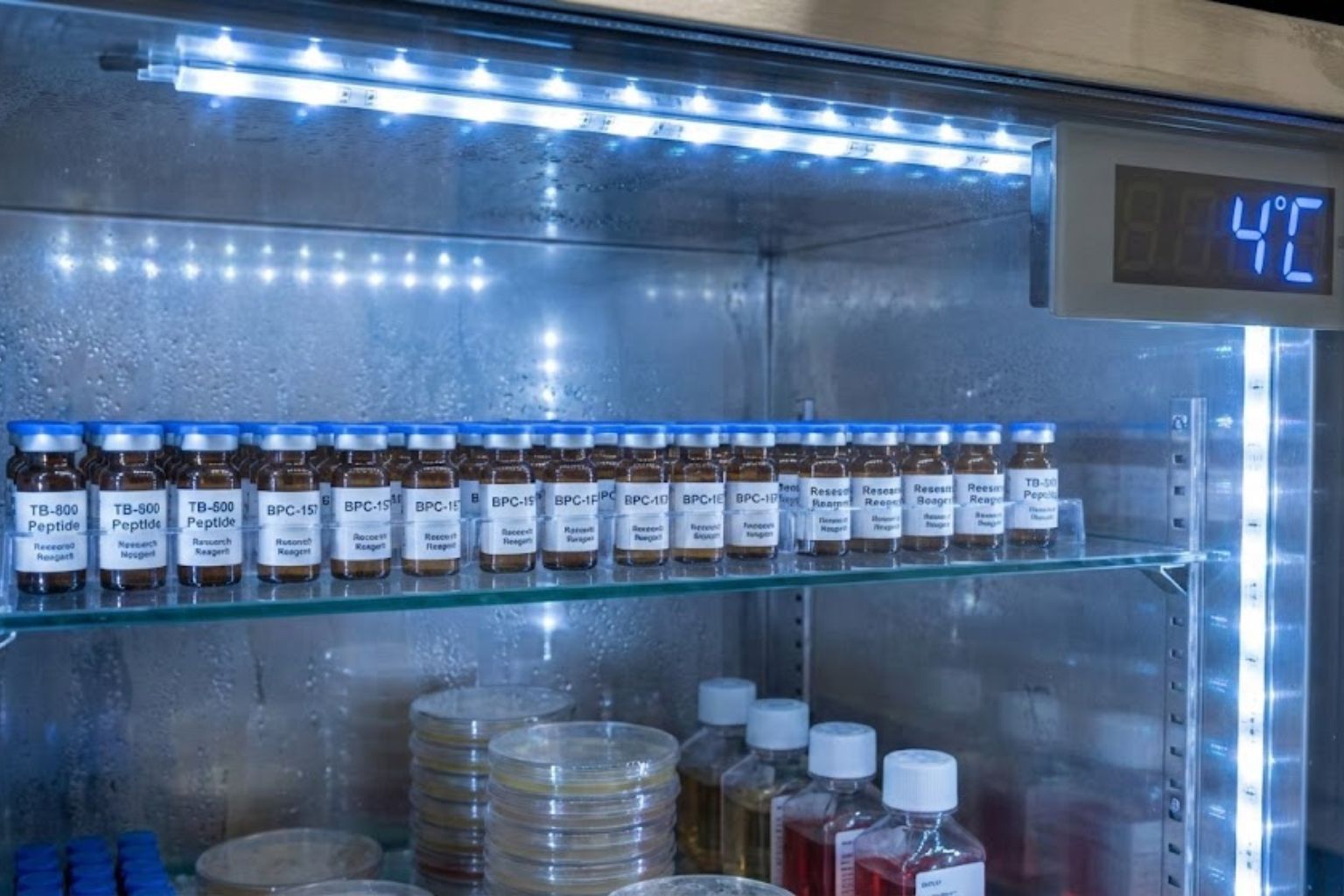
A Comprehensive Guide to TB-500 Storage (Thymosin Beta-4)
In the precise and unforgiving world of peptide research, data integrity is paramount. For researchers utilizing synthetic Thymosin Beta-4, commonly known in the scientific community as TB-500, proper storage is not merely a logistical detail—it is a cornerstone of reproducible science. The validity of an experiment relies heavily on the quality of the reagents used; even the most rigorously designed study can be dismantled by a single compromised pen peptide.
Improper handling can lead to peptide degradation, a silent variable that renders months of longitudinal data invalid and wastes significant budgetary resources. While TB-500 is renowned for its role in actin sequestration, cell migration, and anti-inflammatory pathways, it remains a fragile biological chain susceptible to a host of environmental stressors. Unlike small molecule drugs, which often possess robust stability profiles, peptides like TB-500 rely on specific secondary and tertiary structures to interact with cellular receptors. When these structures are denatured by heat, light, or agitation, the peptide loses its bioactivity.
This comprehensive guide covers the entire lifecycle of the peptide within a laboratory setting—from managing the lyophilised powder upon arrival to handling reconstituted solutions during active experimentation. By strictly adhering to these protocols, you ensure that your research materials remain viable and that your results reflect the true physiological potential of the peptide.
2) Key Takeaways
For researchers requiring a quick reference before delving into the technical minutiae, the following core principles govern the stability of TB-500.
-
Temperature Hierarchies: The state of the peptide dictates its temperature requirements. Lyophilised (powdered) TB-500 is best stored at -20°C for long-term preservation (months to years). For active short-term use (weeks), standard refrigeration at 2–8°C is acceptable. However, once reconstituted, the peptide must be kept at 2–8°C and never frozen.
-
The Stability Window: The introduction of a solvent starts a degradation timer. Once mixed with bacteriostatic water, the solution is chemically stable for approximately 8–14 days. Beyond this window, hydrolysis and oxidation accelerate significantly, leading to a rapid drop in potency.
-
Transport Protocols: Thermal shock is a primary cause of peptide failure. Always ship and travel with insulated medical-grade coolers and frozen gel packs to maintain a consistent cold chain.
-
Avoid Freeze-Thaw Cycles: Repeated fluctuations between freezing and thawing cause ice crystal formation that shears the delicate peptide bonds. To avoid this, researchers should aliquot samples into single-use quantities before freezing.
-
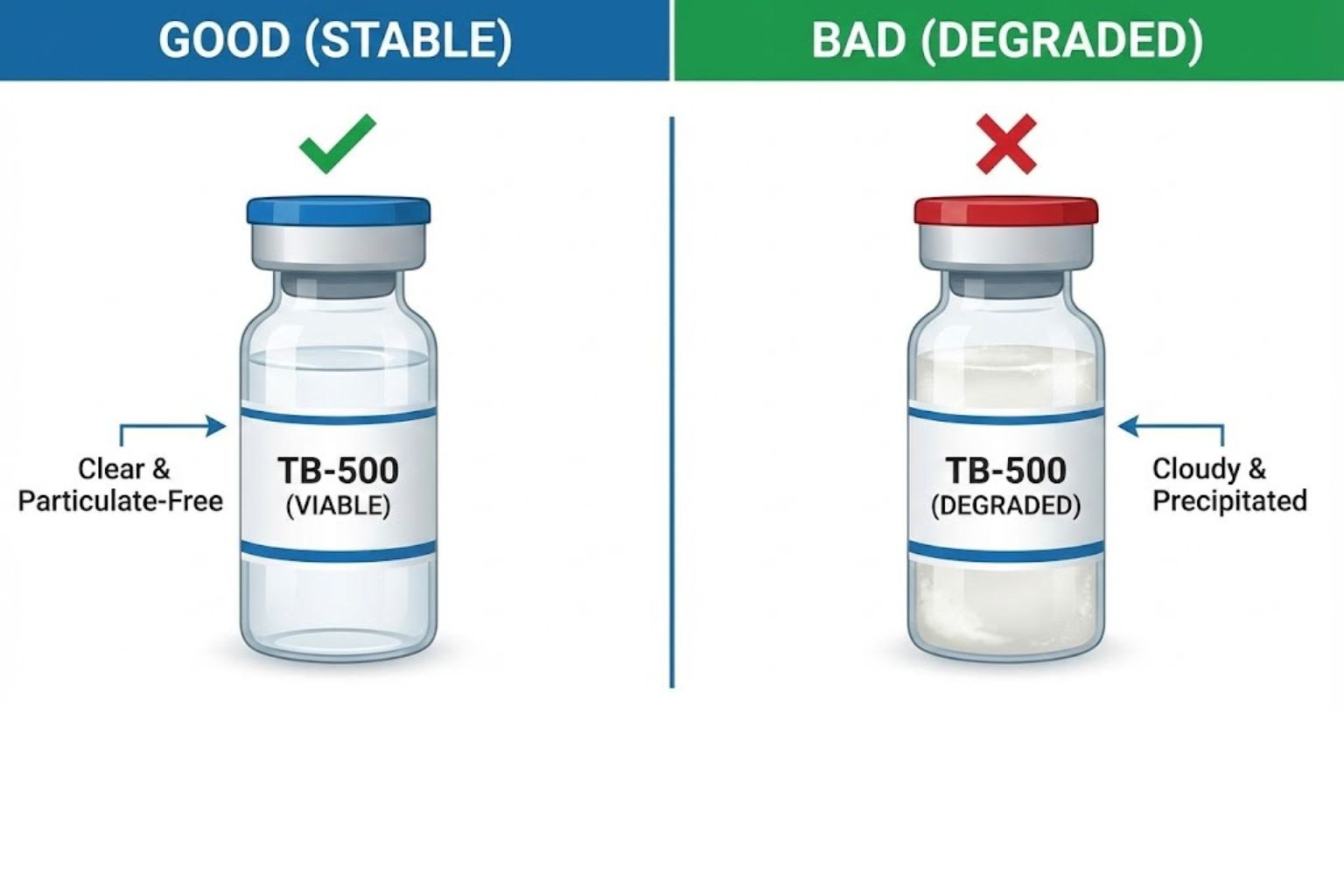
Visual Inspection: Quality control is continuous. Always visually inspect pen peptides for cloudiness, precipitation, or suspended particulates before administration or use in assays. A compromised solution must be discarded immediately.
3) Understanding TB-500 Storage Fundamentals
To understand the strict storage protocols required for TB-500, one must first appreciate the biochemistry of the molecule itself. TB-500 is a synthetic version of Thymosin Beta-4, a naturally occurring, water-soluble regenerative peptide found in high concentrations in blood platelets, wound fluid, and certain tissues. It consists of 43 amino acids and functions primarily by binding to G-actin, preventing its polymerization into actin filaments. This sequestering ability is central to its influence on cell structure and motility.
However, the efficacy of TB-500 in research—ranging from cardiac repair studies to soft tissue healing—relies entirely on this specific amino acid sequence remaining intact. Peptides are held together by peptide bonds (amide bonds), which are susceptible to hydrolysis (breakdown by water) and oxidation (reaction with oxygen). Furthermore, the peptide can undergo conformational changes, where it unfolds or misfolds, preventing it from fitting into the target receptors (such as ATP synthase or actin).
The primary distinction in storage methodology hinges on the physical state of the peptide: lyophilised (freeze-dried) versus reconstituted (liquid).
The Lyophilised State: In its powder form, TB-500 is relatively robust. The lyophilization process removes water, which is the primary medium for chemical reactions like hydrolysis. Without water, the peptide enters a state of suspended animation. It can survive short temperature excursions and is less sensitive to agitation.
The Reconstituted State: Once a solvent (typically bacteriostatic water) is added, the clock starts ticking. The peptide becomes mobile, allowing it to interact with the solvent and dissolved oxygen. It becomes highly reactive and sensitive to heat (which increases molecular kinetic energy and reaction rates) and motion (which can physically shear the molecules). Consequently, the transition from powder to liquid marks a critical shift in how the material must be handled.
4) Temperature Requirements & Refrigeration Protocols
Temperature control is the single most controllable variable in peptide preservation. The Arrhenius equation dictates that chemical reaction rates—including degradation—roughly double for every 10°C increase in temperature. Therefore, keeping TB-500 cold is essentially a way of slowing down time for the molecule.
Lyophilised Powder Storage
For the lyophilised powder, the gold standard for TB-500 storage is a constant temperature of -20°C. At this freezing temperature, molecular motion is minimal, and the peptide can theoretically be preserved for years without significant loss of purity.
However, practical research often requires frequent access. For active research periods, maintaining the pen peptides at standard refrigeration temperatures (2–8°C) is acceptable for weeks to months. The difference in degradation rate between -20°C and 4°C for lyophilised powder is negligible over short durations (4–8 weeks).
Fridge Selection and the “Frost-Free” Danger: Not all cold storage is created equal. Researchers should ideally use a dedicated laboratory refrigerator. If using a combined unit, the freezer section must be chosen with care.
-
Avoid “Frost-Free” Freezers: Most modern residential freezers are “frost-free” or “auto-defrost.” These units work by periodically cycling the temperature up (sometimes above freezing) to melt ice accumulation on the coils, then rapidly cooling back down. This constant temperature oscillation is disastrous for peptides, even lyophilised ones, as it introduces thermal stress and creates micro-climates of moisture within the pen peptide seal.
-
The Solution: Use a manual defrost freezer or a dedicated laboratory freezer that maintains a steady set point.
Room Temperature Exposure: While TB-500 is more stable than some complex proteins like insulin or growth hormones, exposure to room temperature (>20°C) should be minimized. Accidental exposure for a few hours (e.g., during bench work) is usually recoverable and unlikely to ruin the sample. However, days of exposure to ambient room temperature or direct sunlight will degrade potency through oxidation.
5) Reconstituted TB-500 Storage Requirements
The moment bacteriostatic water is introduced to the pen peptide, the rules of storage become strict and unforgiving. The protective stasis of lyophilization is gone, and the peptide is now vulnerable.
Mandatory Refrigeration
Reconstituted pen peptides must strictly stay between 2–8°C. There is no flexibility here. At room temperature, bacteria can proliferate (even with bacteriostatic agents, albeit slowly), and peptide bonds degrade rapidly.
The Usage Timeline
The optimal window for using reconstituted TB-500 is within 8 days. This is the period of peak integrity. While some efficacy may remain up to 14 or even 30 days, research precision demands using fresh solutions. In a controlled study, using a 20-day-old solution introduces a confounding variable: has the effect size diminished because the subject is non-responsive, or because the peptide has degraded to 70% potency? To eliminate this ambiguity, adhere to the 8-14 day rule.
Strategic Placement
The physical location of the pen peptide within the refrigerator matters.
-
Do Not Use the Door: The shelves on the fridge door are the warmest part of the unit and experience the most drastic temperature fluctuations every time the fridge is opened.
-
Back of the Fridge: Store pen peptides in the main body of the fridge, preferably towards the back or bottom, where the thermal mass is highest and the temperature is most stable. Placing the pen peptides inside a secondary container (like a Tupperware or a small Styrofoam box) inside the fridge adds an extra layer of insulation against air currents when the door is opened.
6) Protecting TB-500 From Degradation
Temperature is not the only enemy of peptide stability. A holistic storage protocol must also account for light, physical stress, and microbial contamination.
Light Sensitivity (Photo-Oxidation)
Peptides containing aromatic amino acids (like tryptophan, tyrosine, and phenylalanine) are sensitive to UV light. High-energy photons can excite electrons within these residues, leading to photo-oxidation and the cleavage of the peptide backbone.
-
Protocol: Always store pen peptides in their original cardboard box or an opaque container. Never leave pen peptides sitting on a windowsill or under intense laboratory flourescent lighting for extended periods.
Freeze-Thaw Cycles
A common misconception is that if cold is good, freezing must be better. For reconstituted peptides, this is false.
-
The Mechanism of Damage: When a solution freezes, water molecules crystallize into ice lattices. As these sharp crystals form, they can physically shear the peptide structures. Furthermore, the freezing process concentrates the salts and solutes in the remaining liquid phase before it solidifies, creating a hypertonic environment that can alter the peptide’s pH and charge stability.
-
The Rule: Never refreeze a pen peptide once mixed. If you need to store reconstituted peptide for a long duration, it must be aliquoted before the first freeze, but ideally, you should only reconstitute what you can use within the 2-8°C window.
Contamination and Bacteriostatic Water
Standard sterile water is insufficient for multi-use storage. Once a needle enters a pen peptide, the sterility is technically breached.
-
The Solution: Use Bacteriostatic Water, which contains 0.9% benzyl alcohol. The benzyl alcohol acts as a preservative, inhibiting bacterial growth within the pen peptide during the storage period. This is critical for keeping the solution viable for the full 14-day window. Without it, a reconstituted pen peptide is only safe for single-use (immediate) application.
7) How to Store TB-500 During Travel & Transport
Modern research often requires mobility—whether moving samples between university campuses, transporting materials to a contract research organization (CRO), or field work. Transport is the “danger zone” for storage compliance.
Coolers and Cold Packs
Never transport peptides loose in a bag. Use a high-quality insulated cooler (medical grade if possible, or high-density Styrofoam).
-
The “Buffer” Method: Pack the cooler with frozen gel packs, but ensure the peptide pen peptides do not touch the ice directly. Direct contact can cause flash-freezing of liquid solutions, ruining them. Use a layer of bubble wrap or a towel between the ice packs and the pen peptides to create a cool air pocket (2–8°C) rather than a freezing contact point.
Air Travel Protocols
When flying, never check peptides into the cargo hold. The cargo hold of an aircraft experiences extreme temperature variances, often dropping well below freezing or fluctuating rapidly during loading and unloading on the tarmac.
-
Carry-On Only: Always carry peptides in hand luggage. Modern X-ray scanners are generally considered safe for lyophilised peptides, but heat is not.
-
Documentation: Carry the Material Safety Data Sheet (MSDS) and a prescription or research authorization letter to navigate security screening smoothly.
Vehicle Risks
The interior of a car is a greenhouse. On a sunny 25°C day, the cabin temperature can exceed 50°C in less than 30 minutes.
-
The Rule: Never leave TB-500 storage containers in a parked car, even for a “quick stop.” 50°C heat can denature the peptide in minutes, rendering it useless. If you must travel by car, the cooler must stay with you or the AC must remain on.
8) TB-500 Expiry, Shelf Life & Quality Assessment
Expiry dates provided by manufacturers are not suggestions; they are data-driven limits based on optimal conditions. However, “expired” does not always mean “toxic”—in research, it usually means “unreliable.“
Standard Shelf Life
-
Lyophilised (Powder): Typically 24 months from the date of manufacture, provided it is stored at -20°C.
-
Reconstituted (Liquid): 14 days maximum at 2–8°C.
Visual Indicators of Degradation
Before every use, the researcher must act as a quality control technician.
-
Cloudiness: A healthy TB-500 solution should be crystal clear. Cloudiness suggests that the peptide has precipitated out of the solution or that bacterial growth is occurring.
-
Discolouration: Any yellowing or browning of the solution indicates severe oxidation.
-
Particulates: If you see “floaters” or sediment that does not dissolve upon gentle swirling, the peptide structure has collapsed.
Protocol: If a pen peptide is past its expiry or displays any of these visual cues, discard it immediately. The cost of a new pen peptide is negligible compared to the cost of a failed study.
9) Establishing Laboratory Storage Protocols
Consistency is key. Labs should implement Standard Operating Procedures (SOPs) to remove human error from the storage equation.
1. Log Arrival: Upon receipt of a shipment, immediately inspect the packaging. Was it shipped with ice? Is the ice still frozen? Date the box with the “Date Received” and “Date Opened.“
2. Aliquoting Strategy: If a standard 5mg or 10mg pen peptide contains more peptide than is needed for a single experiment series, do not reconstitute the whole pen peptide.
-
Note: It is difficult to aliquot lyophilised powder without a cleanroom and micro-balance. Therefore, it is often better to purchase smaller pen peptide sizes (e.g., 2mg) that match your experimental needs, rather than buying bulk pen peptides and trying to save the remainder.
-
If Reconstituted Aliquoting is necessary: If you must freeze a liquid, reconstitute, immediately draw into sterile syringes (creating single-use doses), and freeze the syringes at -20°C. This avoids repeated freeze-thaw of a bulk pen peptide, although freezing liquid TB-500 is generally discouraged compared to keeping it lyophilised.
3. Monitoring: Invest in a digital data logger for your lab fridge. These inexpensive devices track temperature 24/7 and can alert you (via an app or alarm) if a power failure occurs or if the door is left ajar. This data provides an audit trail for your samples.
10) Common Storage Mistakes & How to Avoid Them
Even experienced researchers can fall into bad habits. Here are the most common errors and how to correct them.
Mistake 1: Storing reconstituted pen peptides in the freezer.
-
Why it happens: Researchers assume colder is better for preservation.
-
The Consequence: Ice crystals destroy the peptide structure.
-
The Fix: Only freeze powder. Liquid goes in the fridge.
Mistake 2: Shaking the pen peptide vigorously to mix.
-
Why it happens: Impatience during reconstitution.
-
The Consequence: Mechanical stress breaks the peptide bonds and creates foam, which traps peptide in the headspace.
-
The Fix: Gently swirl the pen peptide or roll it between your hands. TB-500 is delicate; treat it like a volatile chemical.
Mistake 3: Ignoring TB-500 storage logs.
-
Why it happens: Administrative fatigue.
-
The Consequence: You forget when a pen peptide was reconstituted and use it on Day 20, compromising data.
-
The Fix: Keep a simple chart or masking tape on the pen peptide itself. Write “Mixed: [Date]” on every pen peptide immediately after adding water.
Mistake 4: Pre-loading syringes for weeks.
-
Why it happens: Convenience.
-
The Consequence: Rubber plungers in syringes can interact with the peptide over time, and the sterility of the needle cap is not absolute.
-
The Fix: Draw up the solution immediately prior to use.
11) TB-500 Storage FAQs
Q: Can I use household fridges for my research samples? A: Yes, but with caveats. You must avoid the door shelves and the vegetable crisper (which can be humid). Place the samples in a sealed container on the middle shelf. Ensure family members or housemates do not move or leave the pen peptides out.
Q: What if I left a lyophilised pen peptide out on the bench overnight? A: If it is still in powder form and the room was not excessively hot (>25°C), it is likely fine. TB-500 powder is stable. Return it to the freezer and proceed.
Q: What if I left a reconstituted pen peptide out overnight? A: This is riskier. If the experiment is critical, discard the pen peptide. If it is a preliminary range-finding study, it might be usable, but note the excursion in your lab book. The risk of bacterial growth increases significantly after 4-6 hours at room temperature.
Q: Is cloudy water okay? A: No. Never use cloudy solution. Cloudiness indicates precipitation (the peptide falling out of solution) or contamination. It will not yield accurate results and could cause injection site reactions in animal models.
Q: Can I mix TB-500 with other peptides (like BPC-157) in the same pen peptide for storage? A: While they are often researched together, storing them mixed is not recommended unless you are using them immediately. Peptides have different isoelectric points and stability requirements. Mixing them can alter the pH and potentially cause one or both to precipitate or degrade faster. Store them separately and mix only in the syringe immediately before administration.
Proper TB-500 storage is the variable you can control in your research. In a field defined by biological variability and complex physiological responses, eliminating the variable of “reagent quality” is essential. By adhering to strict cold-chain protocols, avoiding light and physical agitation, and strictly respecting expiry windows, you ensure that your data reflects the true capabilities of the peptide, not the result of a degraded sample.
Treat your TB-500 with the same precision you apply to your statistical analysis. Use the right water, the right temperature, and the right timeline. In doing so, you protect the integrity of your work, the efficiency of your budget, and the validity of your scientific contribution.
12) Next Steps
To ensure your current research setup is compliant, take the following immediate actions:
-
Conduct an Audit: Check your current inventory. Discard any reconstituted pen peptides older than 14 days or any lyophilised pen peptides past their manufacturer expiry.
-
Verify Equipment: Place a thermometer in your lab fridge to verify it is holding 2–8°C and is not fluctuating.
-
Label Everything: Ensure every pen peptide in your possession has a clear label indicating its arrival date and, if open, its reconstitution date.
-
Stock Bacteriostatic Water: Ensure you have an adequate supply of fresh bacteriostatic water so you are never tempted to use sterile water for multi-dose storage.
13) References
-
Huff, T., et al. (2001). “beta-Thymosins, small acidic peptides with multiple functions.” The International Journal of Biochemistry & Cell Biology. ( discussing structural stability of thymosins).
-
Crockford, D., et al. (2010). “Thymosin beta4: structure, function, and biological properties.” Annals of the New York Academy of Sciences. (Overview of peptide resilience and handling).
-
Manning, M. C., et al. (1989). “Stability of protein pharmaceuticals.” Pharmaceutical Research. (General principles of peptide oxidation and hydrolysis).
-
Goldstein, A. L., et al. (2005). “Thymosin beta4: actin-sequestering protein moonlights to repair injured tissues.” Trends in Molecular Medicine.