

Understanding tirzepatide dose escalation is critical for researchers investigating this dual GIP/GLP-1 receptor agonist peptide. As laboratories worldwide explore tirzepatide’s mechanisms and applications, proper dose escalation protocols have emerged as essential components of rigorous research design. This comprehensive guide examines the scientific principles, methodological considerations, and best practices surrounding tirzepatide dose escalation in controlled research environments.
Key Takeaways
- Tirzepatide dose escalation follows a structured progression typically starting at 2.5mg and advancing through 5mg, 7.5mg, 10mg, 12.5mg, and 15mg increments
- Gradual dose increases minimize adverse effects while optimizing research outcomes and tolerance profiles
- Research-grade tirzepatide requires precise handling, proper reconstitution, and controlled storage conditions
- Dose escalation protocols should incorporate systematic monitoring, documentation, and safety assessments
- High-purity peptides from reputable suppliers like PEPTIDE PRO ensure consistent, reliable research results
Understanding Tirzepatide: Mechanism and Research Applications
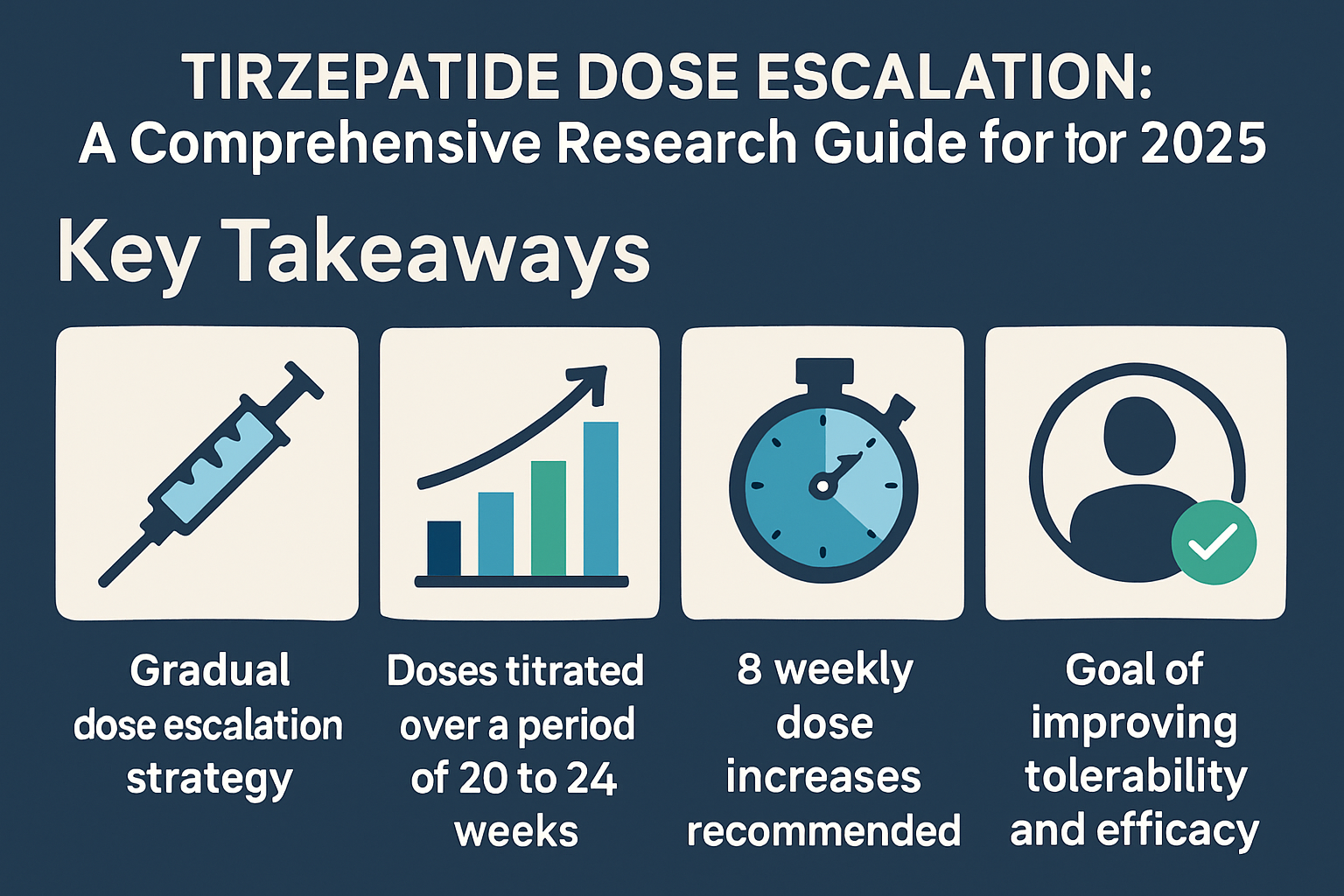
Tirzepatide represents a significant advancement in peptide research, functioning as a dual glucose-dependent insulinotropic polypeptide (GIP) and glucagon-like peptide-1 (GLP-1) receptor agonist. This dual mechanism distinguishes tirzepatide from single-receptor agonists, making it a valuable subject for metabolic and endocrine research.
The Dual Agonist Mechanism
The peptide’s unique structure allows it to activate both GIP and GLP-1 receptors simultaneously, creating synergistic effects that researchers continue to investigate. GIP receptor activation influences glucose homeostasis, lipid metabolism, and energy balance, while GLP-1 receptor engagement affects insulin secretion, gastric emptying, and satiety signaling pathways.
Key research areas include:
- 🔬 Metabolic pathway analysis
- 📊 Receptor binding affinity studies
- 🧬 Cellular signaling cascade investigations
- 📈 Dose-response relationship characterization
- ⚗️ Pharmacokinetic and pharmacodynamic profiling
Research laboratories studying tirzepatide benefit from accessing high-purity research peptides that meet stringent quality standards. The molecular integrity of tirzepatide directly impacts experimental reproducibility and data validity.
Why Research-Grade Purity Matters
When conducting dose escalation studies, peptide purity becomes paramount. Contaminants, degradation products, or inconsistent peptide content can confound dose-response relationships and compromise experimental outcomes. Research-grade tirzepatide should demonstrate:
- ✅ Purity levels exceeding 98% (verified by HPLC)
- ✅ Accurate peptide content (confirmed by mass spectrometry)
- ✅ Proper lyophilization and storage
- ✅ Certificate of Analysis (COA) documentation
- ✅ Batch-to-batch consistency
PEPTIDE PRO maintains exceptional quality standards for all research peptides, including tirzepatide formulations available in various concentrations to support diverse research protocols.
The Science Behind Tirzepatide Dose Escalation
Tirzepatide dose escalation represents a methodical approach to investigating peptide effects across a range of concentrations. This graduated dosing strategy serves multiple scientific purposes in controlled research environments.
Physiological Rationale for Gradual Dose Increases
The principle of dose escalation in peptide research stems from fundamental pharmacological concepts. Starting with lower doses and progressively increasing allows researchers to:
- Establish baseline tolerance profiles before advancing to higher concentrations
- Identify minimum effective doses for specific experimental endpoints
- Characterize dose-dependent response curves with greater precision
- Minimize adverse effects that could compromise experimental subjects or cell cultures
- Optimize therapeutic windows for translational research applications
“Systematic dose escalation provides the granular data necessary to understand the full spectrum of peptide activity, from threshold effects to maximum response plateaus.”
Standard Tirzepatide Dose Escalation Schedule
Research protocols typically follow a structured escalation schedule that has been validated across numerous laboratory settings:
| Dose Level | Concentration | Typical Duration | Research Focus |
|---|---|---|---|
| Initial | 2.5 mg | 4 weeks | Tolerance establishment, baseline measurements |
| Level 2 | 5.0 mg | 4 weeks | Early dose-response characterization |
| Level 3 | 7.5 mg | 4 weeks | Intermediate effect profiling |
| Level 4 | 10.0 mg | 4 weeks | Therapeutic range investigation |
| Level 5 | 12.5 mg | 4 weeks | Enhanced efficacy assessment |
| Maintenance | 15.0 mg | Extended | Maximum tolerated dose studies |
This progressive schedule allows researchers to collect comprehensive data at each concentration level while maintaining experimental integrity. The 4-week intervals provide sufficient time for steady-state conditions and thorough assessment of dose-specific effects.
Factors Influencing Escalation Timing
While the standard schedule provides a framework, several factors may influence the optimal timing of tirzepatide dose escalation in specific research contexts:
Experimental Model Considerations:
- Species or cell line sensitivity
- Baseline metabolic characteristics
- Previous peptide exposure history
- Concurrent experimental interventions
Monitoring Parameters:
- Biomarker response kinetics
- Adverse effect profiles
- Target endpoint achievement
- Receptor saturation indicators
Research Objectives:
- Acute versus chronic effect studies
- Mechanistic versus translational investigations
- Dose-finding versus efficacy confirmation protocols
Researchers working with tirzepatide in various concentrations must carefully consider these variables when designing escalation protocols.
Dose-Response Relationships
Understanding the dose-response relationship is fundamental to effective tirzepatide dose escalation research. This relationship typically follows a sigmoid curve characterized by:
- Threshold dose: Minimum concentration producing detectable effects
- Linear response region: Proportional increases in effect with dose
- Plateau region: Maximum effect achieved, further increases yield minimal additional response
- Toxic dose range: Concentrations producing adverse effects that outweigh benefits
Systematic dose escalation enables precise mapping of these relationships, providing valuable data for subsequent research phases and potential translational applications.
Implementing Tirzepatide Dose Escalation Protocols in Research Settings
Successful implementation of tirzepatide dose escalation requires meticulous attention to methodological details, from peptide preparation through data collection and analysis.
Peptide Reconstitution and Preparation
Proper reconstitution represents the critical first step in any tirzepatide research protocol. Research-grade tirzepatide arrives as lyophilized powder requiring careful reconstitution to achieve accurate concentrations.
Step-by-Step Reconstitution Protocol:
- Environmental Preparation
- Ensure sterile working conditions
- Allow lyophilized peptide to reach room temperature (15-20 minutes)
- Prepare bacteriostatic water or appropriate reconstitution solution
- Gather sterile syringes and needles
- Reconstitution Process
- Calculate required volume based on desired concentration
- Draw reconstitution solution into sterile syringe
- Inject solution slowly down the pen peptide wall (never directly onto powder)
- Allow natural dissolution without vigorous shaking
- Gently swirl if necessary to complete dissolution
- Concentration Verification
- Document final volume precisely
- Calculate actual concentration
- Label pen peptide with concentration, date, and batch information
- Store immediately under appropriate conditions
For researchers requiring multiple tirzepatide concentrations, preparing separate pen peptides for each dose level ensures accuracy and prevents cross-contamination.
Storage and Stability Considerations
Maintaining peptide integrity throughout dose escalation studies requires strict adherence to storage protocols:
Lyophilized Peptide:
- Store at -20°C to -80°C
- Protect from light and moisture
- Shelf life: typically 12-24 months when properly stored
- Minimize freeze-thaw cycles
Reconstituted Peptide:
- Store at 2-8°C (refrigerated)
- Use within 14-28 days depending on formulation
- Protect from light
- Never freeze reconstituted solutions
- Document storage duration for quality control
“Peptide degradation can occur rapidly under improper storage conditions, potentially compromising dose accuracy and experimental validity.”
Dosing Administration Techniques
Precise administration is essential for maintaining the integrity of tirzepatide dose escalation protocols. Whether working with in vitro systems, ex vivo models, or in vivo research subjects, consistency in administration technique ensures reproducible results.
Critical Administration Factors:
� Timing Consistency: Administer doses at the same time points across all experimental groups
📏 Volume Accuracy: Use calibrated equipment appropriate for required volumes
🌡️ Temperature Control: Bring refrigerated solutions to appropriate temperature before administration
📝 Documentation: Record exact dose, time, route, and any observations immediately
🔄 Rotation Protocols: For injection-based studies, rotate sites to prevent localized effects
Monitoring and Safety Assessment
Comprehensive monitoring throughout the dose escalation process provides essential data while ensuring experimental integrity. Research protocols should incorporate systematic assessment at each dose level.
Recommended Monitoring Parameters:
Baseline Assessments (before each escalation):
- Relevant biomarkers specific to research objectives
- Physiological parameters appropriate to experimental model
- Behavioral or functional measurements
- Tissue or cellular health indicators
Ongoing Monitoring (during each dose level):
- Daily or regular observation protocols
- Scheduled biomarker sampling
- Adverse effect surveillance
- Dose-specific endpoint measurements
Escalation Decision Points:
- Predefined criteria for advancing to next dose level
- Safety thresholds that would pause escalation
- Efficacy benchmarks indicating optimal dosing
- Data quality checkpoints
Documentation and Record-Keeping
Rigorous documentation forms the foundation of reproducible research. Comprehensive records of tirzepatide dose escalation protocols enable:
- ✏️ Experimental replication by other researchers
- 📊 Accurate data analysis and interpretation
- 🔍 Troubleshooting unexpected results
- 📚 Publication and peer review processes
- 🔬 Regulatory compliance when applicable
Essential Documentation Elements:
| Category | Required Information |
|---|---|
| Peptide Source | Supplier, batch number, COA, purity level |
| Reconstitution | Solution type, volume, concentration, date |
| Storage | Temperature logs, duration, handling notes |
| Administration | Dose, time, route, technique, personnel |
| Observations | All measurements, adverse events, deviations |
| Analysis | Data processing methods, statistical approaches |
Researchers sourcing peptides from PEPTIDE PRO receive comprehensive documentation including Certificates of Analysis, facilitating complete record-keeping.
Optimizing Research Outcomes with Tirzepatide Dose Escalation
Strategic optimization of tirzepatide dose escalation protocols can significantly enhance research quality, data richness, and experimental efficiency.
Designing Dose-Finding Studies
Dose-finding represents a primary application of escalation protocols. These studies aim to identify optimal concentrations for specific research endpoints.
Key Design Considerations:
1. Endpoint Selection Choose primary and secondary endpoints that:
- Demonstrate dose-dependent responses
- Possess adequate sensitivity to detect differences
- Align with research objectives
- Can be measured reliably across dose levels
2. Sample Size Determination Calculate appropriate group sizes based on:
- Expected effect sizes at different doses
- Measurement variability
- Statistical power requirements
- Resource constraints
3. Control Groups Incorporate appropriate controls:
- Vehicle-only controls
- Positive controls (known active compounds)
- Baseline/pre-treatment measurements
- Time-matched controls
4. Randomization and Blinding Implement when feasible:
- Random assignment to dose groups
- Blinded outcome assessment
- Blinded data analysis
- Documentation of blinding procedures
Comparative Studies: Tirzepatide vs. Other Peptides
Tirzepatide dose escalation studies often benefit from comparative analysis with related peptides. Researchers may compare tirzepatide’s dose-response profile to:
- Single GLP-1 receptor agonists like semaglutide
- Other dual agonists
- Novel triple agonists
- Combination peptide therapies
Such comparative frameworks provide context for interpreting tirzepatide-specific findings and identifying unique characteristics of its dose-response relationship.
Managing Common Research Challenges
Even well-designed tirzepatide dose escalation protocols may encounter challenges. Proactive strategies for common issues include:
Challenge: Variable Response Across Subjects
- Solution: Increase sample sizes, stratify by baseline characteristics, use within-subject designs when appropriate
Challenge: Plateau Effects at Lower Doses
- Solution: Consider alternative escalation schedules, investigate receptor saturation, explore combination approaches
Challenge: Unexpected Adverse Effects
- Solution: Implement dose holds, reduce increment size, extend observation periods, enhance monitoring frequency
Challenge: Batch-to-Batch Variability
- Solution: Source from consistent suppliers, verify each batch with analytical testing, maintain detailed batch records
Challenge: Stability Issues
- Solution: Prepare fresh solutions more frequently, optimize storage conditions, validate stability under research conditions
Advanced Protocol Variations
Beyond standard linear escalation, researchers may employ sophisticated protocol variations:
Adaptive Dose Escalation: Adjust escalation speed based on real-time response data, accelerating through well-tolerated doses and slowing near threshold effects.
Intra-Individual Escalation: Each subject/sample receives all dose levels sequentially, reducing inter-individual variability and enabling paired statistical analyses.
Dose De-escalation Studies: After reaching maximum dose, systematically reduce to identify minimum effective maintenance dose.
Intermittent Dosing Protocols: Investigate dose escalation with non-continuous administration schedules to study duration-dependent effects.
Data Analysis and Interpretation
Comprehensive analysis of tirzepatide dose escalation data requires appropriate statistical approaches:
Dose-Response Modeling:
- Non-linear regression (sigmoid curves, Hill equations)
- ED50/EC50 calculations
- Maximum effect (Emax) determination
- Slope characterization
Comparative Statistics:
- ANOVA across dose groups
- Post-hoc pairwise comparisons
- Trend analysis
- Mixed-effects models for repeated measures
Safety Analysis:
- Adverse event frequency by dose
- Severity grading
- Dose-limiting toxicity identification
- Therapeutic index calculation
Visualization:
- Dose-response curves with confidence intervals
- Individual response trajectories
- Heatmaps for multiple endpoints
- Time-course plots by dose level
Sourcing Research-Grade Tirzepatide for Dose Escalation Studies
The quality of research peptides directly determines experimental validity. Selecting appropriate suppliers represents a critical decision for any tirzepatide dose escalation research program.
Quality Criteria for Research Peptides
When evaluating tirzepatide sources, researchers should prioritize:
Purity and Composition:
- ≥98% purity by HPLC
- Mass spectrometry confirmation
- Minimal degradation products
- Accurate peptide content
Documentation:
- Comprehensive Certificates of Analysis
- Batch-specific testing data
- Storage and handling recommendations
- Stability information
Manufacturing Standards:
- GMP or equivalent production facilities
- Quality control procedures
- Contamination prevention protocols
- Traceability systems
Supplier Reliability:
- Consistent product quality
- Batch-to-batch reproducibility
- Responsive technical support
- Transparent communication
PEPTIDE PRO: Research-Grade Tirzepatide Supplier
PEPTIDE PRO specializes in supplying high-purity research peptides to laboratories and researchers across the UK and internationally. Their tirzepatide offerings support comprehensive dose escalation research:
Product Range:
Service Excellence:
- ⚡ Same-day dispatch for orders placed before 1pm (Mon-Fri)
- 🚚 Fast UK delivery with international shipping options
- 📋 Complete product documentation and COAs
- 🔬 Research-grade purity standards
- 💬 Responsive customer support for research inquiries
Quality Assurance: All PEPTIDE PRO peptides are:
- Produced under strict quality conditions
- Stored in controlled environments
- Clearly labeled “For Research Use Only”
- Accompanied by full product information
- Batch-tested for purity and composition
Ordering Considerations for Dose Escalation Studies
When planning tirzepatide dose escalation research, consider ordering strategies that support your entire protocol:
Quantity Planning:
- Calculate total peptide requirements across all dose levels
- Include buffer for preparation losses and quality control testing
- Account for repeat experiments or extended study duration
- Consider ordering larger quantities for batch consistency
Concentration Selection: Choose tirzepatide concentrations that:
- Minimize reconstitution complexity
- Align with planned dose levels
- Reduce preparation errors
- Optimize storage efficiency
Timing:
- Order with sufficient lead time before study initiation
- Account for delivery times and customs (international orders)
- Plan for peptide equilibration to storage temperature
- Schedule reconstitution timing appropriately
Complementary Research Peptides
Researchers conducting tirzepatide dose escalation studies may also investigate related peptides for comparative analysis:
- Semaglutide: GLP-1 receptor agonist for comparative studies
- Cagrilintide: Amylin analog for combination research
- Mazdutide: Dual GLP-1/glucagon agonist
- Survodutide: GLP-1/glucagon dual agonist
PEPTIDE PRO’s extensive catalogue supports comprehensive metabolic peptide research programs with consistent quality across all products.
Safety Considerations in Tirzepatide Dose Escalation Research
While tirzepatide research occurs in controlled laboratory settings, safety considerations remain paramount for experimental integrity and ethical research practices.
Laboratory Safety Protocols
Handling research peptides requires adherence to standard laboratory safety practices:
Personal Protective Equipment:
- Laboratory coats or protective clothing
- Appropriate gloves (nitrile recommended)
- Safety glasses when handling powders or solutions
- Proper respiratory protection if aerosolization risk exists
Workspace Preparation:
- Clean, dedicated preparation areas
- Proper ventilation
- Spill containment materials readily available
- Waste disposal containers for peptide materials
Contamination Prevention:
- Aseptic technique for reconstitution
- Dedicated equipment for peptide work
- Regular cleaning and decontamination
- Separation from incompatible materials
Experimental Subject Welfare
For researchers conducting tirzepatide dose escalation in biological systems, subject welfare considerations include:
Monitoring Intensity: Increase observation frequency during:
- Initial doses at each escalation level
- First 24-48 hours post-escalation
- Any periods of unexpected responses
- Final high-dose phases
Humane Endpoints: Establish clear criteria for:
- Temporary dose holds
- Dose reduction
- Study withdrawal
- Intervention thresholds
Environmental Optimization: Maintain optimal conditions:
- Temperature and humidity control
- Appropriate lighting cycles
- Stress minimization
- Enrichment when applicable
Adverse Effect Documentation
Systematic recording of adverse effects provides essential safety data and informs future tirzepatide dose escalation protocols:
Classification System:
- Grade 1 (Mild): Minimal impact, no intervention required
- Grade 2 (Moderate): Some impact, monitoring increased
- Grade 3 (Severe): Significant impact, intervention considered
- Grade 4 (Life-threatening): Immediate intervention required
Documentation Requirements:
- Onset timing relative to dose administration
- Duration and resolution
- Severity grading
- Relationship to dose level
- Interventions implemented
- Outcome
Regulatory and Ethical Compliance
Research involving peptides must comply with relevant regulations and ethical standards:
Institutional Oversight:
- Appropriate committee approvals before study initiation
- Protocol review and approval
- Ongoing compliance monitoring
- Amendment procedures for protocol changes
Research Use Only Designation: All PEPTIDE PRO products are clearly labeled “For Research Use Only” and are not intended for human or animal consumption. This designation ensures:
- Appropriate use in laboratory settings
- Compliance with regulatory frameworks
- Protection of researchers and institutions
- Ethical research practices
Documentation Standards:
- Maintain comprehensive study records
- Document all protocol deviations
- Record safety incidents
- Archive data appropriately
Future Directions in Tirzepatide Dose Escalation Research
The field of tirzepatide research continues to evolve, with tirzepatide dose escalation protocols adapting to new scientific questions and technological capabilities.
Emerging Research Applications
Novel research directions incorporating tirzepatide dose escalation include:
Mechanistic Investigations:
- Receptor subtype-specific signaling pathways
- Tissue-specific dose-response relationships
- Temporal dynamics of dual agonism
- Downstream effector characterization
Combination Strategies:
- Tirzepatide with complementary peptides
- Synergistic dose optimization
- Additive versus synergistic effect characterization
- Combination dose-response surface mapping
Precision Medicine Approaches:
- Biomarker-guided dose escalation
- Genetic variant impact on dose-response
- Individualized optimal dosing prediction
- Response predictor identification
Long-term Effect Studies:
- Extended dose escalation timelines
- Chronic exposure effects
- Tolerance development characterization
- Sustained versus intermittent dosing comparisons
Technological Advances
Emerging technologies enhance tirzepatide dose escalation research capabilities:
Analytical Methods:
- High-resolution mass spectrometry for peptide characterization
- Advanced biomarker multiplex assays
- Real-time monitoring technologies
- Automated data collection systems
Modeling Approaches:
- Computational dose-response prediction
- Machine learning for optimal dose identification
- Pharmacokinetic/pharmacodynamic modeling
- Systems biology integration
Delivery Systems:
- Novel formulation research
- Alternative administration routes
- Controlled-release investigations
- Bioavailability optimization
Knowledge Gaps and Research Opportunities
Despite extensive research, several questions remain regarding tirzepatide dose escalation:
Optimal Escalation Parameters:
- Ideal increment size for different research contexts
- Minimum duration at each dose level
- Individual versus population-based escalation strategies
- Dose de-escalation protocols
Mechanistic Understanding:
- Dose-dependent receptor occupancy dynamics
- Tissue distribution across dose levels
- Metabolic fate at different concentrations
- Long-term adaptations to chronic exposure
Translational Considerations:
- Laboratory-to-clinical dose translation
- Species differences in dose-response
- Scaling factors for different models
- Predictive biomarkers for dose optimization
These knowledge gaps represent opportunities for innovative research using high-quality peptides from suppliers like PEPTIDE PRO, who support the research community with consistent, reliable products.
Practical Tips for Successful Tirzepatide Dose Escalation Studies
Drawing from established research practices, these practical recommendations can enhance the success of tirzepatide dose escalation protocols:
Planning Phase
✓ Define Clear Objectives: Articulate specific research questions that dose escalation will address, ensuring the protocol design directly supports these goals.
✓ Conduct Thorough Literature Review: Examine existing tirzepatide research to inform dose selection, escalation timing, and endpoint choices.
✓ Pilot Testing: When feasible, conduct small-scale pilot studies to validate methodology before full-scale implementation.
✓ Resource Assessment: Ensure adequate:
- Peptide quantities
- Analytical capabilities
- Personnel time
- Equipment access
- Funding duration
Execution Phase
✓ Standard Operating Procedures: Develop detailed SOPs for:
- Peptide reconstitution
- Dose preparation
- Administration techniques
- Monitoring protocols
- Data recording
✓ Quality Control Checkpoints: Implement regular verification of:
- Peptide concentration accuracy
- Storage condition maintenance
- Equipment calibration
- Data quality
- Protocol adherence
✓ Flexibility with Rigor: Balance protocol adherence with appropriate adaptations when unexpected findings emerge, documenting all deviations.
✓ Team Communication: Maintain clear communication among research team members regarding:
- Protocol updates
- Unusual observations
- Safety concerns
- Data anomalies
Analysis Phase
✓ Prespecified Analysis Plan: Define statistical approaches before data collection to prevent bias and ensure appropriate methods.
✓ Data Visualization: Create comprehensive visualizations that reveal dose-response patterns and facilitate interpretation.
✓ Sensitivity Analysis: Test robustness of findings to analytical assumptions and potential outliers.
✓ Contextual Interpretation: Interpret results within the broader context of tirzepatide research and related peptide studies.
Dissemination Phase
✓ Comprehensive Reporting: Document all aspects of the tirzepatide dose escalation protocol, including:
- Detailed methodology
- Complete results (positive and negative)
- Limitations and challenges
- Unexpected findings
✓ Data Sharing: When appropriate, make data available to support scientific progress and reproducibility.
✓ Protocol Publication: Consider publishing detailed protocols to benefit other researchers and advance methodological rigor.
Advancing Research Through Systematic Tirzepatide Dose Escalation
Tirzepatide dose escalation represents a fundamental methodological approach for investigating this promising dual GIP/GLP-1 receptor agonist. Through systematic progression from lower to higher doses, researchers can comprehensively characterize dose-response relationships, optimize experimental protocols, and generate robust data that advances scientific understanding.
Key Success Factors
Successful tirzepatide dose escalation research depends on:
- High-Quality Peptides: Sourcing research-grade tirzepatide from reputable suppliers like PEPTIDE PRO ensures consistent purity, accurate concentrations, and reliable results
- Rigorous Methodology: Implementing systematic protocols for reconstitution, storage, administration, and monitoring maintains experimental integrity
- Comprehensive Documentation: Detailed record-keeping enables reproducibility, troubleshooting, and meaningful data interpretation
- Safety Consciousness: Prioritizing laboratory safety and ethical research practices protects researchers and ensures responsible science
- Analytical Rigor: Applying appropriate statistical methods and thoughtful interpretation extracts maximum value from dose escalation data
Actionable Next Steps
For researchers planning tirzepatide dose escalation studies:
Immediate Actions:
- 📋 Define specific research objectives and endpoints
- 🔬 Design detailed dose escalation protocol
- 📦 Source high-purity tirzepatide from PEPTIDE PRO
- 📝 Develop comprehensive documentation systems
- ✅ Obtain necessary approvals and permissions
Short-term Preparation:
- Validate reconstitution and storage procedures
- Calibrate equipment and verify analytical methods
- Train personnel on standardized techniques
- Establish quality control checkpoints
- Prepare data collection infrastructure
Long-term Optimization:
- Analyze pilot data to refine protocols
- Implement continuous improvement processes
- Stay current with emerging research findings
- Build collaborative networks with other researchers
- Contribute findings to the scientific community
The PEPTIDE PRO Advantage
Researchers conducting tirzepatide dose escalation studies benefit from partnering with PEPTIDE PRO, which offers:
- Exceptional Purity: Research-grade peptides with verified quality
- Comprehensive Range: Multiple tirzepatide concentrations supporting diverse protocols
- Fast Delivery: Same-day dispatch for UK orders placed before 1pm
- Expert Support: Knowledgeable team available to address research questions
- Quality Documentation: Complete COAs and product information
- Reliable Consistency: Batch-to-batch reproducibility for long-term studies
As tirzepatide research continues to expand in 2025 and beyond, systematic dose escalation protocols will remain essential for generating high-quality scientific data. By combining rigorous methodology, high-purity peptides, and thoughtful experimental design, researchers can unlock new insights into this remarkable dual agonist peptide.
Whether investigating fundamental mechanisms, characterizing dose-response relationships, or exploring novel applications, tirzepatide dose escalation provides the systematic framework necessary for advancing scientific knowledge and potentially translating laboratory findings into meaningful applications.
For researchers ready to begin their tirzepatide dose escalation studies with premium research-grade peptides, explore PEPTIDE PRO’s tirzepatide catalogue or contact their team for personalized research support.