


If you’re considering or currently using tirzepatide in the UK, understanding which foods to avoid can make the difference between achieving optimal results and experiencing unnecessary side effects. This powerful GLP-1 receptor agonist has transformed weight management approaches, but its effectiveness depends significantly on dietary choices. Knowing which tirzepatide foods to avoid UK-specific guidelines recommend will help you maximize benefits while minimizing discomfort.
Key Takeaways
- High-fat foods significantly slow gastric emptying when combined with tirzepatide, increasing nausea and digestive discomfort
- Refined sugars and simple carbohydrates can counteract tirzepatide’s blood glucose benefits and trigger unwanted side effects
- Alcohol consumption should be limited or avoided entirely due to increased risk of hypoglycemia and gastrointestinal distress
- Spicy and acidic foods often exacerbate common tirzepatide side effects like heartburn and stomach upset
- Proper meal timing and portion control are essential for managing side effects and achieving optimal therapeutic outcomes
Understanding Tirzepatide and Its Dietary Implications
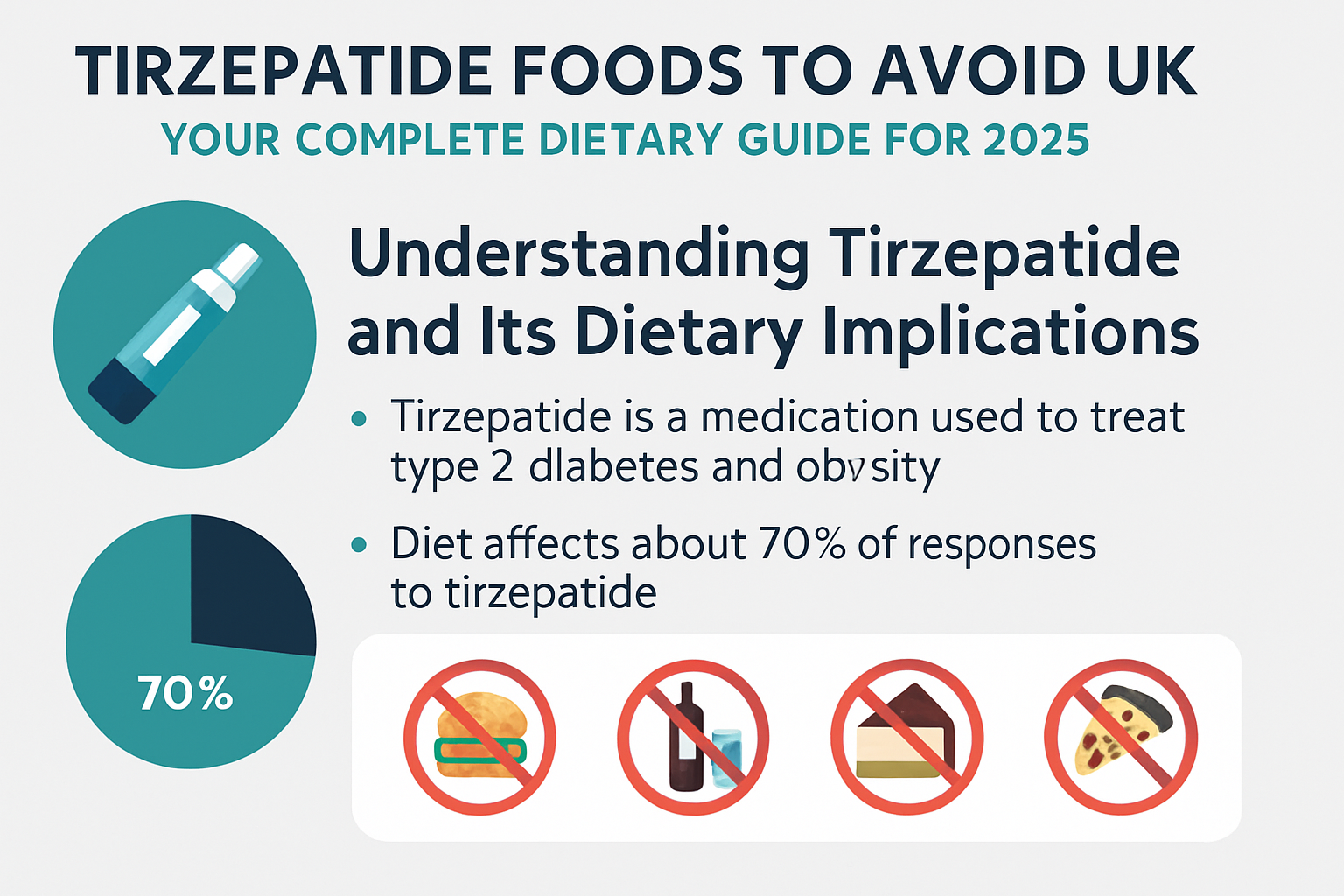
Tirzepatide represents a breakthrough in metabolic health management, functioning as a dual glucose-dependent insulinotropic polypeptide (GIP) and glucagon-like peptide-1 (GLP-1) receptor agonist. This dual-action mechanism significantly impacts how your body processes food, making dietary awareness crucial for anyone using this peptide.
The compound works by slowing gastric emptying—essentially reducing how quickly food moves through your digestive system. While this mechanism contributes to increased satiety and improved glycemic control, it also means that certain foods can cause pronounced discomfort or interfere with the medication’s effectiveness.
For UK residents exploring research-grade peptides for scientific purposes, understanding these dietary interactions provides valuable context for experimental protocols and observational studies.
How Tirzepatide Affects Digestion
When tirzepatide slows gastric emptying, food remains in your stomach longer than usual. This extended residence time means:
- Increased fullness sensations that can quickly turn to discomfort with the wrong food choices
- Heightened sensitivity to fatty, greasy, or heavy foods
- Greater risk of nausea when consuming foods that are difficult to digest
- Altered nutrient absorption patterns that may affect how your body processes certain macronutrients
The medication also influences insulin secretion and glucagon regulation, making blood sugar management more sensitive to dietary carbohydrate quality and timing.
High-Fat Foods: The Primary Category of Tirzepatide Foods to Avoid UK
Among all dietary considerations, high-fat foods represent the most problematic category for tirzepatide users. The combination of delayed gastric emptying and high dietary fat creates a perfect storm for digestive discomfort.
Why Fat Is Particularly Problematic
Dietary fat naturally slows digestion under normal circumstances. When combined with tirzepatide’s gastric-slowing effects, this creates an exaggerated delay that can lead to:
- Severe nausea lasting several hours after eating
- Bloating and abdominal distension that can be quite uncomfortable
- Acid reflux and heartburn due to prolonged stomach fullness
- Reduced appetite to the point of inadequate nutrition
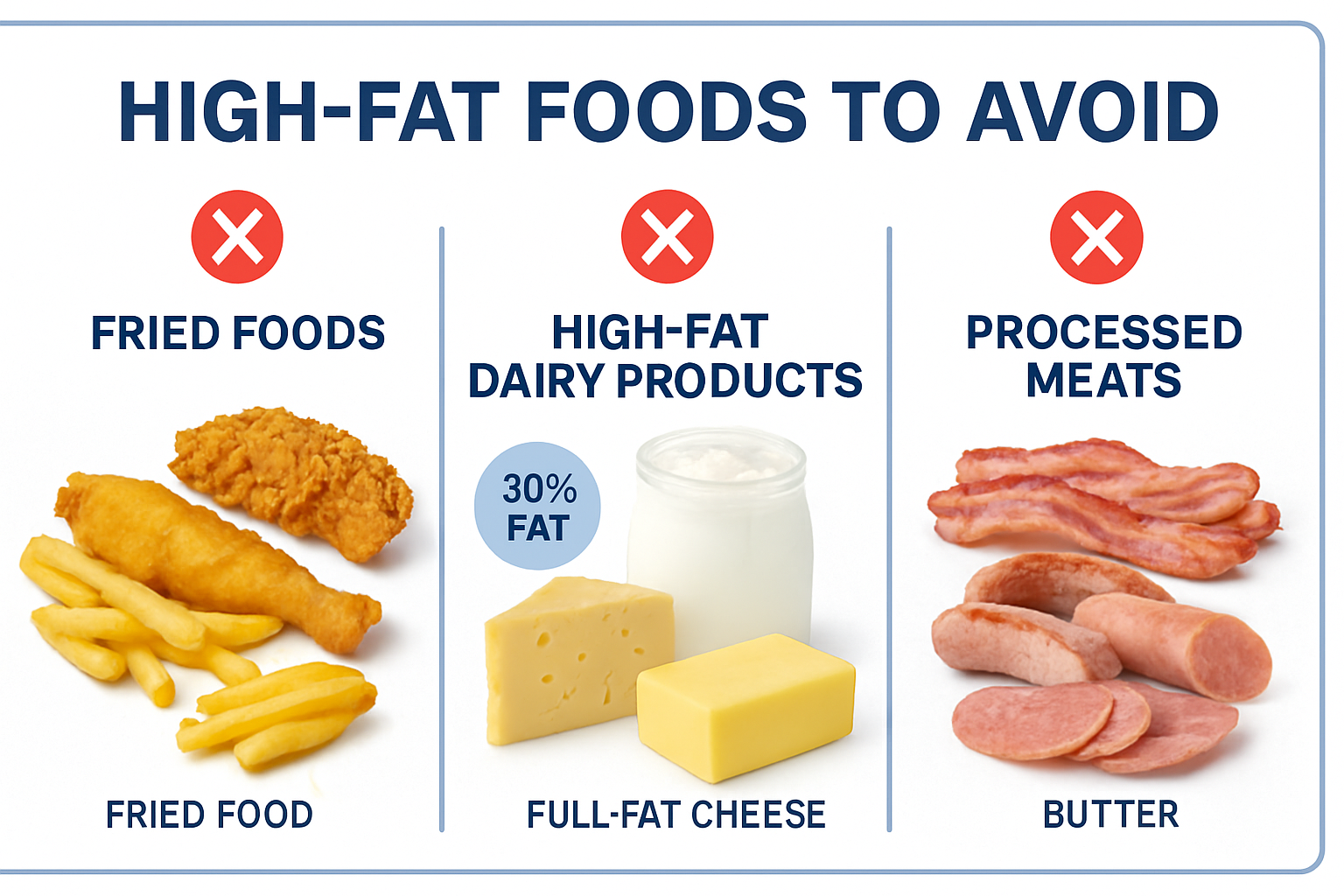
Specific High-Fat Foods to Avoid
Fried and Deep-Fried Foods 🍟
- Fish and chips (a UK staple that becomes problematic)
- Fried chicken and battered foods
- Crisps and fried snacks
- Samosas, pakoras, and other fried appetizers
- Deep-fried Mars bars and similar treats
Full-Fat Dairy Products 🧀
- Whole milk and full-fat cream
- Hard cheeses (cheddar, stilton, red leicester)
- Full-fat yogurt and ice cream
- Butter in large quantities
- Cream-based sauces and soups
Fatty Meats and Processed Proteins 🥓
- Bacon and sausages (traditional English breakfast items)
- Fatty cuts of beef, pork, and lamb
- Processed deli meats high in fat
- Pork pies and sausage rolls
- Black pudding and other high-fat offal
High-Fat Prepared Foods 🥧
- Pastries, croissants, and Danish pastries
- Pies (steak and kidney, chicken and mushroom)
- Takeaway curries with heavy cream bases
- Pizza with extra cheese
- Creamy pasta dishes
Better Alternatives
Instead of eliminating these food categories entirely, consider lower-fat alternatives:
| Instead of… | Choose… |
|---|---|
| Full-fat milk | Skimmed or semi-skimmed milk |
| Fried fish | Grilled or baked fish |
| Fatty beef mince | Extra-lean turkey or chicken mince |
| Cheddar cheese | Reduced-fat cottage cheese |
| Cream-based sauces | Tomato or vegetable-based sauces |
| Butter on toast | Thin spread of avocado |
Those researching peptide protocols can find high-purity tirzepatide formulations through specialized suppliers for controlled experimental work.
Refined Sugars and Simple Carbohydrates
While tirzepatide helps regulate blood glucose, consuming refined sugars and simple carbohydrates can work against the medication’s benefits and trigger unwanted side effects.
The Sugar-Tirzepatide Interaction
Refined sugars cause rapid blood glucose spikes that, while partially mitigated by tirzepatide, can still lead to:
- Blood sugar fluctuations that may cause energy crashes
- Increased cravings that undermine weight management goals
- Gastrointestinal upset when combined with the medication’s effects
- Reduced therapeutic effectiveness over time
Specific Sugary Foods to Limit or Avoid
Sweets and Confectionery 🍬
- Traditional British sweets (jelly babies, wine gums, liquorice allsorts)
- Chocolate bars and chocolate-covered biscuits
- Fudge, toffee, and hard candies
- Pick and mix selections
Sugary Beverages 🥤
- Regular fizzy drinks (Coca-Cola, Irn-Bru, lemonade)
- Fruit squash with added sugar
- Sweetened tea and coffee drinks
- Energy drinks
- Fruit juices (even 100% juice contains concentrated sugars)
Baked Goods and Desserts 🍰
- Cakes, particularly frosted varieties
- Biscuits (digestives, custard creams, bourbons)
- Doughnuts and sweet pastries
- Trifle and other traditional British puddings
- Jam, marmalade, and honey in large quantities
Processed Breakfast Items
- Sugary cereals
- Sweetened porridge sachets
- Jam on toast
- Pancakes with syrup
Healthier Carbohydrate Choices
Focus on complex carbohydrates that provide sustained energy without dramatic blood sugar spikes:
- Whole grain bread instead of white bread
- Steel-cut or rolled oats rather than instant porridge
- Brown rice, quinoa, and bulgur wheat instead of white rice
- Sweet potatoes rather than white potatoes prepared with fat
- Fresh whole fruits in moderation (berries are particularly beneficial)
Professional Tip: When you do consume carbohydrates, pair them with lean protein and fiber to further slow absorption and minimize blood sugar impact.
Alcohol: A Significant Consideration for Tirzepatide Foods to Avoid UK
Alcohol consumption requires special attention when using tirzepatide, as the combination can create multiple complications beyond simple dietary concerns.
Why Alcohol Is Problematic
The interaction between tirzepatide and alcohol creates several risk factors:
Hypoglycemia Risk 📉 Alcohol can lower blood sugar levels, and when combined with tirzepatide’s glucose-regulating effects, this may lead to dangerously low blood glucose, particularly in those using the peptide for diabetes management.
Gastrointestinal Amplification 🤢 Alcohol irritates the stomach lining under normal circumstances. With tirzepatide’s gastric-slowing effects, this irritation becomes more pronounced and prolonged, leading to:
- Increased nausea and vomiting risk
- Severe heartburn and acid reflux
- Stomach pain and cramping
- Delayed recovery from these symptoms
Dehydration Concerns 💧 Both alcohol and tirzepatide can affect hydration status. Alcohol’s diuretic effect combined with potential tirzepatide-related nausea and reduced fluid intake creates dehydration risk.
Impaired Judgment 🧠 Alcohol may impair your ability to recognize and respond to side effects or make appropriate food choices while using tirzepatide.
UK-Specific Alcohol Considerations
British drinking culture makes this particularly relevant:
- Pub meals often combine problematic elements (alcohol + high-fat foods)
- Social drinking expectations may create pressure to consume alcohol
- Traditional drinks like real ale, cider, and spirits all pose concerns
- “Rounds” culture can lead to excessive consumption
Safer Approaches to Alcohol
If you choose to consume alcohol while using tirzepatide:
✅ Limit quantity strictly – One drink maximum, consumed slowly ✅ Never drink on an empty stomach – Have a protein-rich meal first ✅ Choose lower-alcohol options – Light beer or wine spritzer rather than spirits ✅ Hydrate extensively – Drink water before, during, and after alcohol consumption ✅ Monitor blood glucose – Check levels if you have diabetes ✅ Avoid mixing – Don’t combine alcohol with other problematic foods
For researchers investigating peptide interactions, PEPTIDE PRO provides comprehensive product information and certificates of analysis for experimental protocols.
Spicy, Acidic, and Irritating Foods
Foods that irritate the gastrointestinal tract under normal conditions become significantly more problematic when using tirzepatide.
The Irritation Factor
Tirzepatide’s mechanism of slowing gastric emptying means irritating foods remain in contact with your stomach lining for extended periods, amplifying their effects.
Foods That May Cause Irritation
Spicy Foods
🌶Hot curries (vindaloo, madras, jalfrezi)
- Spicy Mexican food (jalapeños, hot salsa, spicy burritos)
- Hot sauce and chili-based condiments
- Spicy crisps and snacks
- Peri-peri chicken and similar preparations
Acidic Foods 🍅
- Tomato-based sauces in large quantities
- Citrus fruits and juices (oranges, grapefruit, lemons)
- Vinegar-heavy foods (pickles, certain salad dressings)
- Citrus-marinated dishes
Other Potential Irritants
- Strong coffee (especially on an empty stomach)
- Peppermint in large quantities
- Raw onions and garlic in excess
- Extremely hot temperature foods and beverages
Individual Tolerance Varies
⚠️ Important Note: Tolerance to these foods varies significantly between individuals. Some tirzepatide users can handle moderate spice levels without issue, while others experience severe discomfort from even mildly seasoned foods.
Recommendation: Reintroduce potentially irritating foods gradually and in small quantities to assess your personal tolerance.
Gentler Flavor Alternatives
You don’t need to sacrifice flavor entirely:
- Herbs instead of spice – Basil, oregano, thyme, rosemary
- Mild seasonings – Garlic powder, onion powder (rather than raw)
- Gentle acids – Lemon zest rather than juice
- Flavor-building techniques – Roasting vegetables to enhance natural sweetness
- Aromatic vegetables – Celery, carrots, and fennel for depth without irritation
Carbonated Beverages and Gas-Producing Foods
Bloating and abdominal discomfort are common side effects of tirzepatide. Certain foods and beverages can significantly worsen these symptoms.
Why Carbonation Is Problematic
Carbonated drinks introduce gas directly into your digestive system. With slowed gastric emptying, this gas becomes trapped longer, causing:
- Excessive bloating and abdominal distension
- Increased belching and discomfort
- Feeling of fullness that may prevent adequate nutrition
- Abdominal pain in some cases
Beverages to Avoid or Limit
- Fizzy soft drinks (even diet/zero-sugar varieties)
- Sparkling water and flavored seltzers
- Beer and champagne
- Carbonated energy drinks
- Fizzy mixers (tonic water, ginger ale, soda water)
Gas-Producing Foods
Certain foods naturally produce gas during digestion. While healthy and nutritious, they may need to be limited during tirzepatide use:
Cruciferous Vegetables 🥦
- Broccoli, cauliflower, Brussels sprouts
- Cabbage (including in coleslaw)
- Kale in large quantities
Legumes and Pulses 🫘
- Beans (baked beans, kidney beans, black beans)
- Lentils and chickpeas
- Split peas
Other Gas-Producing Foods
- Onions (particularly raw)
- Certain whole grains in large quantities
- Sugar alcohols (sorbitol, xylitol, mannitol) found in sugar-free products
Managing These Foods
Rather than complete avoidance, consider:
- Smaller portions – Reduce serving sizes of gas-producing foods
- Cooking methods – Well-cooked vegetables produce less gas than raw
- Gradual introduction – Build tolerance slowly
- Enzyme supplements – Products like Beano may help with legume digestion
- Soaking legumes – Proper preparation reduces gas-producing compounds
Processed and Ultra-Processed Foods
The UK diet includes many processed convenience foods that can interfere with tirzepatide’s effectiveness and exacerbate side effects.
Why Processed Foods Are Problematic
Ultra-processed foods typically combine multiple problematic elements:
- High fat content (often hidden fats)
- Refined carbohydrates and added sugars
- High sodium levels contributing to water retention
- Artificial additives that may irritate digestion
- Poor nutritional density despite high calorie content
Common UK Processed Foods to Limit
Ready Meals and Convenience Foods 📦
- Microwave meals and TV dinners
- Frozen pizzas
- Instant noodles and pot meals
- Pre-packaged sandwiches with heavy mayo or dressings
- Tinned pasta and similar products
Processed Snacks
- Crisps and flavored chips
- Processed cheese snacks
- Sausage rolls and pasties from shops
- Pork scratchings
- Most cereal bars and “health” bars
Fast Food and Takeaways 🍔
- Burger chain meals
- Fried chicken shops
- Kebab shop offerings
- Most chip shop items beyond plain fish
- Chinese takeaway items high in sugar and fat
Processed Breakfast Items
- Breakfast sandwiches from chains
- Processed breakfast meats
- Sweetened yogurts with additives
- Highly processed cereals
Reading UK Food Labels
When shopping in the UK, use traffic light labeling to guide choices:
� Red (High) – Avoid or strictly limit
- Fat: More than 17.5g per 100g
- Saturated fat: More than 5g per 100g
- Sugars: More than 22.5g per 100g
- Salt: More than 1.5g per 100g
🟡 Amber (Medium) – Consume occasionally in moderation
� Green (Low) – Best choices for regular consumption
For those conducting research on peptide formulations, PEPTIDE PRO’s extensive catalogue includes various tirzepatide concentrations for experimental applications.
Timing and Portion Considerations
Understanding when and how much you eat is equally important as what you eat when using tirzepatide.
Meal Timing Strategies
Smaller, More Frequent Meals
️ Rather than three large meals, consider 4-5 smaller meals throughout the day:
- Reduces stomach overload at any one time
- Maintains more stable energy levels
- Minimizes nausea and discomfort
- Helps ensure adequate nutrition despite reduced appetite
Avoid Eating Close to Bedtime 🌙 With slowed gastric emptying, late meals can cause:
- Nighttime heartburn and reflux
- Disrupted sleep
- Morning nausea
- Prolonged fullness into the next day
Recommendation: Finish eating at least 3-4 hours before bed.
Portion Control Guidelines
Tirzepatide significantly reduces appetite, but this can be both beneficial and problematic:
Listen to Satiety Signals 👂
- Stop eating when comfortably satisfied, not “full”
- Recognize that fullness arrives more quickly than pre-medication
- Don’t force yourself to finish portions
- Use smaller plates to adjust visual expectations
Ensure Adequate Nutrition ⚖️ Despite reduced appetite, your body still needs:
- Sufficient protein (1.2-1.6g per kg body weight daily)
- Essential vitamins and minerals
- Adequate hydration (2-3 liters of water daily)
- Enough calories to support healthy metabolic function
Warning Signs of Inadequate Intake:
- Extreme fatigue
- Hair loss or brittle nails
- Muscle weakness
- Dizziness or lightheadedness
- Difficulty concentrating
Strategic Meal Composition
Structure meals to maximize nutrition while minimizing side effects:
The Ideal Plate
½ plate: Non-starchy vegetables (leafy greens, peppers, courgettes, tomatoes)
- ¼ plate: Lean protein (chicken breast, white fish, turkey, tofu)
- ¼ plate: Complex carbohydrates (brown rice, quinoa, sweet potato)
- Small addition: Healthy fat (olive oil drizzle, small portion of avocado)
Eating Order Strategy Some users find eating foods in a specific order reduces discomfort:
- Start with protein (most important for satiety and nutrition)
- Follow with vegetables (fiber and nutrients)
- Finish with carbohydrates (if still comfortable)
This approach ensures you consume the most nutritionally important foods first, before fullness becomes overwhelming.
UK-Specific Dietary Challenges and Solutions
British food culture presents unique challenges for tirzepatide users. Here’s how to navigate common situations.
Traditional British Meals
The Full English Breakfast 🍳 Traditional version is problematic (high fat, processed meats), but you can create a modified version:
❌ Avoid: Bacon, sausages, fried eggs, fried bread, black pudding, baked beans ✅ Choose: Poached or scrambled eggs (minimal butter), grilled tomatoes, mushrooms, small portion of baked beans, wholemeal toast
Sunday Roast 🍖 This beloved tradition can be adapted:
❌ Avoid: Fatty cuts of meat, Yorkshire puddings, excessive gravy, roast potatoes cooked in lots of fat ✅ Choose: Lean roast chicken or turkey breast, steamed or lightly roasted vegetables, small portion of dry-roasted potatoes, thin gravy
Fish and Chips 🐟 The quintessential British meal needs significant modification:
❌ Avoid: Battered fried fish, deep-fried chips, curry sauce, mushy peas with butter ✅ Choose: Grilled fish without batter, small portion of oven-baked chips, side salad, vinegar for flavor
Social Eating Situations
Pub Meals 🍺 Navigate pub menus by:
- Choosing grilled options over fried
- Requesting salad instead of chips
- Asking for dressings and sauces on the side
- Selecting clear soups over creamy versions
- Opting for mineral water or diet soft drinks
Afternoon Tea ☕ This British institution can be enjoyed with modifications:
- Select sandwiches with lean fillings (cucumber, smoked salmon)
- Choose scones but limit butter and cream
- Enjoy fresh fruit options
- Drink tea without excessive sugar
- Share portions with companions
Takeaway Modifications When ordering takeaway:
- Chinese: Steamed dishes, avoid sweet and sour, request less oil
- Indian: Tandoori options, tomato-based curries, avoid naan and creamy sauces
- Pizza: Thin crust, vegetable toppings, light cheese
- Thai: Clear soups, stir-fries with less oil, avoid coconut-based curries
Seasonal Considerations
Christmas and Holiday Eating 🎄 British holiday traditions are food-focused:
- Christmas dinner: Focus on turkey breast, vegetables, small portions of sides
- Mince pies: Limit to one small pie, or skip entirely
- Selection boxes: Avoid or share with others
- Party buffets: Fill plate with vegetables and lean proteins first
Summer BBQs ☀️ Warm weather gatherings can be navigated successfully:
- Choose grilled chicken or fish over burgers and sausages
- Load up on salads (watch creamy dressings)
- Bring a healthy dish to share
- Stay hydrated with water, not alcohol or fizzy drinks
For research institutions requiring high-purity peptide compounds, PEPTIDE PRO offers professional consultation and bulk ordering options.
Hydration: The Often-Overlooked Essential
While not technically a “food to avoid,” improper hydration significantly impacts tirzepatide tolerance and effectiveness.
Why Hydration Matters More with Tirzepatide
Nausea Management 💧 Adequate hydration helps reduce nausea severity and duration. Dehydration exacerbates gastrointestinal discomfort.
Constipation Prevention 🚽 Slowed gastric emptying can lead to constipation. Proper hydration keeps digestive processes moving.
Medication Effectiveness 💊 Optimal hydration supports proper medication distribution and metabolic function.
Hydration Guidelines
Daily Targets:
- Minimum: 2 liters (approximately 8 glasses) daily
- Optimal: 2.5-3 liters for most adults
- More if: Exercising, warm weather, experiencing side effects
Best Hydration Sources:
- Plain water (still, not carbonated)
- Herbal teas (peppermint may help nausea for some)
- Weak squash with minimal sugar
- Water with cucumber, lemon, or mint infusion
Beverages to Limit:
- Caffeinated drinks (count only 50% toward hydration)
- Fruit juices (high sugar content)
- Artificially sweetened drinks (may cause digestive upset)
Hydration Timing:
- Sip throughout the day rather than large amounts at once
- Drink between meals rather than with meals (reduces stomach overload)
- Increase intake if experiencing nausea or vomiting
- Monitor urine color (pale yellow indicates good hydration)
Signs of Dehydration
Watch for these warning signs:
- Dark yellow urine
- Dizziness or lightheadedness
- Dry mouth and lips
- Headaches
- Increased fatigue
- Worsening nausea
Managing Side Effects Through Dietary Choices
Even with careful food selection, some side effects may occur. Strategic dietary choices can help manage them.
Nausea Management
Foods That May Help: 🤢
- Plain crackers or dry toast
- Ginger (fresh, tea, or crystallized in small amounts)
- Cold foods (often better tolerated than hot)
- Bland, low-fat proteins
- Small, frequent sips of water
Eating Strategies:
- Never allow yourself to become too hungry
- Avoid strong food smells when nauseous
- Eat slowly and chew thoroughly
- Rest after eating (but don’t lie flat)
- Keep a food diary to identify triggers
Constipation Relief
Helpful Foods: 🥗
- High-fiber vegetables (cooked to reduce gas)
- Prunes and prune juice in moderation
- Flaxseed (ground, added to foods)
- Whole grains in appropriate portions
- Adequate water intake (essential)
Foods to Avoid:
- Processed foods low in fiber
- Excessive dairy products
- Refined grains
- Dehydrating beverages
Heartburn and Reflux
Soothing Choices: 🔥
- Oatmeal and whole grain cereals
- Bananas and melons
- Green vegetables
- Lean proteins
- Ginger tea
Trigger Foods to Avoid:
- Tomato-based products
- Citrus fruits
- Chocolate
- Peppermint
- Fatty or fried foods
- Alcohol and caffeine
Lifestyle Modifications:
- Eat smaller, more frequent meals
- Avoid lying down after eating
- Elevate head of bed
- Wear loose-fitting clothing
- Avoid eating 3-4 hours before bedtime
Creating Your Personalized Tirzepatide-Friendly Meal Plan
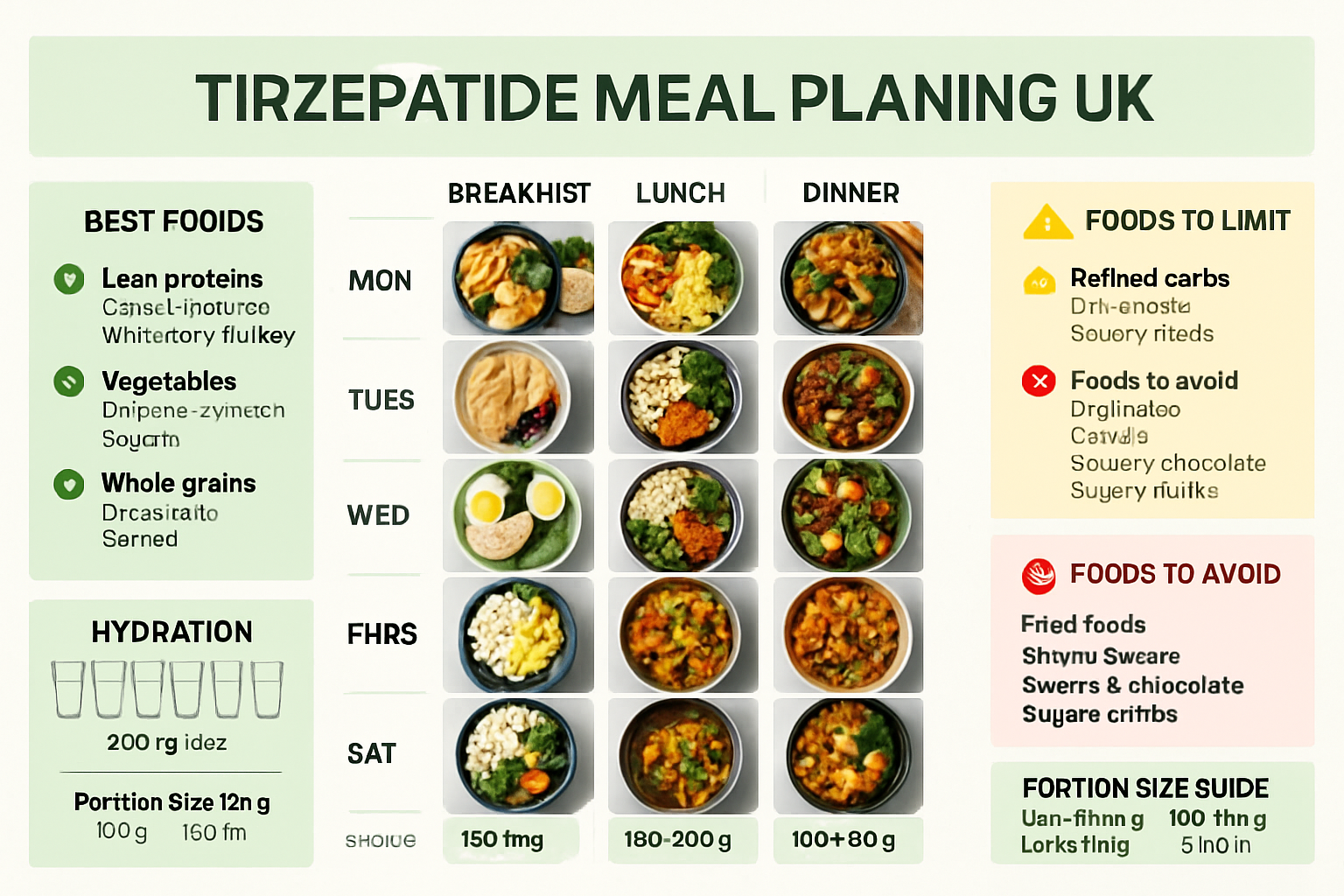
Understanding tirzepatide foods to avoid UK guidelines is just the beginning. Creating a sustainable, enjoyable meal plan is essential for long-term success.
Weekly Meal Planning Template
Monday
- Breakfast: Scrambled eggs with spinach, wholemeal toast
- Lunch: Grilled chicken salad with mixed vegetables, olive oil dressing
- Dinner: Baked cod with roasted vegetables and quinoa
- Snacks: Greek yogurt, apple slices
Tuesday
- Breakfast: Porridge with berries and a drizzle of honey
- Lunch: Turkey and avocado wrap (wholemeal tortilla)
- Dinner: Lean beef stir-fry with vegetables and brown rice
- Snacks: Carrot sticks with hummus, handful of almonds
Wednesday
- Breakfast: Poached eggs on wholemeal toast with tomatoes
- Lunch: Lentil and vegetable soup with a small wholemeal roll
- Dinner: Grilled chicken breast with sweet potato and green beans
- Snacks: Cottage cheese with cucumber, pear
Thursday
- Breakfast: Greek yogurt with granola and fresh berries
- Lunch: Tuna salad (in water, not oil) with mixed leaves
- Dinner: Turkey meatballs with courgette noodles and tomato sauce
- Snacks: Rice cakes with thin peanut butter, orange
Friday
- Breakfast: Vegetable omelette with wholemeal toast
- Lunch: Chicken and vegetable soup with oatcakes
- Dinner: Grilled salmon with asparagus and new potatoes (small portion)
- Snacks: Mixed berries, small handful of walnuts
Saturday
- Breakfast: Smoked salmon with scrambled eggs and spinach
- Lunch: Quinoa salad with chickpeas and roasted vegetables
- Dinner: Lean pork tenderloin with roasted root vegetables
- Snacks: Apple with almond butter, vegetable sticks
Sunday
- Breakfast: Protein smoothie with banana, spinach, and protein powder
- Lunch: Roast chicken breast with steamed vegetables
- Dinner: Prawn and vegetable stir-fry with brown rice
- Snacks: Greek yogurt, small portion of berries
Shopping List Essentials
Proteins 🥩
- Chicken breast
- Turkey mince
- White fish (cod, haddock, plaice)
- Salmon
- Eggs
- Low-fat cottage cheese
- Greek yogurt (low-fat)
- Tofu
Vegetables 🥬
- Leafy greens (spinach, kale, lettuce)
- Broccoli and cauliflower (in moderation)
- Courgettes and aubergines
- Peppers (all colors)
- Tomatoes
- Carrots and root vegetables
- Mushrooms
- Asparagus and green beans
Carbohydrates 🌾
- Brown rice
- Quinoa
- Wholemeal bread
- Oats (steel-cut or rolled)
- Sweet potatoes
- Wholemeal pasta (small portions)
Healthy Fats 🥑
- Olive oil (for cooking and dressing)
- Avocado (small portions)
- Nuts and seeds (small portions)
- Fatty fish (salmon, mackerel)
Pantry Staples 🏺
- Herbs and mild spices
- Low-sodium stock cubes
- Tinned tomatoes
- Tinned fish in water
- Legumes and pulses
- Vinegar (balsamic, apple cider)
Meal Prep Strategies
Batch Cooking
👨🍳 Prepare larger quantities of tirzepatide-friendly foods:
- Grill multiple chicken breasts at once
- Cook large batches of brown rice or quinoa
- Prepare vegetable soups in bulk
- Pre-portion snacks into containers
Preparation Tips:
- Wash and chop vegetables in advance
- Marinate proteins overnight
- Prepare overnight oats for quick breakfasts
- Keep hard-boiled eggs ready for snacks
Storage Guidelines:
- Refrigerate prepared meals for up to 3-4 days
- Freeze portions for longer storage
- Use clear containers and label with dates
- Separate components (protein, vegetables, grains) for flexibility
When to Seek Professional Guidance
While this guide provides comprehensive information about tirzepatide foods to avoid UK recommendations, individual circumstances vary significantly.
Consult Healthcare Professionals If:
⚠️ Severe or Persistent Side Effects
- Nausea lasting more than a few days
- Inability to keep food or fluids down
- Severe abdominal pain
- Significant changes in bowel habits
- Unexplained symptoms
⚠️ Nutritional Concerns
- Difficulty meeting nutritional needs
- Unintended rapid weight loss
- Signs of nutrient deficiency
- Concerns about adequate protein intake
- Questions about supplementation
⚠️ Medical Conditions
- Pre-existing digestive disorders
- Diabetes requiring insulin adjustment
- History of eating disorders
- Kidney or liver conditions
- Any chronic health conditions
⚠️ Medication Interactions
- Taking multiple medications
- Experiencing unusual symptoms
- Questions about supplement interactions
Working with Nutrition Professionals
A registered dietitian can provide:
- Personalized meal plans based on your specific needs
- Nutritional assessment to identify deficiencies
- Practical strategies for managing side effects
- Ongoing support as your needs change
- Evidence-based guidance tailored to UK dietary patterns
Research and Scientific Applications
For researchers and laboratories investigating tirzepatide and related peptides, PEPTIDE PRO offers research-grade compounds with comprehensive documentation including certificates of analysis. All products are clearly labeled “For Research Use Only” and come with proper storage and handling guidance.
The company provides same-day dispatch for orders placed before 1pm Monday through Friday, with fast UK delivery and international shipping options for research institutions worldwide.
The Science Behind Food Interactions
Understanding the scientific mechanisms behind tirzepatide’s food interactions helps explain why certain dietary modifications are necessary.
Gastric Emptying and Food Composition
Protein’s Role 🥩 Protein naturally slows gastric emptying less than fat but more than carbohydrates. With tirzepatide:
- Lean proteins are well-tolerated
- Provide essential amino acids for muscle preservation
- Enhance satiety without excessive gastric delay
- Support metabolic function during weight loss
Fat’s Disproportionate Impact 🧈 Dietary fat triggers the release of cholecystokinin (CCK), which further slows gastric emptying. Combined with tirzepatide:
- Creates compound slowing effect
- Extends food residence time in stomach
- Increases nausea and discomfort risk
- May reduce overall nutrient intake
Carbohydrate Considerations 🍞 Simple carbohydrates empty quickly even with tirzepatide, leading to:
- Blood sugar fluctuations
- Reduced satiety
- Potential for overconsumption
- Less optimal metabolic outcomes
Complex carbohydrates provide:
- Sustained energy release
- Better blood sugar control
- Enhanced satiety
- Improved nutritional value
GLP-1 and GIP Receptor Activation
Tirzepatide’s dual agonist action affects food processing:
GLP-1 Effects:
- Slows gastric emptying
- Reduces appetite
- Enhances insulin secretion
- Suppresses glucagon release
GIP Effects:
- Enhances insulin response to food
- May affect fat metabolism
- Contributes to satiety
- Supports glucose regulation
Combined Impact: The synergistic effect means dietary choices have amplified consequences compared to single-agonist medications.
Individual Variation in Response
Genetic, metabolic, and lifestyle factors influence how individuals respond to tirzepatide and various foods:
Factors Affecting Tolerance:
- Baseline gastric emptying rate
- Previous dietary patterns
- Gut microbiome composition
- Metabolic health status
- Concurrent medications
- Stress and sleep patterns
This variability explains why some individuals tolerate certain foods well while others experience significant discomfort from the same items.
Long-Term Dietary Sustainability
Avoiding problematic foods while using tirzepatide is important, but creating sustainable long-term eating patterns is equally crucial.
Transitioning to Maintenance
As your body adapts to tirzepatide (typically after 4-8 weeks), you may find:
Increased Tolerance 📈
- Side effects often diminish over time
- Gastric adaptation may occur
- Food tolerances may expand slightly
- Eating becomes more comfortable
Gradual Reintroduction When appropriate, carefully reintroduce foods:
- Choose one food at a time
- Start with very small portions
- Monitor symptoms for 24 hours
- Gradually increase if well-tolerated
- Maintain food diary to track responses
Foods to Prioritize for Reintroduction:
- Healthy fats in moderation (avocado, nuts, olive oil)
- Whole grain carbohydrates
- Larger portions of vegetables
- Occasional treats in very small quantities
Foods to Continue Limiting:
- Deep-fried and heavily processed foods
- Excessive added sugars
- Large portions of fatty meats
- Alcohol (always in moderation)
Building Healthy Habits Beyond Medication
Tirzepatide provides a window of opportunity to establish lasting healthy eating patterns:
Mindful Eating Practices 🧘
- Pay attention to hunger and fullness cues
- Eat slowly and without distractions
- Appreciate food quality over quantity
- Recognize emotional versus physical hunger
Sustainable Lifestyle Changes
- Regular physical activity appropriate to your fitness level
- Adequate sleep (7-9 hours nightly)
- Stress management techniques
- Social support and accountability
- Regular health monitoring
Avoiding Common Pitfalls
- Don’t rely solely on medication for weight management
- Avoid extremely restrictive eating patterns
- Don’t ignore nutritional needs in pursuit of rapid weight loss
- Seek support when struggling with adherence
Optimizing Your Tirzepatide Experience Through Informed Food Choices
Understanding tirzepatide foods to avoid UK guidelines empowers you to maximize the medication’s benefits while minimizing uncomfortable side effects. The key principles to remember include:
Primary Dietary Modifications:
- Minimize high-fat foods, particularly fried, greasy, and heavily processed options
- Limit refined sugars and simple carbohydrates that spike blood glucose
- Avoid or strictly limit alcohol due to multiple interaction risks
- Reduce irritating foods including very spicy, acidic, and carbonated items
- Focus on lean proteins, vegetables, and complex carbohydrates for optimal nutrition
Practical Implementation:
- Start with strict avoidance of problematic foods during initial weeks
- Gradually assess individual tolerance as adaptation occurs
- Maintain consistent meal timing with smaller, more frequent meals
- Prioritize hydration throughout the day
- Keep detailed food and symptom diaries to identify personal triggers
Personalization Is Essential: Every individual responds differently to tirzepatide. What causes severe discomfort for one person may be perfectly tolerable for another. Use this guide as a starting framework, then refine your approach based on personal experience and professional guidance.
Looking Forward: The dietary modifications required while using tirzepatide need not feel restrictive or punishing. Instead, view this as an opportunity to develop healthier, more mindful eating patterns that will serve you well beyond medication use. Focus on nutrient-dense, whole foods that nourish your body and support your health goals.
Next Steps
✅ Review your current diet and identify problematic foods to eliminate or reduce
✅ Create a personalized meal plan using the templates and suggestions provided
✅ Stock your kitchen with tirzepatide-friendly foods and remove temptations
✅ Start a food and symptom diary to track your individual responses
✅ Consult healthcare professionals for personalized guidance and monitoring
✅ Join support communities to share experiences and strategies with others
✅ Be patient with yourself as you navigate this adjustment period
For research institutions and laboratories requiring high-purity peptide compounds for scientific investigation, PEPTIDE PRO provides premium research-grade peptides with comprehensive quality documentation, fast UK delivery, and professional support. All products are strictly for research use only and come with detailed handling and storage guidance.
Remember that successful tirzepatide use extends beyond simply avoiding certain foods—it involves creating a comprehensive approach to nutrition, lifestyle, and health that supports your individual goals and circumstances. With informed choices, patience, and appropriate support, you can navigate the dietary aspects of tirzepatide use successfully while working toward your health objectives.