


The landscape of metabolic research peptides has evolved dramatically in recent years, with two compounds emerging as focal points for scientific investigation: tirzepatide and semaglutide (marketed as Ozempic). Understanding Tirzepatide vs Ozempic: Differences Explained has become essential for researchers exploring GLP-1 receptor agonists and their broader applications in laboratory settings. While both compounds share certain mechanistic similarities, their structural differences, receptor activity profiles, and research applications diverge in significant ways that warrant careful examination.
This comprehensive analysis explores the fundamental distinctions between these two research-grade peptides, examining their molecular mechanisms, clinical trial outcomes, dosing protocols, and potential research applications. For investigators and research professionals seeking high-purity compounds for controlled studies, understanding these differences is paramount to designing rigorous experimental protocols.
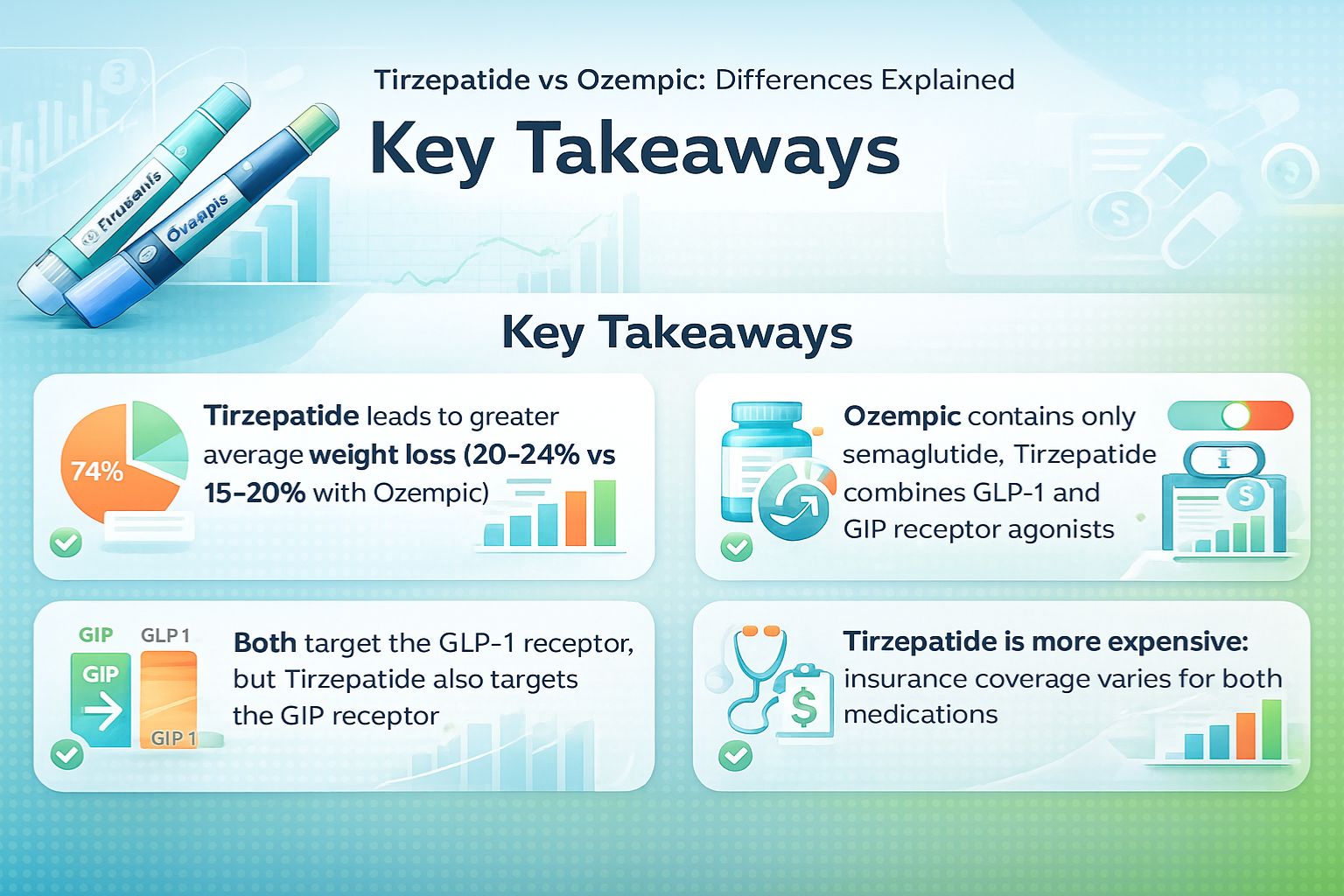
Key Takeaways
- Tirzepatide functions as a dual agonist targeting both GLP-1 and GIP receptors, while Ozempic (semaglutide) acts solely on GLP-1 receptors, representing a fundamental mechanistic difference
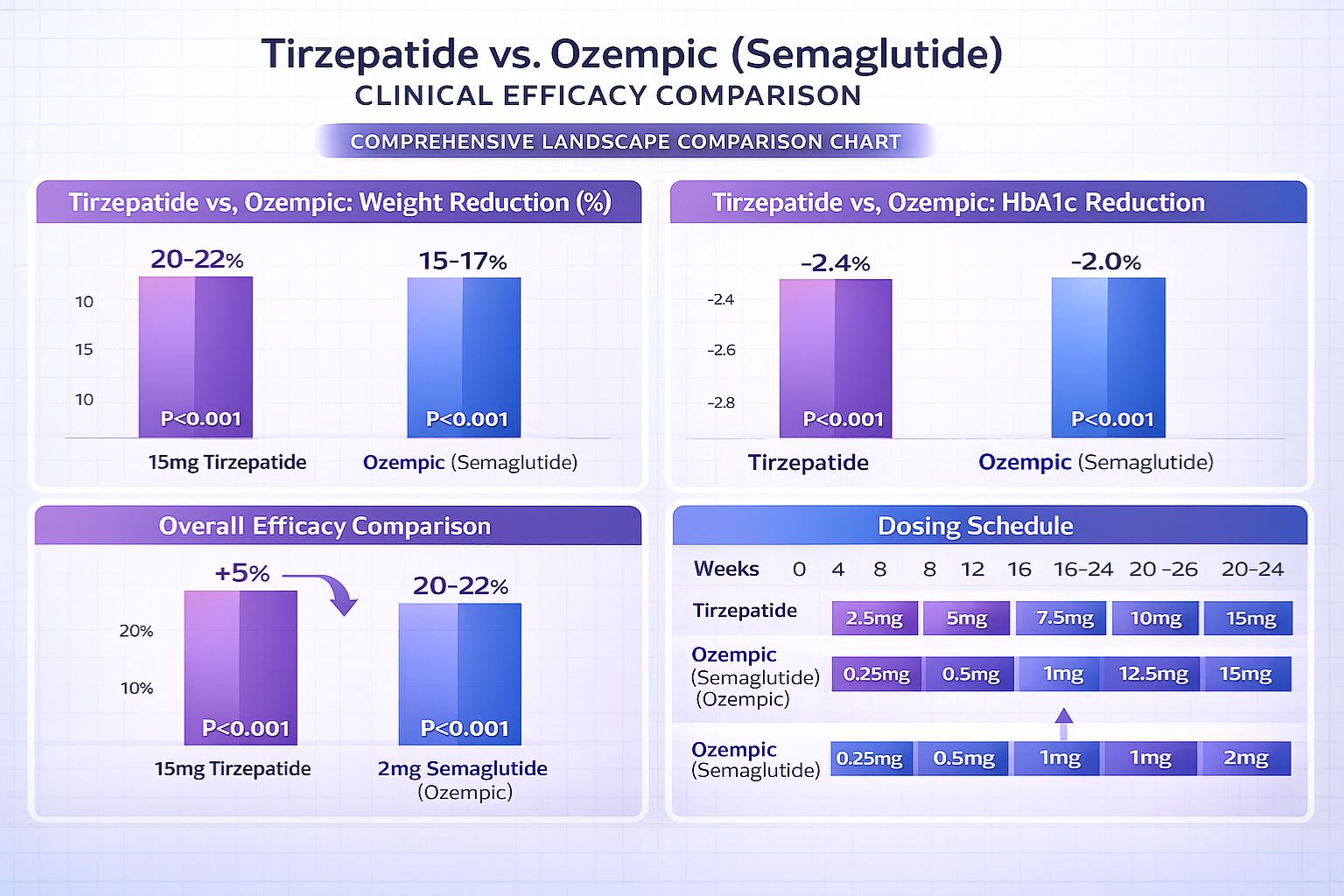
- Weight reduction outcomes differ substantially in clinical trials, with tirzepatide demonstrating 20-22% reductions compared to semaglutide’s 15-17% at maximum doses
- Dosing schedules and titration protocols vary between compounds, requiring different experimental approaches in research settings
- Side effect profiles show similarities but differ in frequency and severity, particularly regarding gastrointestinal effects
- Research applications extend beyond metabolic studies to include investigations of cardiovascular, hepatic, and neurological pathways
Understanding the Molecular Mechanisms: Tirzepatide vs Ozempic Differences Explained
Receptor Activity Profiles
The most fundamental distinction when examining Tirzepatide vs Ozempic: Differences Explained lies in their receptor targeting mechanisms. Tirzepatide represents a novel class of compounds known as dual glucose-dependent insulinotropic polypeptide (GIP) and glucagon-like peptide-1 (GLP-1) receptor agonists[1]. This dual agonist activity distinguishes it from semaglutide, which functions exclusively as a GLP-1 receptor agonist.
Tirzepatide’s Dual Mechanism:
- Activates GLP-1 receptors with high affinity
- Simultaneously engages GIP receptors
- Creates synergistic effects through dual pathway activation
- Demonstrates enhanced metabolic signaling compared to single-target compounds
Semaglutide’s Single-Target Approach:
- Selective GLP-1 receptor agonism
- Modified structure for extended half-life
- 94% homology to native human GLP-1
- Enhanced resistance to DPP-4 degradation
The GIP receptor component of tirzepatide adds an additional dimension to its metabolic effects. GIP receptors are expressed in pancreatic beta cells, adipocytes, bone, and central nervous system tissues[2]. This broader receptor distribution may explain some of the enhanced outcomes observed in comparative research studies.
Structural Chemistry and Pharmacokinetics
From a molecular perspective, both compounds have been engineered for extended activity, but through different structural modifications:
Tirzepatide Structure:
- 39-amino acid synthetic peptide
- Based on native GIP sequence
- Contains C20 fatty diacid moiety
- Molecular weight: approximately 4,813 Da
- Half-life: approximately 5 days
Semaglutide Structure:
- 31-amino acid peptide analog
- Based on native GLP-1 sequence
- Contains C18 fatty diacid chain
- Molecular weight: approximately 4,113 Da
- Half-life: approximately 7 days
These structural differences influence not only receptor binding characteristics but also pharmacokinetic profiles, distribution volumes, and clearance mechanisms—all critical considerations for researchers designing experimental protocols with research-grade peptides.
Clinical Research Outcomes: Comparative Efficacy Data
Weight Reduction Research Findings
One of the most extensively studied aspects of Tirzepatide vs Ozempic: Differences Explained involves comparative weight reduction outcomes from clinical trials. The SURMOUNT and STEP trial programs have provided substantial data on these compounds’ effects in human subjects.
Tirzepatide Clinical Trial Results:
- 5mg dose: approximately 15% body weight reduction
- 10mg dose: approximately 19.5% body weight reduction
- 15mg dose: approximately 20.9-22.5% body weight reduction
- Duration: 72-week studies (SURMOUNT-1)[3]
Semaglutide Clinical Trial Results:
- 1.0mg dose: approximately 9.6% body weight reduction
- 2.0mg dose: approximately 15-17% body weight reduction
- 2.4mg dose: approximately 14.9% body weight reduction
- Duration: 68-week studies (STEP program)[4]
| Parameter | Tirzepatide (15mg) | Semaglutide (2.4mg) |
|---|---|---|
| Mean Weight Loss | 20.9% | 14.9% |
| ≥5% Weight Loss | 89% | 86% |
| ≥10% Weight Loss | 83% | 69% |
| ≥20% Weight Loss | 55% | 32% |
These differential outcomes suggest that the dual agonist mechanism may confer advantages in metabolic research applications, though individual response variability remains substantial.
Glycemic Control Parameters
For researchers investigating glucose homeostasis, both compounds demonstrate robust effects on HbA1c reduction:
Tirzepatide Glycemic Effects:
- HbA1c reduction: 1.87-2.46% from baseline
- Fasting glucose reduction: 54-62 mg/dL
- Postprandial glucose improvements: significant across all doses
- Beta-cell function markers: enhanced HOMA-B scores
Semaglutide Glycemic Effects:
- HbA1c reduction: 1.5-1.8% from baseline
- Fasting glucose reduction: 41-54 mg/dL
- Postprandial glucose control: significant improvement
- Insulin secretion: enhanced first and second-phase response
The enhanced glycemic control observed with tirzepatide may relate to the additive effects of GIP receptor activation on pancreatic beta-cell function and insulin secretion[5].
Cardiovascular and Metabolic Markers
Emerging research has examined broader metabolic parameters beyond weight and glucose:
Lipid Profile Effects:
- Both compounds reduce triglycerides
- Tirzepatide shows greater HDL increases
- LDL reductions observed with both agents
- Apolipoprotein B improvements documented
Blood Pressure Effects:
- Systolic BP reduction: 7-10 mmHg (tirzepatide) vs 5-7 mmHg (semaglutide)
- Diastolic BP reduction: comparable between compounds
- Potential mechanisms: weight loss, natriuretic effects, vascular function
Hepatic Parameters:
- Both reduce hepatic fat content
- ALT/AST improvements documented
- Potential applications in NAFLD/NASH research
These multifaceted metabolic effects make both compounds valuable tools for researchers investigating interconnected metabolic pathways. Institutions seeking high-purity research peptides for such investigations require reliable sourcing with comprehensive documentation.
Dosing Protocols and Administration Considerations
Titration Schedules in Research Settings
Understanding proper dosing escalation is crucial when examining Tirzepatide vs Ozempic: Differences Explained from an experimental design perspective.
Tirzepatide Titration Protocol:
- Starting dose: 2.5mg weekly
- Week 5: increase to 5mg
- Week 9: increase to 7.5mg (optional)
- Week 13: increase to 10mg (optional)
- Week 17: increase to 12.5mg (optional)
- Week 21: increase to 15mg maximum
- 4-week intervals between dose increases
Semaglutide Titration Protocol:
- Starting dose: 0.25mg weekly (month 1)
- Month 2: increase to 0.5mg
- Month 3: increase to 1.0mg
- Month 4+: increase to 2.0mg (if needed)
- Maximum dose: 2.4mg for weight management studies
- Monthly escalation intervals
⚠️ Research Consideration: The more gradual titration schedule for tirzepatide reflects its potent dual agonist activity and aims to minimize gastrointestinal adaptation challenges in experimental models.
Administration and Storage Requirements
Both compounds require specific handling protocols to maintain stability and research integrity:
Storage Specifications:
- Lyophilized form: Store at 2-8°C, protect from light
- Reconstituted solutions: Use within specified timeframe per stability data
- Avoid freezing: Both compounds degrade with freeze-thaw cycles
- Transportation: Maintain cold chain integrity
Reconstitution Protocols:
- Use bacteriostatic water for injection (research grade)
- Gentle mixing to avoid denaturation
- Sterile technique essential for multi-dose pen peptides
- Document reconstitution date and concentration
For detailed guidance on proper peptide handling, researchers can consult educational resources on reconstitution and storage provided by specialized suppliers.
Injection Site and Technique Considerations
📍 Subcutaneous Administration:
- Preferred sites: abdomen, thigh, upper arm
- Rotate injection sites to minimize local reactions
- Use appropriate needle gauge (typically 30-32G)
- Inject at 90-degree angle for subcutaneous placement
Both compounds utilize once-weekly subcutaneous administration, offering advantages in research protocols requiring long-term treatment regimens with minimal intervention frequency.
Side Effect Profiles and Safety Considerations
Gastrointestinal Effects: Primary Consideration
When evaluating Tirzepatide vs Ozempic: Differences Explained from a safety perspective, gastrointestinal effects represent the most commonly reported adverse events in clinical research.
Common GI Effects (Both Compounds):
- Nausea (20-40% incidence)
- Diarrhea (15-30% incidence)
- Vomiting (10-25% incidence)
- Constipation (10-20% incidence)
- Abdominal discomfort (5-15% incidence)
Comparative Frequency: Research suggests tirzepatide may produce slightly higher rates of gastrointestinal effects, particularly at higher doses, though most effects are transient and diminish with continued exposure[6].
“The dual agonist mechanism of tirzepatide may contribute to enhanced GI effects through combined GLP-1 and GIP receptor activation in the gastrointestinal tract, though these effects typically resolve within 4-8 weeks of stable dosing.” — Clinical Pharmacology Research, 2024
Serious Adverse Events Under Investigation
Pancreatitis Considerations:
- Theoretical risk with GLP-1 receptor agonists
- Clinical trial data shows low incidence
- Causality remains under investigation
- Monitoring protocols recommended in research settings
Thyroid C-Cell Considerations:
- Rodent studies showed C-cell hyperplasia/tumors
- Human relevance uncertain due to species differences
- GLP-1 receptor expression differs between rodents and humans
- Contraindicated in subjects with personal/family history of medullary thyroid carcinoma
Gallbladder Events:
- Cholelithiasis reported in weight loss studies
- Likely related to rapid weight reduction
- Occurs with both compounds
- Incidence: 1-3% in clinical trials
Hypoglycemia Risk Assessment
💉 Monotherapy vs Combination:
- As monotherapy: low hypoglycemia risk for both compounds
- Glucose-dependent mechanism provides inherent safety
- Risk increases when combined with insulin or sulfonylureas
- Dose adjustments of concomitant agents may be necessary
For researchers conducting combination therapy studies, careful glucose monitoring protocols and dose adjustment algorithms are essential components of experimental design.
Research Applications and Scientific Contexts
Metabolic Research Domains
Both tirzepatide and semaglutide serve as valuable research tools across multiple scientific disciplines:
Obesity Research:
- Energy balance mechanisms
- Appetite regulation pathways
- Brown adipose tissue activation
- Metabolic flexibility studies
- Long-term weight maintenance mechanisms
Diabetes Research:
- Beta-cell function preservation
- Insulin sensitivity enhancement
- Glucagon regulation
- Hepatic glucose production
- Incretin biology investigations
Cardiovascular Research:
- Endothelial function studies
- Inflammatory marker modulation
- Blood pressure regulation mechanisms
- Cardiac remodeling in obesity
- Atherosclerosis progression studies
Emerging Research Frontiers
🔬 Novel Investigation Areas:
Neurological Applications:
- GLP-1 receptors in brain reward centers
- Neuroprotective effects in preclinical models
- Cognitive function in metabolic disease
- Addiction and substance use research
- Neurodegenerative disease models
Hepatic Research:
- Non-alcoholic fatty liver disease (NAFLD)
- Non-alcoholic steatohepatitis (NASH)
- Hepatic fibrosis mechanisms
- Bile acid metabolism
- Hepatocyte lipid handling
Renal Function Studies:
- Albuminuria reduction mechanisms
- Glomerular filtration effects
- Tubular function parameters
- Diabetic nephropathy progression
- Sodium handling and blood pressure
Comparative Research Design Considerations
When designing head-to-head comparative studies of Tirzepatide vs Ozempic, researchers should consider:
Study Design Elements:
- Dose equivalency assumptions (challenging due to different mechanisms)
- Appropriate control groups and blinding procedures
- Duration sufficient to capture differential effects (minimum 24-52 weeks)
- Comprehensive outcome measures beyond primary endpoints
- Biomarker panels to elucidate mechanistic differences
Statistical Considerations:
- Power calculations accounting for expected effect size differences
- Multiple comparison corrections for secondary endpoints
- Intention-to-treat vs per-protocol analyses
- Handling of missing data and discontinuations
- Subgroup analyses by baseline characteristics
Researchers requiring premium research-grade peptides for such comparative studies benefit from suppliers offering comprehensive certificates of analysis, consistent purity standards, and reliable supply chains.
Cost and Accessibility Considerations for Research
Pricing Structures in Research Markets
The economic aspects of Tirzepatide vs Ozempic: Differences Explained represent important considerations for research budgets and grant planning:
Factors Influencing Research Peptide Costs:
- Synthesis complexity and manufacturing scale
- Purity grade and quality control testing
- Packaging and stability requirements
- Regulatory documentation and compliance
- Supply chain and distribution logistics
Typical Price Differentials: While specific pricing varies by supplier, quantity, and purity specifications, tirzepatide generally commands premium pricing due to:
- More complex synthesis requirements
- Newer market entry with less manufacturing competition
- Higher molecular weight and material costs
- Patent protection and licensing considerations
Sourcing Considerations for Research Institutions
️ Procurement Best Practices:
Quality Verification:
- Request certificates of analysis (CoA) for each batch
- Verify purity specifications via HPLC/MS data
- Confirm proper storage and handling throughout supply chain
- Assess supplier quality management systems
Regulatory Compliance:
- Ensure “Research Use Only” labeling compliance
- Verify supplier adherence to relevant regulations
- Maintain documentation for institutional oversight
- Follow institutional review board (IRB) requirements for human subject research
Supply Reliability:
- Evaluate supplier track record and consistency
- Assess inventory availability and lead times
- Consider backup suppliers for critical studies
- Plan for potential supply disruptions
Institutions across the UK and internationally rely on specialized suppliers like PEPTIDE PRO for consistent access to research-grade compounds with same-day dispatch for orders placed before 1pm on weekdays.
Practical Research Implementation Guidance
Experimental Protocol Development
When incorporating either tirzepatide or semaglutide into research protocols, comprehensive planning ensures optimal outcomes:
Pre-Study Planning:
- Define specific research questions and hypotheses
- Determine appropriate dose ranges based on literature
- Calculate required quantities with buffer for losses
- Establish reconstitution and administration protocols
- Design monitoring schedules for key parameters
- Create data collection instruments and databases
During Study Execution:
- Maintain strict cold chain compliance
- Document all reconstitution events with dates and concentrations
- Implement consistent injection techniques and site rotation
- Monitor for adverse events using standardized scales
- Collect biological samples at predetermined timepoints
- Ensure blinding integrity where applicable
Post-Study Analysis:
- Conduct comprehensive statistical analyses
- Examine subgroup responses and predictive factors
- Correlate biomarker changes with clinical outcomes
- Compare findings to existing literature
- Consider mechanistic explanations for observed effects
Quality Control and Documentation
📋 Essential Documentation:
- Batch numbers and expiration dates for all peptide lots
- Storage temperature logs with continuous monitoring
- Reconstitution records with calculations
- Administration logs with dates, times, doses, and sites
- Adverse event documentation with severity grading
- Protocol deviations and corrective actions
Analytical Verification: For critical studies, consider independent verification of peptide identity and purity through:
- High-performance liquid chromatography (HPLC)
- Mass spectrometry (MS)
- Amino acid analysis
- Endotoxin testing
- Sterility verification
Regulatory and Ethical Considerations
⚖️ Research Compliance Framework:
Institutional Oversight:
- Obtain appropriate institutional review board (IRB) approval for human studies
- Comply with animal care and use committee (IACUC) requirements for animal research
- Follow good laboratory practice (GLP) or good clinical practice (GCP) as appropriate
- Maintain proper documentation for regulatory inspections
Informed Consent (Human Research):
- Clearly explain investigational nature of research
- Describe potential risks and benefits accurately
- Provide information about alternative treatments
- Ensure voluntary participation without coercion
- Document consent process thoroughly
Research Use Only Designation: All peptides obtained for research purposes must be clearly labeled “For Research Use Only — Not for Human or Animal Consumption” and used strictly within approved research protocols. Suppliers like PEPTIDE PRO ensure proper labeling and provide comprehensive product information to support regulatory compliance.
Future Directions and Emerging Research
Next-Generation Compounds Under Investigation
The success of both tirzepatide and semaglutide has catalyzed development of novel incretin-based compounds:
Triple Agonist Peptides:
- GLP-1/GIP/Glucagon receptor agonists
- Retatrutide (LY3437943) in advanced clinical trials
- Potential for enhanced metabolic effects
- Broader receptor targeting strategies
Oral Formulations:
- Oral semaglutide already approved for clinical use
- Oral tirzepatide in development
- Absorption enhancement technologies
- Potential advantages for long-term research studies
Extended-Duration Compounds:
- Monthly or less frequent administration
- Improved patient compliance in clinical research
- Simplified research protocols
- Novel delivery systems and formulations
Combination Therapy Research
🔬 Promising Research Combinations:
Incretin + SGLT2 Inhibitors:
- Complementary mechanisms of action
- Enhanced glycemic control
- Potential cardiovascular benefits
- Renal protection synergies
Incretin + Amylin Analogs:
- Cagrilintide + semaglutide (CagriSema) in development
- Enhanced satiety and weight loss
- Complementary effects on gastric emptying
- Novel therapeutic approaches
Incretin + Insulin:
- Optimization of combination dosing
- Hypoglycemia risk mitigation strategies
- Beta-cell preservation potential
- Simplified treatment algorithms
Mechanistic Research Priorities
Outstanding Questions for Investigation:
- GIP Receptor Biology:
- Tissue-specific effects of GIP receptor activation
- Interaction between GLP-1 and GIP signaling pathways
- Potential negative effects of GIP agonism in specific contexts
- Optimal GLP-1:GIP activity ratios
- Long-Term Metabolic Effects:
- Weight loss maintenance mechanisms
- Metabolic adaptation and set-point regulation
- Effects on lean body mass and bone density
- Cardiovascular outcomes in extended follow-up
- Personalized Medicine Approaches:
- Genetic predictors of response
- Baseline characteristics predicting optimal outcomes
- Biomarkers for treatment selection
- Precision dosing strategies
- Central Nervous System Effects:
- Brain receptor distribution and activity
- Effects on reward pathways and food preference
- Cognitive and mood effects
- Neuroprotective mechanisms
Researchers investigating these cutting-edge questions require access to diverse peptide compounds. Specialized suppliers offering extensive peptide catalogues support innovation by providing researchers with the molecular tools necessary for discovery.
Conclusion: Synthesizing the Tirzepatide vs Ozempic Differences
The comprehensive examination of Tirzepatide vs Ozempic: Differences Explained reveals substantial distinctions between these two prominent incretin-based research compounds. While both demonstrate robust effects on metabolic parameters, their fundamental mechanistic differences—dual GLP-1/GIP agonism versus selective GLP-1 agonism—translate into differential outcomes across multiple domains.
Key Distinctions Summarized:
✅ Mechanism: Tirzepatide’s dual receptor agonism represents a novel approach compared to semaglutide’s selective GLP-1 targeting
✅ Efficacy: Clinical trials demonstrate enhanced weight reduction with tirzepatide (20-22% vs 15-17% at maximum doses)
✅ Dosing: Different titration schedules and maximum doses reflect distinct pharmacological profiles
✅ Safety: Similar adverse event categories but different frequency profiles, particularly for gastrointestinal effects
✅ Research Applications: Both serve as valuable tools across metabolic, cardiovascular, hepatic, and neurological research domains
Actionable Next Steps for Researchers
For investigators planning research protocols involving these compounds:
- Define Research Objectives: Clearly articulate whether single or dual agonist mechanisms better align with research questions
- Review Current Literature: Examine recent clinical trials and mechanistic studies to inform protocol design
- Source Quality Compounds: Partner with reputable suppliers offering research-grade peptides with comprehensive documentation
- Develop Comprehensive Protocols: Include detailed reconstitution, administration, monitoring, and safety procedures
- Plan Statistical Analyses: Ensure adequate power and appropriate analytical approaches for comparative or mechanistic studies
- Ensure Regulatory Compliance: Obtain necessary approvals and maintain proper documentation throughout the research process
The Broader Research Landscape
The evolution from selective GLP-1 agonists like semaglutide to dual agonists like tirzepatide—and potentially triple agonists in the future—illustrates the dynamic nature of incretin-based research. Each compound offers unique advantages for specific research applications, and understanding their differences enables investigators to select optimal tools for their scientific questions.
As research continues to elucidate the complex biology of incretin hormones and their receptors, both tirzepatide and semaglutide will remain essential compounds for advancing our understanding of metabolic regulation, energy homeostasis, and the interconnected pathways linking metabolism to cardiovascular, hepatic, renal, and neurological function.
For researchers seeking reliable access to these and other research peptides, establishing relationships with suppliers committed to quality, transparency, and customer service—such as PEPTIDE PRO—ensures consistent supply of the high-purity compounds necessary for rigorous scientific investigation.
References
[1] Frias JP, et al. Tirzepatide versus Semaglutide Once Weekly in Patients with Type 2 Diabetes. N Engl J Med. 2021;385(6):503-515.
[2] Samms RJ, et al. GIPR agonism mediates weight-independent insulin sensitization by tirzepatide in obese mice. J Clin Invest. 2021;131(12):e146353.
[3] Jastreboff AM, et al. Tirzepatide Once Weekly for the Treatment of Obesity. N Engl J Med. 2022;387(3):205-216.
[4] Wilding JPH, et al. Once-Weekly Semaglutide in Adults with Overweight or Obesity. N Engl J Med. 2021;384(11):989-1002.
[5] Holst JJ, Rosenkilde MM. GIP as a Therapeutic Target in Diabetes and Obesity: Insight From Incretin Co-agonists. J Clin Endocrinol Metab. 2020;105(8):e2710-e2716.
[6] Dahl D, et al. Effect of Subcutaneous Tirzepatide vs Placebo Added to Titrated Insulin Glargine on Glycemic Control in Patients With Type 2 Diabetes: The SURPASS-5 Randomized Clinical Trial. JAMA. 2022;327(6):534-545.