

Mastering the Cold Chain for Travel with Tirzepatide
1.The Weakest Link in Research
Research is rarely a static endeavor. While the majority of scientific work occurs within the controlled sanctuary of the laboratory, the modern scientific landscape is increasingly collaborative and mobile. You may need to transport samples between university buildings, ship reagents to a partner facility in another city, or carry compounded formulations to a clinical site.
In this logistical web, the physical transport of reagents is often the weakest link. A researcher may spend months meticulously culturing cells or recruiting subjects, only to have the entire data set compromised by a two-hour drive in a hot car.
Tirzepatide travel requires a distinct shift in mindset. You are no longer just a scientist; you are a logistics manager. This peptide, a complex dual agonist, is chemically vulnerable. The stable environment of your -20°C freezer or 4°C fridge must be replicated in a portable, unpowered container. Failure to do so introduces “variables of transport”—unaccounted stressors like heat spikes, freezing drops, and mechanical vibration—that can silently degrade the peptide before it ever reaches the pipette.
This guide provides a rigorous protocol for the transport of Tirzepatide, ensuring that the molecule you arrive with is identical to the one you packed.
2. The Cold Chain Imperative
The “Cold Chain” is a logistics term referring to the uninterrupted series of refrigerated production, storage, and distribution activities that maintain a product within a specific temperature range. When engaging in Tirzepatide travel, you become the custodian of this chain.
The Physics of Temperature Excursions
A temperature excursion is any event where the peptide is exposed to temperatures outside the recommended range (usually 2–8°C for liquid, or room temperature/frozen for powder).
-
The Heat Spike: High temperatures increase the kinetic energy of the solution. This accelerates hydrolysis (chemical breakdown) and promotes aggregation (physical clumping). A car trunk in summer can reach 50°C (122°F), a temperature that can denature proteins in minutes.
-
The Freeze Shock: Conversely, uncontrolled cold is equally dangerous for reconstituted peptides. If a liquid pen peptide touches a frozen ice pack directly, it can flash-freeze. As discussed in storage protocols, this formation of ice crystals shears the peptide structure.
The Goal: Simulation
The objective of proper packing is simulation. You are trying to create a micro-environment inside a box that mimics the stable, convective cooling of a laboratory refrigerator, isolating the payload from the chaotic thermodynamics of the outside world.
3. Packing the Perfect Cooler: Thermodynamics in Action
Do not rely on a simple lunchbox or a single-walled plastic bag. The quality of your container dictates the safety margin of your transport.
A. The Container: Insulation Matters
-
Hard-Shell Coolers: High-quality, hard-shell coolers (like those made by Yeti or Pelican, or specifically designed medical transport boxes) are preferred. They use thick polyurethane foam insulation which has a high R-value (thermal resistance).
-
Styrofoam (EPS) Shippers: For shipping via courier, thick-walled Expanded Polystyrene (EPS) boxes are the industry standard. They are lightweight and excellent insulators.
-
Avoid: Soft-sided fabric lunch bags. They have poor insulation properties and offer zero protection against physical crushing.
B. The Coolant: Gel Packs vs. Wet Ice
-
Wet Ice (The Enemy): Never use loose ice cubes.
-
Mess: As ice melts, it creates water that can ruin labels and cardboard packaging.
-
Temperature: Wet ice sits at exactly 0°C. While this keeps things cold, it is difficult to control.
-
Movement: As ice melts, the volume shifts, causing pen peptides to rattle around.
-
-
Gel Packs (The Standard): Polymer-based gel packs are superior.
-
Phase Change: They thaw slower than water, maintaining a cool temperature for longer.
-
No Sweat: Quality packs do not leak fluids.
-
-
Phase Change Materials (PCMs): For high-end transport, consider PCMs engineered to melt at exactly 5°C. These packs physically cannot freeze your sample because they never get colder than their phase change point, and they hold the temperature perfectly in the fridge range.
C. The Packing Protocol: The “Sandwich” Technique
Proper packing is about layering. You must build a buffer zone.
-
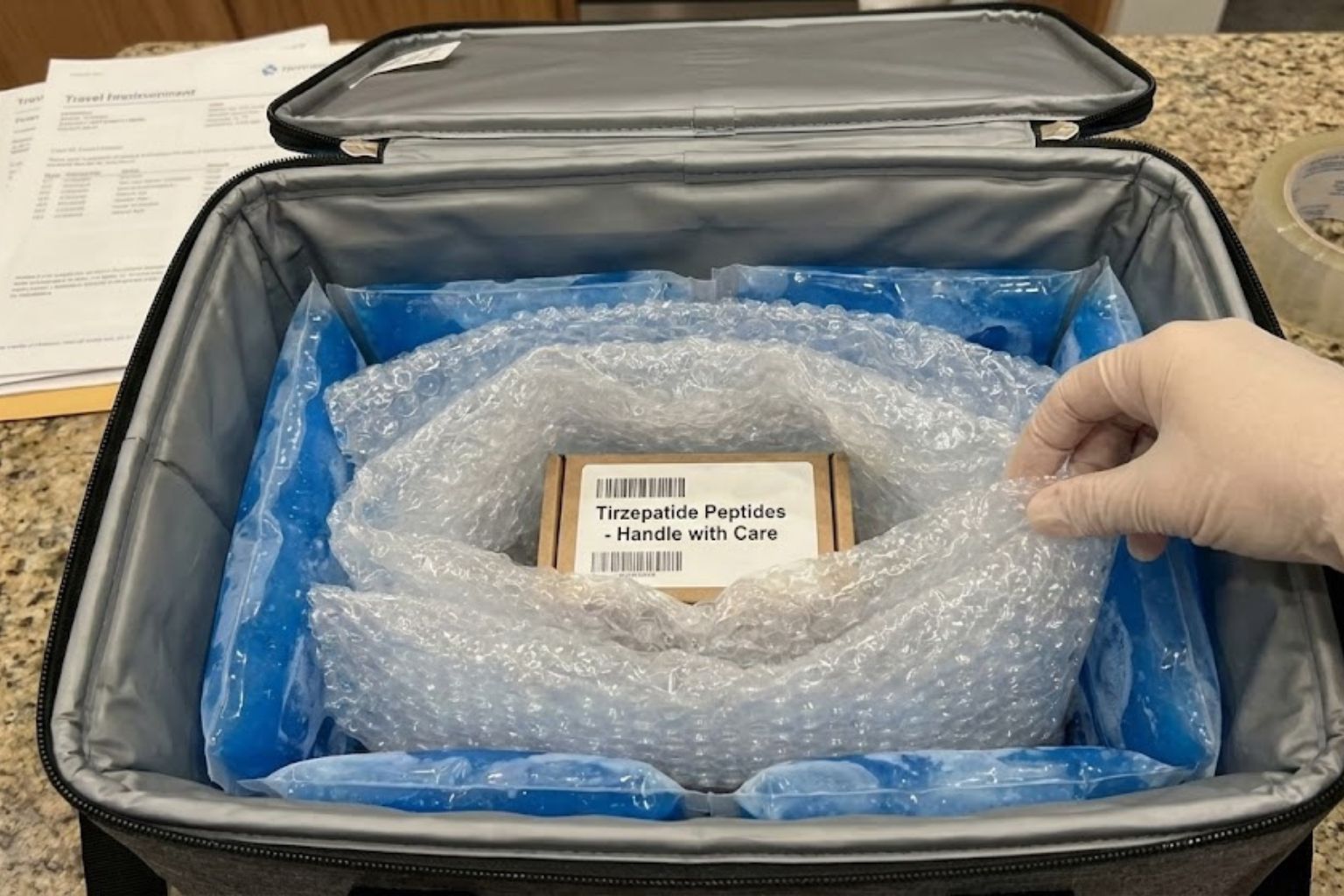
The Payload (Inner Core): Place your Tirzepatide pen peptides inside a secondary container. A small cardboard box or a hard plastic Tupperware container lined with bubble wrap is ideal. This protects the glass from breaking and provides the first layer of thermal insulation.
-
The Buffer Layer (Critical): Never let the peptide pen peptide or its secondary box touch the frozen gel packs directly.
-
The Risk: Frozen gel packs come out of the freezer at -20°C. Direct contact will freeze your liquid peptide instantly.
-
The Solution: Place a layer of bubble wrap, crumpled paper, or a towel between the gel packs and the payload. This buffer allows cool air to circulate without conducting freezing cold directly to the pen peptide.
-
-
The Coolant Layer: Arrange the frozen gel packs around the buffer layer—bottom, sides, and top. You want to create an “igloo” effect.
-
Void Fill: If there is empty space in the cooler, fill it with packing peanuts or crumpled paper. Air is a poor insulator if it is allowed to circulate freely (convection). Dead air space is better.
-
Seal: Tape the cooler shut to prevent air exchange.
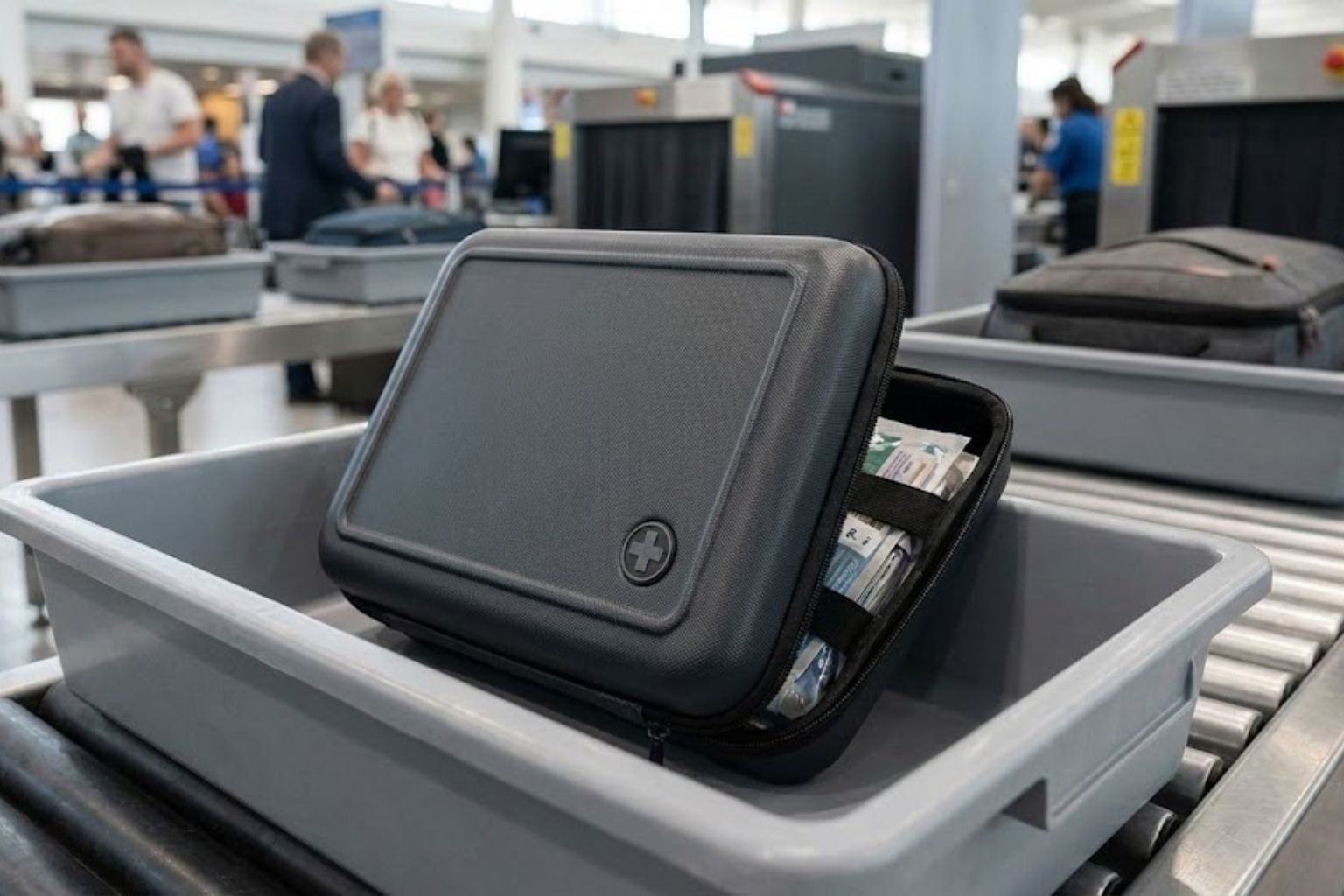
4. Air Travel and Security: Navigating the Bureaucracy
Flying with biological samples is legal, but it requires adherence to strict TSA (or local aviation authority) and airline regulations.
Carry-On vs. Checked Luggage
-
The Golden Rule: Always Carry-On.
-
The Cargo Hold Danger:
-
Temperature: While cargo holds are generally pressurized and temperature-controlled, they can fluctuate. Tarmac delays can leave luggage baking in the sun or freezing in winter conditions for hours before loading.
-
Pressure: Depressurization events, while rare, can pop the stoppers off pen peptides.
-
Loss: If the airline loses your luggage, your research is gone.
-
-
Carry-On Rights: You are permitted to carry medical and research supplies. Gel packs are technically liquids/gels, but they are exempt from the “3-1-1” (100ml) liquid rule if they are frozen solid at the time of screening. If they are slushy, agents may confiscate them.
Documentation Essentials
Security agents are not scientists. A pen peptide of white powder or clear liquid looks suspicious. You must provide context.
-
Letter of Intent: Carry a letter on official university or company letterhead. It should state:
-
Your name and credentials.
-
The nature of the material (“Non-infectious, non-hazardous peptide for research purposes”).
-
That the material requires temperature control.
-
-
SDS (Safety Data Sheet): Have a printed copy of the Tirzepatide SDS. This proves the material is not explosive, radioactive, or a biohazard.
The Screening Process
-
Declare It: Do not let the bag go through the X-ray machine silently. Tell the officer, “I am traveling with temperature-sensitive medical research samples.”
-
Manual Inspection: You have the right to request a manual hand inspection instead of X-ray.
-
Note: While modern X-rays are generally considered safe for peptides (unlike live cells or DNA which can sustain damage), avoiding radiation is always a best practice if possible.
-
Heat Risk: Some older CT-style scanners generate significant heat. A hand search avoids this.
-
5. Lyophilised vs. Reconstituted Travel: Managing Risk Profiles
Not all Tirzepatide is created equal when it comes to travel. The physical state of the peptide dictates the risk profile.
Scenario A: Traveling with Lyophilised Powder
Risk Level: Low This is the preferred method. In its freeze-dried state, Tirzepatide is remarkably robust.
-
Temperature Tolerance: It can withstand room temperature excursions for days without significant degradation. The cold chain here is a precaution, not a desperate necessity.
-
Mechanical Stability: The powder cake does not “slosh.” It is immune to the shear stress of vibration.
-
Strategy: If you are going to a collaborative lab, bring the powder and the bacteriostatic water separately. Reconstitute upon arrival.
Scenario B: Traveling with Reconstituted Solution
Risk Level: High Once mixed with water, the peptide is fragile. The risks double.
-
Thermal Sensitivity: As discussed, liquid peptides degrade rapidly in heat and are destroyed by freezing. The temperature window is strict (2–8°C).
-
Agitation and Shear Stress: This is the hidden killer of mobile research.
-
The Slosh Effect: As you walk, drive, or fly, the liquid in the pen peptide sloshes back and forth. This creates shear forces.
-
Cavitation: Intense vibration (like a plane taking off or a car on a bumpy road) can cause microscopic cavitation bubbles.
-
The Result: This physical stress can cause the peptide to unfold and aggregate. A clear pen peptide can turn cloudy just from being shaken too much in a backpack.
-
-
Strategy:
-
Keep Upright: Pack the pen peptides vertically. This reduces the surface area of the liquid sloshing against the stopper.
-
Fill Volume: If possible, travel with full pen peptides. A pen peptide that is half-empty has more “headspace” for the liquid to crash around in.
-
Cushioning: Wrap the pen peptide tightly in foam. This dampens the vibration frequency reaching the liquid.
-
6. Arrival Protocols: The Handover
The journey doesn’t end when you park the car. The transition from “travel mode” to “storage mode” must be immediate.
The Inspection Checklist
-
Open and Check Temp: If you have a temperature logger (highly recommended), download the data. If not, touch the internal buffer box. Is it cool to the touch? If the gel packs are completely melted and warm, assume an excursion occurred.
-
Visual Check:
-
Powder: Is the cake still intact, or has it crumbled? (Crumbled is usually fine, just cosmetic).
-
Liquid: Is it clear? Is there foaming? Is it cloudy? Cloudiness = Aggregation = Discard.
-
-
Physical Integrity: Check for hairline cracks in the glass. Air pressure changes or drops can crack pen peptides.
-
Stopper Integrity: Ensure the flip-off cap or rubber stopper hasn’t popped up due to pressure changes.
The Transfer
-
Move the samples immediately to a monitored laboratory refrigerator (2–8°C) or freezer (-20°C for powder).
-
Log It: Record the travel in your lab notebook. “Samples transported from Site A to Site B. Duration: 4 hours. Method: Cooler with gel packs. Arrival condition: Good.” This metadata is crucial if experimental results later look weird.
7. Dealing with Delays: Contingency Planning
Murphy’s Law applies to logistics: “Anything that can go wrong, will go wrong.” Traffic jams, flight cancellations, and power outages happen.
The “Pre-Conditioning” Trick
The most common mistake is pulling a warm cooler off the shelf, throwing in ice, and leaving. The insulation of the cooler itself is holding heat.
-
Protocol: Place your open cooler inside a walk-in fridge or freezer for hour before you pack it. This cools down the plastic and insulation. When you pack, the cooler is already cold, adding hours to your safety window.
Overpacking
Always pack for the “Worst Case Scenario.” If the drive takes 2 hours, pack enough coolant for 8 hours.
-
Extra Gel Packs: If you have space, fill it with frozen packs. The more thermal mass (cold stuff) inside the box, the longer it takes to warm up.
Emergency Ice
If you are stuck at an airport or on the road and your gel packs are melting:
-
Buy a bag of regular ice or get a cup of ice from a fast-food vendor.
-
Do not put it in with the pen peptides yet.
-
Double bag the ice in Ziploc bags to prevent leaking.
-
Wrap the ice bags in a thick towel or t-shirt.
-
Place this on top of your payload. (Cold air sinks).
-
This emergency measure is messy, but it is better than heat exposure.
8. Conclusion: Logistics is Science
Successful Tirzepatide travel is not about luck; it is about anticipation and thermodynamics.
Researchers often compartmentalize their work: “Science” happens at the bench, and “Travel” is just a commute. This is a fallacy. The transport of your reagents is an experimental variable. If you control it, your data remains robust. If you ignore it, you introduce noise that no amount of statistical analysis can fix.
By respecting the Cold Chain, using the “sandwich” packing method, prioritizing carry-on transport, and shielding your liquid samples from vibration, you ensure that your research remains rigorous, regardless of geography. Treat your cooler with the same precision as your pipette, and your results will travel safely with you.